
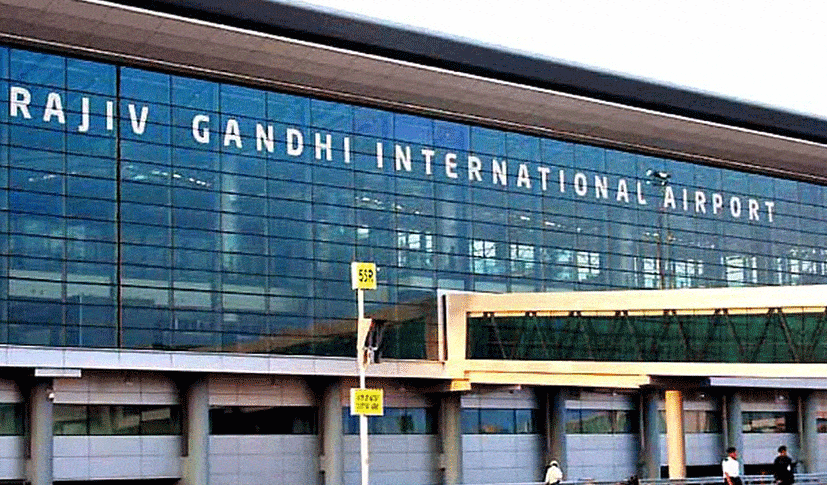
Hyderabad’s Rajiv Gandhi International Airport (RGIA) has secured the prestigious title of ‘Best Airport in the 15 to 25 Million Passengers Per Annum (MPPA)’ category in the Asia-Pacific region for 2024. The award, conferred by the Airports Council International (ACI) under its Airport Service Quality (ASQ) program, highlights RGIA’s commitment to delivering exceptional passenger experiences.
Table of Contents
Hyderabad’s RGIA Crowned Best Airport in Asia-Pacific for 2024
What Makes RGIA a Standout Winner?
The ACI’s ASQ survey, considered the global benchmark for airport service quality, evaluated over 30 key metrics—from check-in efficiency to terminal ambiance—based on real-time passenger feedback. RGIA outperformed 400+ airports worldwide to claim the top spot.
Key Factors Behind RGIA’s Success
- Tech-Driven Services: Self-check-in kiosks, automated baggage systems, and AI-powered crowd management.
- Passenger-Centric Design: Integrated terminal with seamless domestic-international transfers.
- Eco-Friendly Initiatives: Solar power plants and water recycling systems.
- Cargo Excellence: Specialized handling for pharmaceuticals, contributing to 70% of its cargo exports.
RGIA’s Growth & Milestones
Since opening in 2008 as India’s first Greenfield airport under a public-private partnership, RGIA has grown exponentially:
- Passenger Traffic: From 6.2 million (2009) to 21.6 million (pre-pandemic).
- Connectivity: Links 88+ destinations, including 18 international routes.
- Cargo Handling: Manages 159,000 tons annually, with a dedicated pharma zone.
In 2023, RGIA completed a major expansion, boosting capacity to 34 MPPA. Future plans include a new terminal to accommodate 40 MPPA by 2025.
Leadership’s Vision
Pradeep Panicker, CEO of GMR Hyderabad International Airport Ltd., stated:
“This award reflects our relentless focus on innovation. From AI-driven operations to sustainable infrastructure, we aim to make every journey memorable.”
Why This Award Matters
The ASQ award is a passenger-voted accolade, making it a genuine reflection of traveler satisfaction. RGIA’s win underscores:
- Operational Efficiency: Short security queues and quick baggage claims.
- Cultural Touchpoints: Local art displays and regional cuisine outlets.
- Global Benchmarking: Competing with hubs in China, Japan, and Australia.
RGIA continues to invest in upgrades, including:
- A new General Aviation terminal for private flights.
- Expansion of its cargo hub for time-sensitive shipments.
- Enhanced digital tools for real-time passenger updates.
Hyderabad’s RGIA has cemented its position as a global aviation leader, blending technology, sustainability, and passenger comfort. With its eyes set on future-ready infrastructure, RGIA is poised to remain a top choice for travelers in the Asia-Pacific region.