
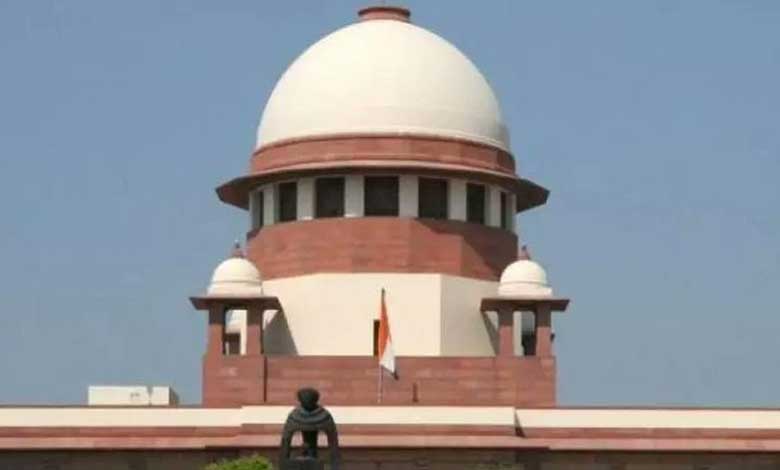
New Delhi: The Tamil Nadu government on Friday urged the Supreme Court to urgently hear its plea challenging the Madras High Court’s order permitting the centuries-old Deepam ceremony on the sacred hill above the Thiruparankundram Arulmigu Subramaniya Swamy Temple.
When the matter was mentioned for urgent listing before Chief Justice of India (CJI) Surya Kant, another counsel objected, saying: “The state government is merely trying to make a drama here. They only want to convey to the (Madras) High Court that they have mentioned before the Supreme Court”.
In response, the counsel representing the Tamil Nadu government immediately clarified that he was only praying for the urgent listing of the special leave petition (SLP).
After hearing the submissions, CJI Kant remarked that the top court would “see” and take an appropriate decision on whether to list the matter urgently.
“No mentioning! Let it be numbered and listed,” the CJI clarified.
The lamp-lighting controversy arose after Justice Swaminathan of the Madurai Bench of the Madras High Court ordered that Karthigai Deepam be lit at the hilltop lamp post on Thiruparankundram Hill and directed the deployment of CISF personnel for security.
Follow for more details: munsifdaily.com
The order was passed on a petition seeking permission to light the traditional Karthigai Deepam at the lamp post on the hill, which is one of the six barrack areas at Thiruparankundram.
Acting on the plea, Justice Swaminathan directed that the Maha Deepam be lit at the hilltop and asked the temple administration to make arrangements.
Although preliminary preparations were made on Wednesday morning, the temple authorities abruptly cancelled the arrangements. The withdrawal triggered protests by Hindu Makkal Katchi, Akhila Bharath Hanuman Sena, South India Forward Bloc, and other organisations, who marched demanding that the lamp be lit at the lamp post, as requested by the petitioner. However, following temple tradition, the Deepam was lit at 6 p.m. near the Uchchipillaiyar Temple on the hilltop, not at the lamp post.
Unsatisfied, the petitioner and others urged that the Deepam be lit at the lamp post with CISF protection. Justice Swaminathan issued an order permitting them to proceed to the spot with security personnel. The order led to tense scenes on Wednesday evening. BJP cadres and Hindu outfit members raised slogans near the 16-foot hall and attempted to scale the hill after breaking barricades. Police intervened, resulting in clashes in which two policemen sustained injuries.
Considering the escalating situation, District Collector Praveen Kumar imposed Section 144 prohibitory orders in the area. Several protesters were arrested for violating the restrictions. Some groups later lit camphor on the pathway and performed rituals before dispersing.
The Tamil Nadu government immediately approached the Administrative Judge of the Madurai Bench, Justice Jayachandran, seeking to overturn the single judge’s order.
The Additional Chief Public Prosecutor argued that the single-judge Bench had no authority to deploy CISF, which is assigned only for the security of the Madras High Court premises, not for maintaining public order.
The state government further submitted that the order directly affected communal harmony and law and order in Thiruparankundram. Simultaneously, the Collector moved another petition seeking a stay on the contempt plea filed by the original petitioner. Both matters were taken up as the first cases of the day by a Bench of Justices G. Jayachandran and K.K. Ramakrishnan.
The Tamil Nadu government argued that action against the temple administration could not be taken without hearing them, and that contempt proceedings cannot lead to immediate punishment on the same day of filing. It urged the division Bench led by Justice Jayachandran to quash the single-judge Bench’s directives, stating that they were beyond judicial authority and had aggravated tensions in the region.
In an order passed on Thursday, the Justice Jayachandran-led Bench dismissed the state government’s appeal, terming the move a “ruse” to circumvent timely compliance, which prompted the Tamil Nadu government to approach the Supreme Court.