
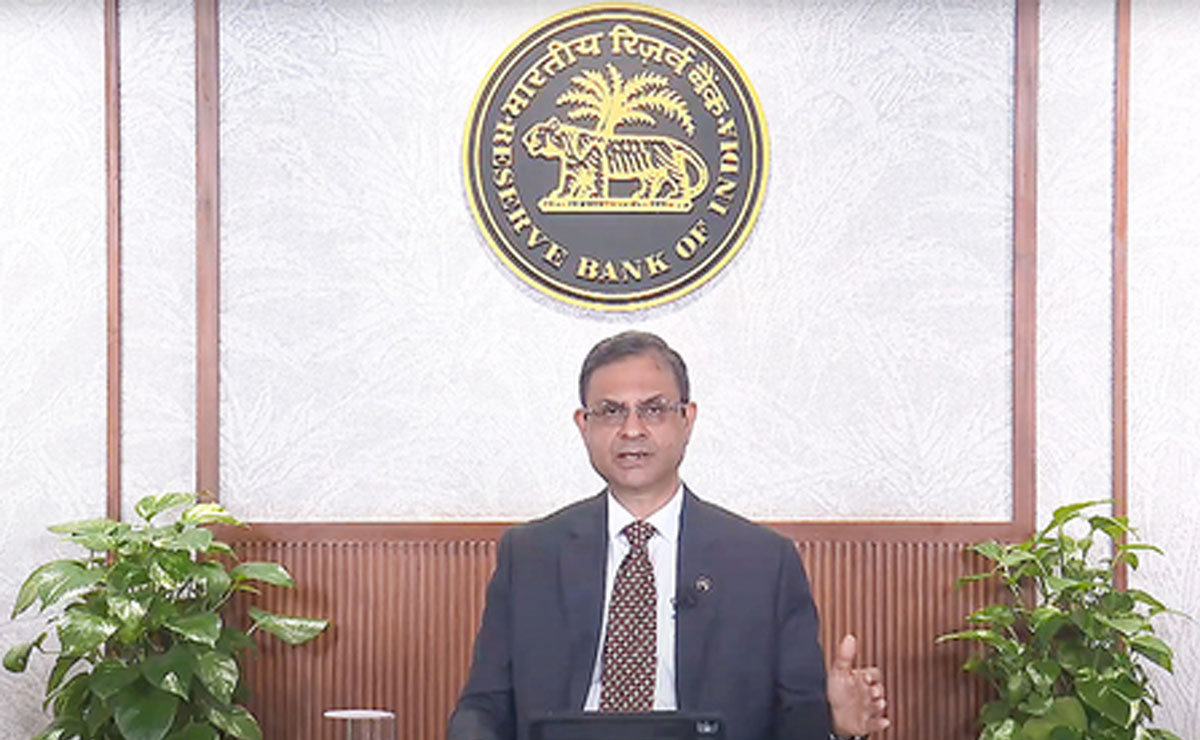
Mumbai: RBI Governor Sanjay Malhotra announced on Friday that the monetary policy committee (MPC) meeting has unanimously decided to reduce the repo rate by 25 basis points to 5.25 per cent from 5.5 per cent earlier to spur growth in the economy.
The RBI Governor also said that the Central Bank would inject more liquidity in the economy by undertaking open market operations with the purchase of government securities to the tune of Rs 1 lakh crore. Besides, the RBI would also put in place a dollar-rupee swap arrangement of $5 billion.
Malhotra said that the surge in economic growth to 8.2 per cent growth in the second quarter of the current financial year and the sharp decline in inflation to 1.7 per cent had provided a rare “Goldilocks period” for the Indian economy.
He said that the benign inflation has given headroom to go for a repo rate cut to support growth. The RBI has also raised its projection for the country’s GDP growth to 7.3 per cent from 6.8 per cent earlier.
Follow for more details: munsifdaily.com
Malhotra further stated that the RBI has decided to stick to “neutral policy stance.”
A neutral stance requires neither stimulation nor curbs on liquidity as it strikes a fine balance between controlling inflation without hurting growth. The RBI has been sticking to the neutral stance as it was waiting for the earlier monetary policy easing was still playing out and trade related implications are unfolding.
The RBI Governor also said that the country foreign exchange reserves had touched an impressive $686 billion which was sufficient to provide a robust import cover of 11 months.
However, at the same time he cautioned that the geopolitical and global trade uncertainty continued to weigh as a downside risk on the economy.
The RBI Governor had indicated last week that there was headroom for a repo rate cut to spur growth at the monetary policy review meeting on December 5 due to favourable macroeconomic indicators.
Also Read: BJP exposed itself by misquoting Upalokayukta: Siddaramaiah
The monetary policy committee chaired by the RBI Governor had left the repo rate unchanged in the last two reviews, held in August and October, in order to keep inflation in check.
Before that the RBI reduced the repo rate by 100 bps from 6.5 per cent to 5.5 per cent in quick succession between February and June and the transmission to the economy was still working out.
A lower policy rate and more liquidity with banks leads to a decline in interest rate on bank loans which makes borrowing easier for consumers as well as businesses resulting in more consumption and investments in the economy leading to higher growth.
However, the effectiveness of the rate cut hinges on how quickly and efficiently commercial banks pass on the benefits to borrowers.