
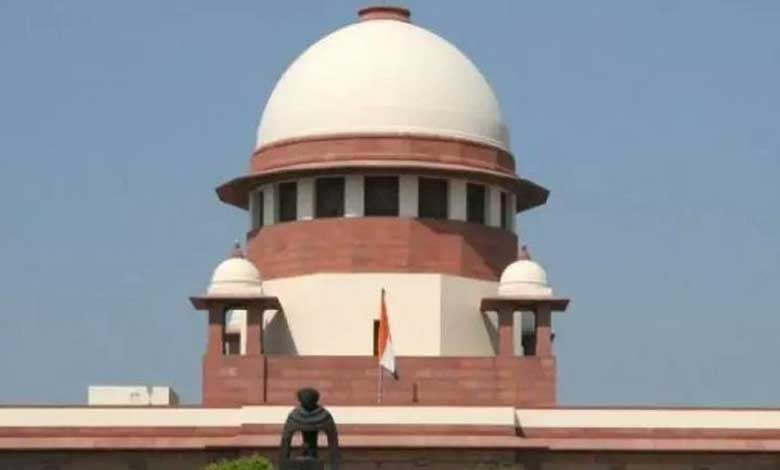
New Delhi: The Supreme Court on Wednesday granted bail to former Rajasthan Minister Mahesh Joshi, who was arrested by the Enforcement Directorate (ED) in April this year in connection with the alleged Rs 900 crore Jal Jeevan Mission (JJM) scam.
A Bench of Justices Dipankar Datta and AG Masih was hearing a special leave petition (SLP) filed by Joshi challenging the Rajasthan High Court’s August 26 order rejecting his bail plea.
In the impugned order, a single-judge Bench of Justice Praveer Bhatnagar of the Rajasthan HC opined that under the Prevention of Money Laundering Act (PMLA), bail can only be granted if the court is prima facie satisfied that the accused is not guilty.
Follow for more details: munsifdaily.com
Joshi argued that he was wrongly implicated and his name did not appear in the original case filed by the Anti-Corruption Bureau (ACB).
Despite receiving a notice last year, he was arrested without any new evidence coming to light.
He further contended that the ED accused him of receiving Rs 2.01 crore, but failed to provide evidence of the source of this money. Joshi also clarified that the Rs 50 lakh transaction in his son’s firm was merely a loan, which had already been repaid.
Opposing the plea, the ED argued that Joshi’s role was specifically mentioned in a separate ACB FIR. It asserted that the Rs 50 lakh transaction in his son’s company could not be overlooked simply because it was later returned.
Also Read: Passengers of Delayed Indigo Flight Protest at Mumbai Airport, Disrupting Morning Operations
The agency further claimed that Joshi accepted bribes during the department’s tendering process.
Earlier, the Anti-Corruption Bureau (ACB) had registered an FIR against 22 people, including former Minister Mahesh Joshi, in connection with the multi-crore Jal Jeevan Mission (JJM) scam. The list of accused also included senior officials of the department, including the financial advisor, chief engineer, additional chief engineer, superintendent engineer, and executive engineer.
According to ACB, a crucial breakthrough came from the scrutiny of an email ID, which led investigators to key evidence.
By tracking and examining related email accounts, the names of several officials involved in awarding tenders on fake certificates came to light. The investigation has revealed a deep nexus of officials and contractors who allegedly manipulated the tendering process to facilitate large-scale corruption under the JJM scheme.