
New Delhi: Security has been intensified across Uttar Pradesh ahead of December 6, the anniversary of the 1992 Babri Masjid demolition, with authorities placing Ayodhya and Mathura, two of the most sensitive locations in the state — on the highest alert. Police forces have been instructed to remain vigilant, and multi-layered security arrangements have been activated to prevent any untoward incidents. In several cities, a high alert has been declared in anticipation of the anniversary and in view of the events that unfolded in Ayodhya on December 6, 1992.
In Mathura, barricades have been erected around the Shri Krishna Janmabhoomi complex and the Shahi Eidgah Mosque, where security personnel have been deployed in large numbers. The entire area has been divided into two zones, four super zones, and eight sectors to enable systematic surveillance. Authorities are monitoring the region using both CCTV networks and drone cameras. Similar heightened security measures have been put in place in Ayodhya as well.
In Vrindavan, the Banke Bihari Temple, Prem Mandir, and other prominent temples are witnessing tight security. Police teams are conducting checks around these religious sites, screening vehicles and monitoring visitor movement. Personnel from the Agra-Aligarh range have also been stationed in the district to support local law enforcement. Units of the Provincial Armed Constabulary (PAC) and the Rapid Action Force (RAF) are on standby.
In addition, police officers in plain clothes have been posted near major temples and mosques to monitor crowd behaviour and ensure swift response if required. The security build-up is also influenced by the long-standing dispute surrounding the Shahi Idgah Mosque in Mathura. The Hindu side claims that the mosque was constructed during the reign of Mughal emperor Aurangzeb after demolishing a temple believed to mark the birthplace of Lord Krishna. The matter is currently being heard by the Supreme Court, adding further sensitivity to the region.
December 6 remains a polarising date, observed as ‘Shaurya Diwas’ by certain Hindu organisations and as ‘Black Day’ by several Muslim groups. Because of these contrasting observances, the day requires careful policing and preventive measures to maintain communal harmony. Ayodhya carries the deepest historical memory of December 6, 1992, when the Babri Masjid was brought down, triggering decades of legal disputes and political movements linked to the site.
A major turning point came on November 9, 2019, when the Supreme Court delivered a unanimous verdict granting the disputed land to Ram Lalla Virajman. The Court instructed the Central and Uttar Pradesh governments to form a trust to oversee the construction and administration of a Ram temple, and simultaneously directed that five acres of land in Ayodhya be allotted to the Sunni Waqf Board for building a new mosque.
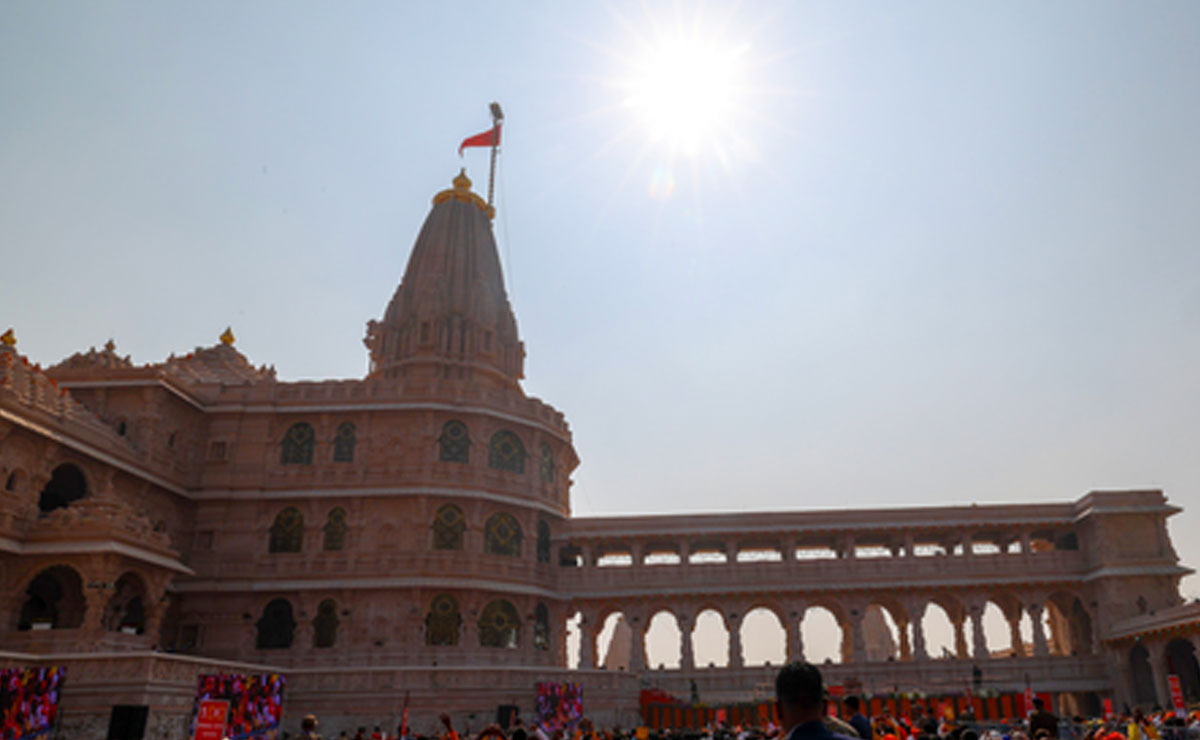
The foundation-laying ceremony for the Ram temple took place on August 5, 2020, attended by Prime Minister Narendra Modi, members of the Trust, and numerous dignitaries. Construction formally commenced on the land where the Babri Masjid had once stood. As of December 6, 2025, the Shri Ram Janmabhoomi Mandir has been fully completed. On November 25, Prime Minister Modi raised the saffron Dharma Dhwaj atop the temple’s spire, symbolizing the culmination of the Ram Mandir project.