
Delhi air pollution: AQI slips into near severe zone amid dense fog, cold conditions
Air pollution levels in the national capital deteriorated sharply on Sunday, edging dangerously close to the “severe” category as dense smog, plunging temperatures, and thick fog blanketed large swathes of northern India.

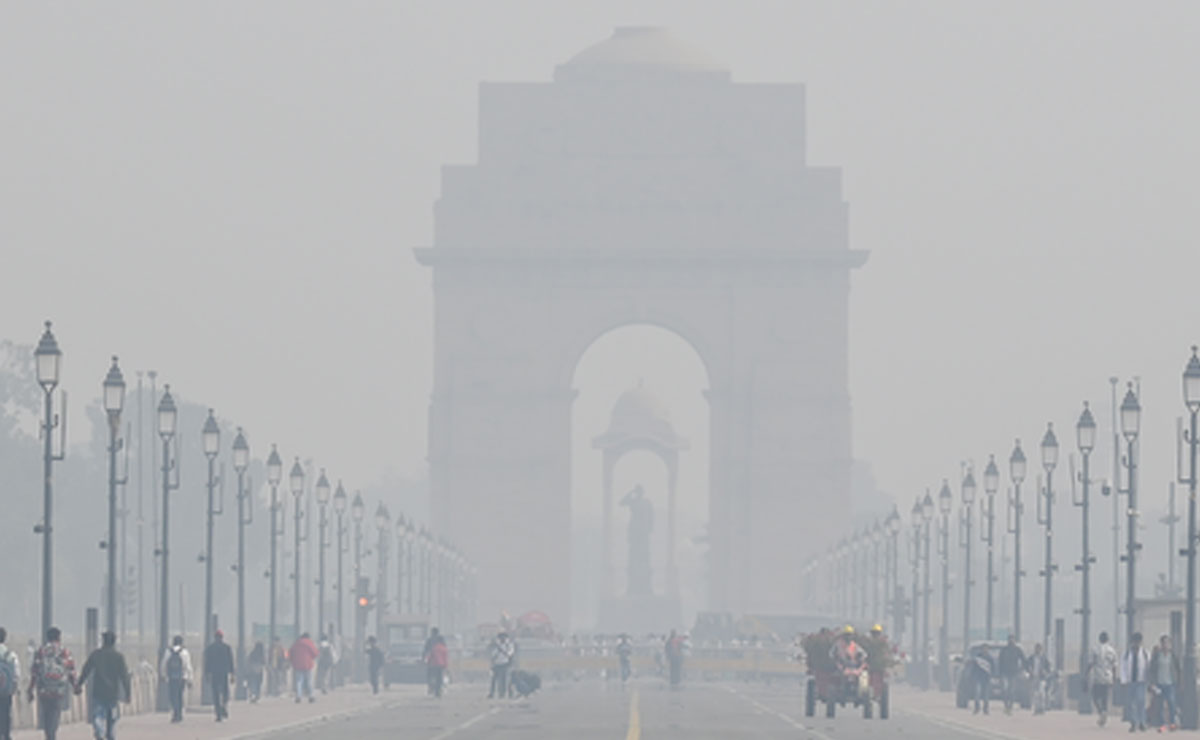
New Delhi: Air pollution levels in the national capital deteriorated sharply on Sunday, edging dangerously close to the “severe” category as dense smog, plunging temperatures, and thick fog blanketed large swathes of northern India. The worsening air quality once again raised health concerns for residents, particularly children, the elderly and those with respiratory ailments. According to data from the Air Quality Early Warning System for Delhi, operated by the Ministry of Earth Sciences, the city’s Air Quality Index (AQI) climbed steadily, touching 410 by 11 pm, officially breaching the “severe” threshold.
Although there was a marginal improvement overnight, pollution levels remained alarmingly high, with the AQI recorded at 396 at around 6.30 a.m. on Sunday, still within the near-severe range. Monitoring data from the Central Pollution Control Board’s Sameer app revealed that several areas across the capital experienced extremely poor air quality during the early morning hours. Among the worst-affected locations were Chandni Chowk (455), Wazirpur (449), Rohini (444), Jahangirpuri (444), Anand Vihar (438) and Mundka (436), all of which firmly fell under the “severe” pollution category.
The deteriorating air quality coincided with challenging weather conditions. The India Meteorological Department (IMD) warned of dense to very dense fog, further reducing visibility and compounding the impact of pollution. Orange alerts, the second-highest warning level, were issued for large parts of Delhi, Uttar Pradesh, Haryana, and Chandigarh, cautioning residents and authorities about possible disruptions to road, rail, and air traffic.
Also Read: Elon Musk’s net worth soars to nearly $750 billion
Delhi witnessed what meteorologists described as cold day conditions, with the mercury struggling to rise. The city recorded a maximum temperature of around 17 degrees Celsius, while the minimum dipped to approximately 8 degrees Celsius, intensifying discomfort amid the persistent haze. Thick layers of smog lingered through much of the day, blurring skylines and limiting outdoor activity.
Experts attribute the pollution spike to a combination of unfavourable meteorological conditions, including low wind speeds and temperature inversion, which trap pollutants close to the ground. As winter tightens its grip, Delhi continues to grapple with recurring episodes of air pollution, underscoring the urgent need for sustained mitigation measures and long-term solutions to improve air quality in the region.


