
Hindu organisation moves Supreme Court seeking ‘exclusive’ access in Bhojshala on Basant Panchami
The long-standing dispute over the Bhojshala-Kamal Maula complex in Dhar, Madhya Pradesh, has intensified as Basant Panchami coincides with Friday on January 23, 2026.

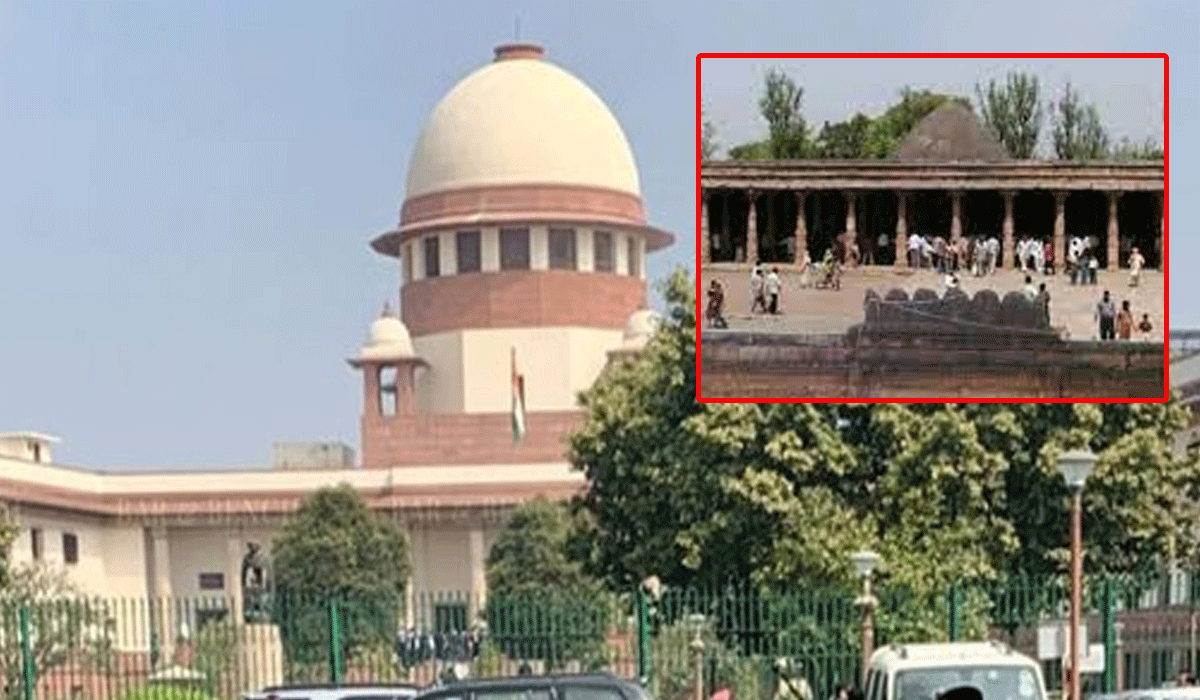
Bhopal: The long-standing dispute over the Bhojshala-Kamal Maula complex in Dhar, Madhya Pradesh, has intensified as Basant Panchami coincides with Friday on January 23, 2026.
In a fresh development, the Hindu Front for Justice has approached the Supreme Court with an urgent application seeking “exclusive” access for Hindus to perform “Goddess Saraswati Puja” throughout the day on January 23.
The site, a protected monument under the Archaeological Survey of India (ASI), is claimed by Hindus as an ancient temple dedicated to Goddess “Vagdevi (Saraswati)”, built by Parmar king Raja Bhoja in the 11th century, and by Muslims as the Kamal Maula Mosque.
The plea demands to “prohibit” from allowing any member of the Muslim community to offer namaz (prayer) that day, strict security arrangements by the ASI and state government, and an expedited hearing of the main case pending before the apex court.
The application highlights a critical ambiguity in the ASI’s April 7, 2003, order, which allows Hindus to worship every Tuesday and on Basant Panchami, while permitting Muslims to offer Friday prayers from 1 p.m. to 3 p.m. The directive remains silent on scenarios where Basant Panchami falls on a Friday, as it does this year.
Hindu groups argue that Basant Panchami holds profound sacred significance in Sanatan Dharma as the birth anniversary of Goddess Saraswati, traditionally marked by uninterrupted worship at the site. They contend that overlapping observances have historically led to disorder, clashes, and even communal violence on such rare coinciding days.
The plea further alleges that allowing Friday namaz without conclusively determining the monument’s religious character violates the spirit of the Ancient Monuments and Archaeological Sites and Remains (AMASR) Act. It emphasises the long tradition of Hindu worship at the complex and claims the ASI’s arrangement infringes on exclusive rights to perform puja on this auspicious day.
The broader dispute traces back to historical claims; Hindus assert the structure originated as a centre of Vedic learning and Saraswati temple before alleged destruction and conversion during medieval invasions, while Muslims maintain continuity of worship at the mosque named after Maulana Kamaluddin Chishti.
Madhya Pradesh High Court, in its order dated July 22, 2024, declined to proceed further with WP No. 10497/2022 concerning the Bhojshala dispute in Dhar. Citing the Supreme Court’s interim order dated April 1, 2024, in the connected SLP, the bench refrained from considering the ASI report or passing any operative orders.
The matter will now be listed only after the apex court’s final disposal or further directions.
With the main case—challenging the site’s religious character and ASI survey findings—already pending in the Supreme Court (tagged with other Places of Worship Act matters), the fresh plea underscores escalating demands amid the calendar overlap.
Local authorities in Dhar have heightened security, deploying thousands of personnel to prevent any untoward incidents on January 23.


