
Supreme Court reserves decision on pleas against hate speech
Directing all parties to file brief written submissions, a Bench of Justices Vikram Nath and Sandeep Mehta hinted that most of the matters would be closed, with liberty to pursue remedies as available under law, except for one petition.

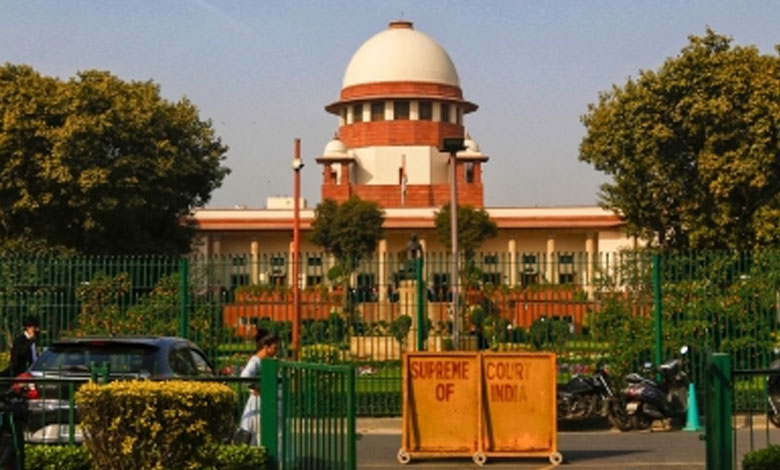
New Delhi: The Supreme Court on Tuesday reserved its decision on a batch of petitions raising concerns over hate speeches and the alleged failure of authorities to effectively implement existing regulatory mechanisms.
Directing all parties to file brief written submissions, a Bench of Justices Vikram Nath and Sandeep Mehta hinted that most of the matters would be closed, with liberty to pursue remedies as available under law, except for one petition.
The Justice Nath-led Bench decided to continue hearing the matter concerning an alleged 2021 hate crime against a Muslim cleric in Noida, Uttar Pradesh, to assess the status of the trial and the steps taken thereafter.
The clutch of petitions, filed from 2020 onwards, arose in the backdrop of alleged hate speeches linked to the ‘Corona Jihad’ narrative on social media, the controversial ‘UPSC Jihad’ programme aired by a television channel, and provocative remarks made at religious gatherings such as Dharam Sansads.
In 2023, the Supreme Court had directed all states and Union Territories (UTs) to register FIRs suo motu, even without formal complaints being filed, in cases of communal hate speech.
During the hearing on Tuesday, advocate Nizam Pasha, appearing for the petitioners, contended that the issue was not the absence of adequate laws but the reluctance of enforcement agencies to act, particularly when the alleged offenders were linked to ruling establishments.
He submitted that hate speech events were often advertised in advance and that earlier top court interventions had effectively prevented such incidents.
Pasha also referred to an application seeking the takedown of an AI-generated video allegedly shared by a political party’s Assam unit, arguing that there was a direct link between hate speeches and subsequent hate crimes.
Follow for more details: munsifdaily.com
Senior advocate M.R. Shamshad, appearing for Jamiat Ulama-i-Hind, submitted that apart from general hate speeches, there was an emerging trend of targeting religious personalities, with police often declining to register FIRs on the pretext that prior sanction was necessary.
Additional Solicitor General S.V. Raju, appearing for the Centre, said that there was substantial compliance with the top court’s earlier directions, informing the Justice Nath-led Bench that FIRs had been registered in the majority of cases referred to in contempt petitions.
Senior advocate Sanjay Hegde highlighted the role of social and mainstream media in amplifying hate due to commercial incentives.
Referring to earlier apex court rulings, he questioned whether mechanisms could be evolved to make hate speech “unprofitable”.
Senior advocate Dama Seshadri Naidu, appearing for the Election Commission of India, submitted that the poll panel already had guidelines and enforcement mechanisms in place to deal with hate speech during elections and was open to strengthening them if required.
After hearing all sides, the Justice Nath-led Bench asked the parties to submit concise written notes and reserved its orders on the broader issue of whether additional guidelines or mechanisms were required to curb the menace of hate speech.


