
US role overstated in India-Pakistan crisis: Senator Warner
Mark Warner, Chairman of the powerful Senate Intelligence Committee and Co-Chair of the Senate India Caucus, said available information did not support assertions that Washington independently settled the standoff.

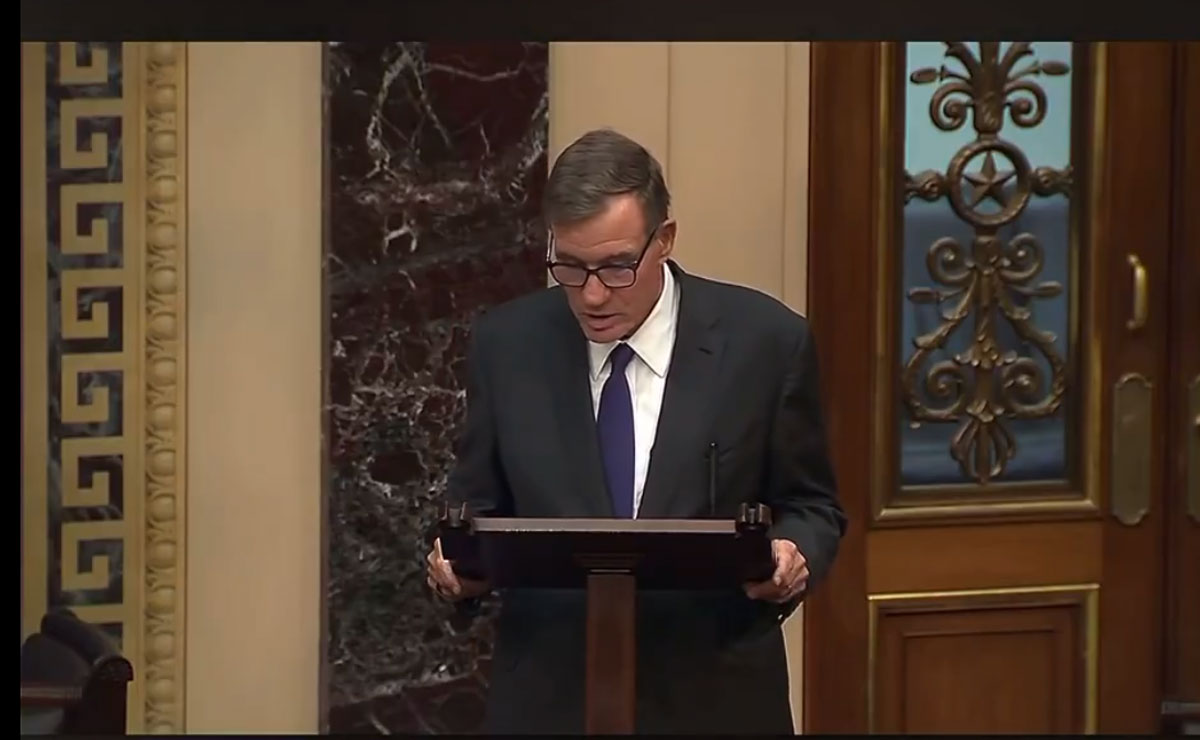
Washington: Claims that the Trump Administration single-handedly defused recent India-Pakistan hostilities have been overstated and risk distorting the reality of how the crisis was resolved, a powerful American Senator has said, and warning that such exaggerated narratives are feeding tensions at a sensitive moment in regional diplomacy.
Mark Warner, Chairman of the powerful Senate Intelligence Committee and Co-Chair of the Senate India Caucus, said available information did not support assertions that Washington independently settled the standoff. “Everything that I heard and read from members of the Indian government, from the intelligence community, the American Intelligence Committee… was that this was settled between Pakistan and India,” Warner told IANS in an exclusive interview. Warner acknowledged that the United States may have attempted to play a supportive role but rejected claims of direct intervention by President Donald Trump.
“While America may have tried to help, it was not like Mr. Trump did this personally,” he said, describing such portrayals as driven by “an ego reaction.” Asked whether the escalation had brought the two nuclear-armed neighbours close to catastrophe, Warner said the situation was serious but not unprecedented. “It was a very serious escalation by both sides,” he said, noting that India and Pakistan had experienced multiple such crises in the past.
He said the episode followed a familiar pattern. “This was again… due to something to do with a terrorist incident,” Warner said, pointing to longstanding concerns about cross-border militancy. He added that established communication channels between New Delhi and Islamabad were in place for such moments. “There are communications… between Indian Pakistan for these kinds of occasions,” he said. Warner expressed concern that overstating Washington’s role could damage trust with allies
He said the current tariff dispute with India appeared to be linked to resentment over a perceived lack of recognition. “That is the only logical explanation,” he said, referring to Trump’s belief that Prime Minister Narendra Modi did not give him sufficient credit for easing hostilities. Drawing a parallel with other foreign policy claims, Warner said Trump had a pattern of overstating outcomes. Referring to US strikes on Iran, he said, “The American bombers did a wonderful job, but they didn’t totally obliterate Iran’s nuclear capabilities,” adding that Tehran retained the ability to rebuild within months.
He warned that such rhetoric had real diplomatic costs. “When everyone doesn’t salute that language, he then becomes resentful,” Warner said, linking that dynamic towards the broader deterioration in trust between Washington and New Delhi. The senator cautioned that short-term political disputes could undermine long-term strategic cooperation, particularly in defence. “You can’t switch overnight unless you’re sure that that next partner’s gonna be dependable,” he said, referring to India’s gradual effort to reduce dependence on Russian military equipment.
On Pakistan, Warner said the country remained excessively focused on India. “It feels to me too often that Pakistan is so obsessed with India… and it uses India as the reason why Pakistan itself has not succeeded as a nation economically,” he said. By contrast, he said India had moved beyond that rivalry. “India’s since it’s graduated into a… first world power, it’s moved beyond that competition,” Warner said, adding that generational shifts in India favoured closer alignment with the United States. Warner said exaggerating US involvement risked complicating an already delicate regional balance and diverting attention from the need to stabilise long-term India-US relations.


