
Trump launches Great American Recovery plan
US President Donald Trump signed a sweeping executive order launching what he called the Great American Recovery Initiative, a national effort aimed at combating addiction and substance abuse by coordinating federal, state, local, and private-sector resources.

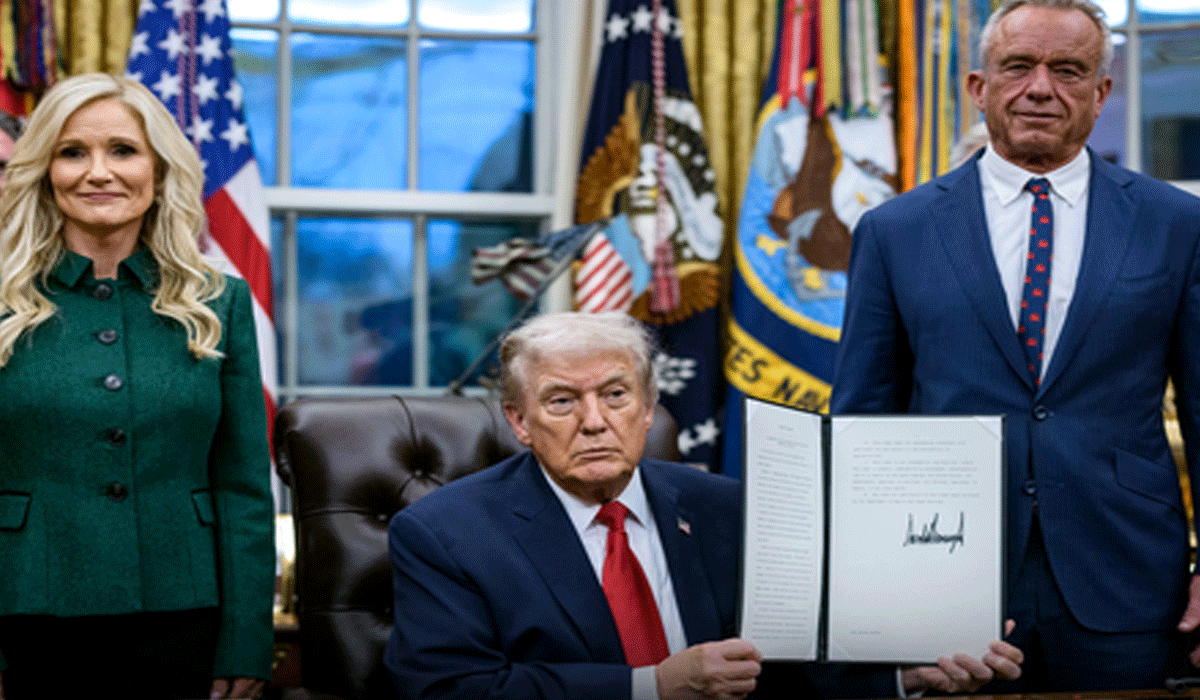
Washington: US President Donald Trump signed a sweeping executive order launching what he called the Great American Recovery Initiative, a national effort aimed at combating addiction and substance abuse by coordinating federal, state, local, and private-sector resources.
Calling addiction “a big deal in this country and probably in every country,” Trump said the initiative was designed to help Americans “get the help and the support that they need to free themselves from the horrible burden of dependency.”
The President said an estimated 300,000 people die each year in the United States from drug and alcohol abuse, adding that the real number was likely higher. He said drug overdose deaths had dropped by 21 per cent over the past year.
Trump credited border enforcement and drug seizures for the decline, saying authorities had seized more than 47 million fentanyl pills and 10,000 pounds of fentanyl powder. He also said drugs entering the country by sea were down 97 per cent following enforcement actions in what he referred to as the “Gulf of America.”
“We’re taking a bold action to help Americans struggling with all forms of addiction,” Trump said. “The Great American Recovery Initiative will bring together federal, state, local, and private sector resources to support addiction, recovery, treatment, and prevention.”
Health and Human Services Secretary Robert F. Kennedy Jr., who will serve as a co-chair of the initiative, said the executive order marked a fundamental shift in how the federal government addresses addiction.
“Addiction is not a moral failure. It is a disease. It’s chronic. It’s treatable,” Kennedy said, adding that the country had relied too long on “fragmentation, stigmatization and silence instead of science, compassion and coordination.”
Kennedy said nearly 50 million Americans suffer from substance use disorder, and many never receive treatment. The initiative would align federal programs, expand evidence-based care, focus on early intervention, and support long-term recovery, he added.
“Recovery is not a side issue,” Kennedy said. “It’s an economic issue, a workforce issue, a family issue, a national security issue.”
Kathryn Burgum, the White House senior adviser for the initiative, described addiction as a lifelong medical condition comparable to diabetes, cancer, and heart disease. The new framework represented a shift “from reaction to prevention, from fragmentation to coordination, from stigma to science,” she added.
“This initiative represents a fundamental shift,” Burgum said, adding that when addiction is treated early and correctly, “people recover and families heal.”
Several administration officials and guests spoke about personal experiences with addiction and loss, including Special Envoy Steve Witkoff, who discussed the death of his son from addiction, and senior health officials who highlighted research, treatment expansion and prevention efforts.
Trump said the initiative builds on actions taken during his presidency, including securing the border, expanding access to treatment and naloxone, and investing in prevention and recovery programs.
The United States has grappled with an opioid and addiction crisis for more than a decade, with overdose deaths peaking during the COVID-19 pandemic. Federal and state governments have increasingly shifted toward public health–based approaches alongside law enforcement.
Trump said the new initiative would establish a coordinated national response to addiction, adding, “When Americans recover, communities grow stronger, families heal and children thrive.”


