
IBC Amendment Bill in 2nd half of Budget session, a lot more divestment coming: FM
Finance Minister Nirmala Sitharaman on Monday said that the government is set to introduce the Insolvency and Bankruptcy Code (IBC) Amendment Bill in the second half of the Budget session, beginning March 9.

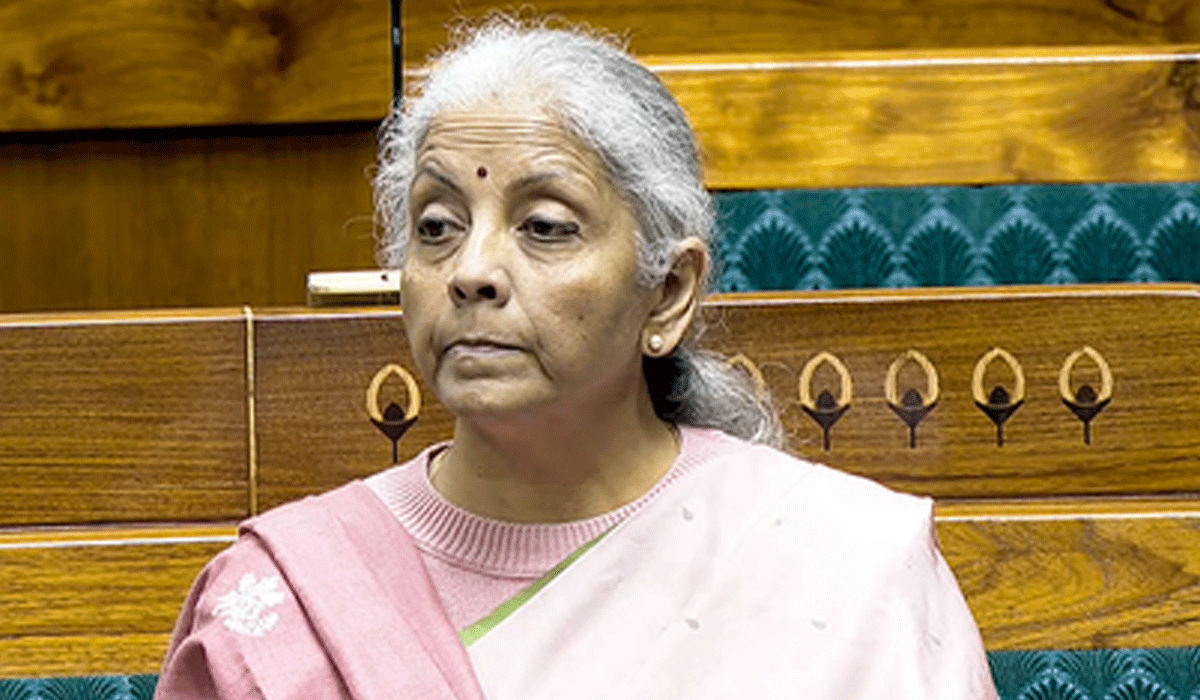
New Delhi: Finance Minister Nirmala Sitharaman on Monday said that the government is set to introduce the Insolvency and Bankruptcy Code (IBC) Amendment Bill in the second half of the Budget session, beginning March 9.
Addressing a press briefing, a day after presenting the historic reform-oriented Budget 2026-27, she said that the pace and direction of disinvestment should set the tone for revenue generation in the coming years.
“Going forward, there will be a lot more divestment. Specifically, divestment of Central Public Sector Enterprises (CPSEs) will be seriously considered now onwards,” FM Sitharaman noted.
She further added that she will have to work on broadening the tax base so that direct tax revenues grow.
“However, divestment is a priority,” the Finance Minister noted, adding that the IDBI Bank strategic disinvestment is on track and is likely to be concluded soon.
“Pace of disinvestment and asset monetisation will continue, encouraging more public floating of CPSEs. I am confident higher private consumption will sustain in the coming months, and FY27 deficit target shows the government’s priority is growth,” she told reporters.
The Budget has proposed a revenue estimate from miscellaneous capital receipts at Rs 80,000 crore – sharply higher from the revised estimate of Rs 33,837 crore for FY26. Miscellaneous capital receipts include revenue generation through both the sale and monetisation of government assets.
The Finance Minister announced capital expenditure of Rs 12.2 lakh crore in the Budget for 2026-27, to boost big-ticket infrastructure projects for boosting growth and jobs in the economy. This represents an increase of 2.2 lakh crore over the corresponding figure of the previous fiscal year.
Meanwhile, the debt-to-GDP ratio is estimated to be 55.6 per cent of GDP in 2026-27 (budget estimate or BE), compared to 56.1 per cent of GDP in 2025-26 (revised estimate or RE).


