
FairPoint: When Congress crossed a parliamentary line
Parliament, the most sacrosanct space in Indian democracy, is where political disagreement is settled by argument, not intimidation.

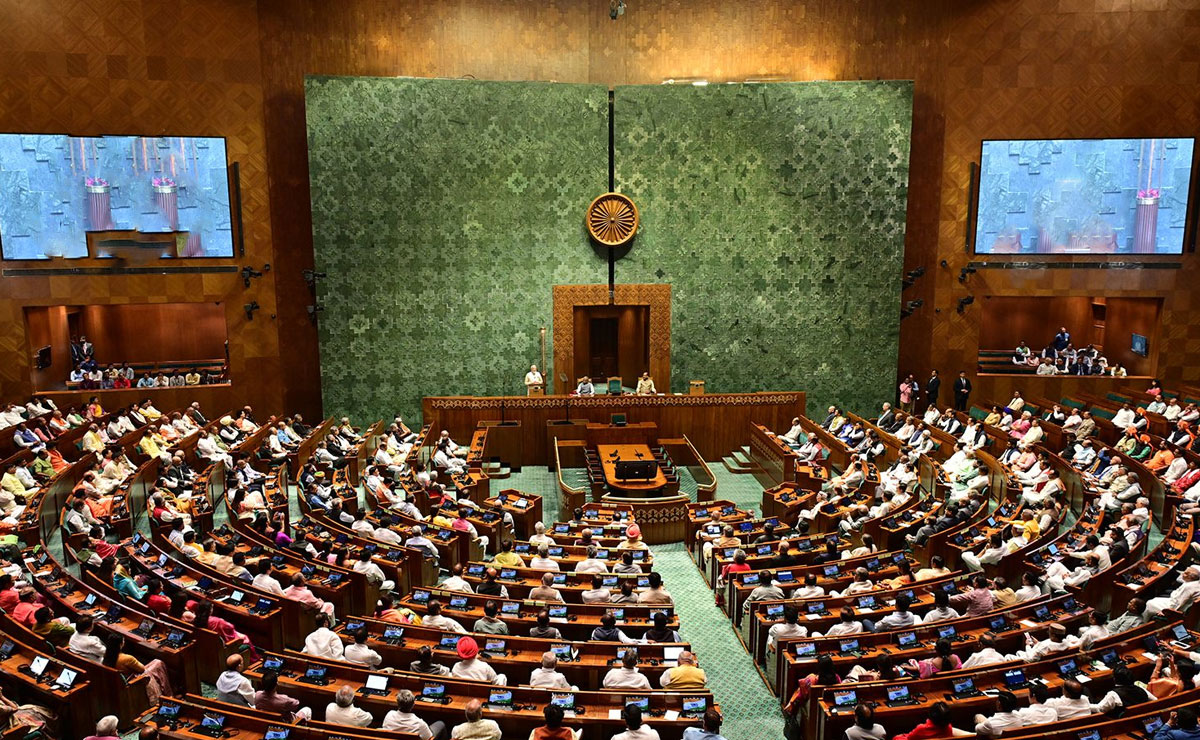

New Delhi: Parliament, the most sacrosanct space in Indian democracy, is where political disagreement is settled by argument, not intimidation. But when the Speaker of the Lok Sabha advises a sitting Prime Minister to stay away from the House because of security concerns arising from the conduct of fellow MPs, something has gone profoundly wrong.
The events of February 4 are not merely an instance of parliamentary disruption; they are a disturbing rupture in democratic norms that demand serious reflection, particularly from the Congress party. Even as Congress leader Priyanka Gandhi Vadra has dismissed allegations of a February 4 assault plot targeting Prime Minister Narendra Modi as “outright lies”, the visuals from the Lok Sabha and the statement made by Speaker Om Birla tell a troubling story.
Taken together, they raise serious questions not merely about a protest gone wrong, but about the political mindset now guiding the Congress leadership. What’s happened to Congress is the first thought that comes to the mind of all right-thinking people who want the party to stand up to the BJP’s might and ask meaningful questions with the right political punch. But this is not the political fight. This is certainly not about ideological disagreement either.
It is about conduct so unprecedented that it will be remembered as a low point in parliamentary history. Priyanka Gandhi’s defence was brief and categorical. She claimed that the talk of an attack on the Prime Minister was completely false, and that Congress MPs were only protesting. She even accused the Prime Minister of “hiding behind the Speaker” to evade accountability. Other opposition leaders echoed this line, framing the episode as legitimate dissent that was deliberately misrepresented as violence.
Ordinarily, such explanations might have found some resonance. This time, they have not. The reason is simple: the public has seen the videos, and more importantly, has heard the Speaker of the Lok Sabha himself. Om Birla stated that he personally advised the Prime Minister not to enter the House on February 4 to deliver his reply to the Motion of Thanks.
His reason was stark — he said he had credible information and definite inputs suggesting that Congress MPs planned to surround the Prime Minister’s chair and potentially create an unforeseen incident. When the constitutional head of the House uses such language, it is no longer a matter of partisan interpretation. Birla went further, calling the conduct of the protesting MPs a “black spot” on the history of Parliament. That description alone should have prompted introspection within the Congress.
Instead, the party doubled down on denial. Criticism of the government, even sharp criticism, is not just permissible in a democracy — it is essential. But when protest crosses into physical intimidation or attempts to obstruct the House’s functioning, it ceases to be democratic dissent. Parliament is governed by rules, traditions, and codes of conduct precisely because passions can run high. Lawmakers are expected to uphold these norms, not test how far they can be stretched.
Rahul Gandhi has often been theatrically carrying a red-bound copy of the Constitution, projecting himself as its chief custodian. If constitutional values are indeed central to his politics, uncomfortable questions arise. Why was such a protest strategy permitted on February 4? Why was the possibility of chaos — even danger — allowed to loom over the House? Social media, predictably, has been rife with speculation and unverified claims about the nature of the inputs received by the Speaker.
Responsible commentary must separate conjecture from fact. What can be stated with certainty is that multiple senior BJP leaders, including Union ministers, have alleged that there was a deliberate attempt to physically prevent the Prime Minister from speaking. Union Minister Giriraj Singh claimed that opposition members planned to target treasury bench MPs, while Coal and Mines Minister G. Kishan Reddy directly accused Rahul Gandhi of orchestrating the disruption.
In a post on X, Reddy alleged that Congress leaders intended to stop the Prime Minister “at any cost” and suggested that women MPs were used as a shield to execute the plan. The Congress has rejected these charges, but the damage has already been done — not only because of what BJP leaders have said, but because the Speaker’s intervention lends institutional weight to concerns about safety and order. This episode fits into a larger pattern.
Over the past decade, Rahul Gandhi has repeatedly promised “big exposes” against the Modi government. Most have failed to translate into concrete outcomes. Allegations are made with flourish, headlines are generated, but follow-through is absent. The result is a politics of spectacle — what might be called a shoot-and-scoot approach — that excites supporters briefly but ultimately erodes credibility. In a healthy democracy, lawmakers are expected to debate fiercely yet responsibly.
When those entrusted with making laws are seen flouting the very norms that govern Parliament, the message sent to citizens is deeply corrosive. If rules do not bind elected representatives, why should they bind anyone else? What unfolded in the Lok Sabha on February 4 was not just a momentary lapse. It reflected a deeper malaise in Indian politics: the growing normalisation of ‘personalised’ disruption as a political tool.
Once norms are breached, restoring them becomes extraordinarily difficult. Today it may be an attempt to gherao the Prime Minister’s chair; tomorrow it could be something far worse. Parliament deserves better from all sides. The Congress, in particular, must ask itself whether such actions align with its stated commitment to constitutionalism.
Dissent is the lifeblood of democracy — but when dissent abandons discipline, it leads to a February 4 shocking situation — a blow to democracy. Rahul Gandhi would do well to reflect on that reality, but he may or may not. (Deepika Bhan can be contacted at [email protected])