
Serious Economic Alarm: Oil supply disruption from Iran-US war likely to be Pakistan’s ‘biggest economic threat’: Report
If the war between Iran and the United States escalates, "the single biggest economic threat to Pakistan will come from oil," with surging prices likely to lift inflation and making tax cuts harder, a report has said.

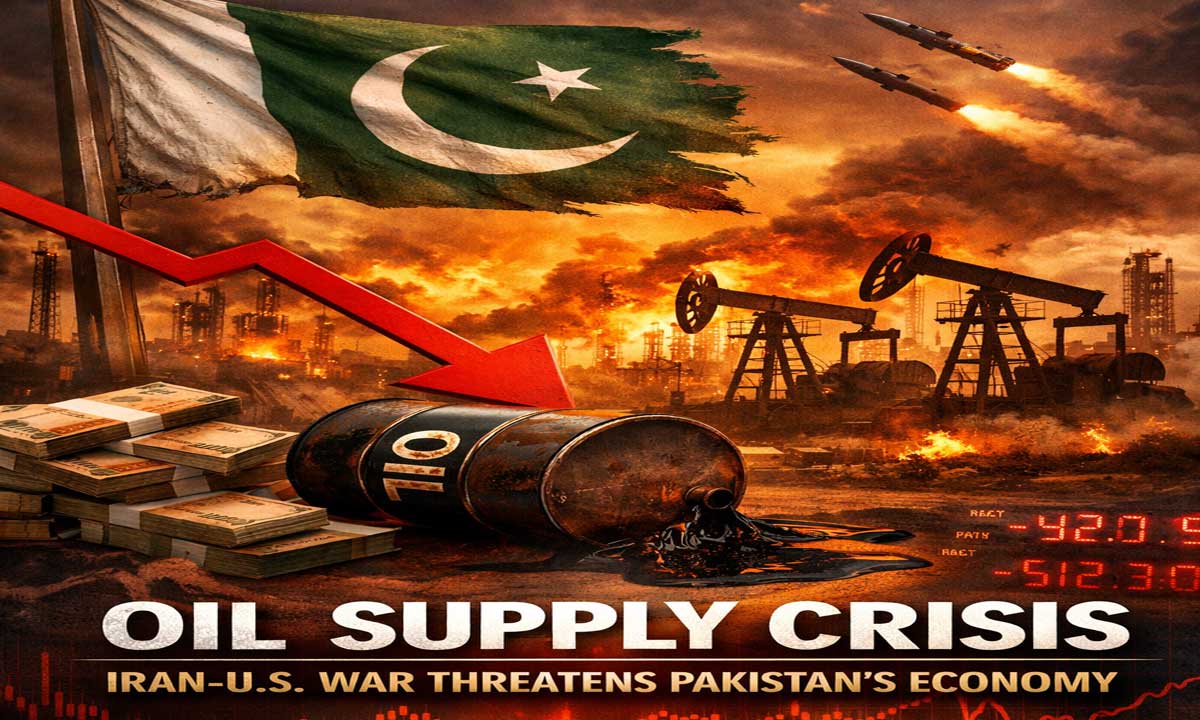
New Delhi: If the war between Iran and the United States escalates, “the single biggest economic threat to Pakistan will come from oil,” with surging prices likely to lift inflation and making tax cuts harder, a report has said.
The editorial piece from Dawn said inflation would rise again due to surging oil prices, making further policy rate cuts unlikely, and industry would face higher input costs, shrink fiscal space and limit the government’s ability to lower taxes or provide relief.
Table of Contents
“For every $10 increase in oil prices, Pakistan’s inflation typically rises by about 0.5–0.6 percentage points,” the editorial cited an expert.
A similar surge in oil prices will cause the current account deficit to increase by roughly $1.5–$2 billion, the report cited former chief executive officer of the Pakistan Business Council, Ehsan Malik.
“If prices were to climb to $100, the deficit could expand by $5–$7 billion on an annualised basis, potentially undoing recent gains that allowed FY25 to post a $2 billion current account surplus,” Malik said.
Rising oil prices and mounting economic pressure
Analysts recalled the economic horror in initial days of the Russia–Ukraine war that gripped Pakistan when Brent crude hovered around $100–125 per barrel, leading the country close to sovereign default.
“The war pushed up oil prices, widening Pakistan’s import bill and putting pressure on the exchange rate. The rupee dipped from around Rs 170 per dollar in early 2022 to a peak of Rs 305 on Aug 28, 2023, before stabilising in the Rs 270–280 range by end of that year,” the editorial said.
Iran’s retaliatory strikes on oil and gas facilities have heightened fears of supply disruption, lifting oil prices and stoking inflation worries. Tehran reportedly targeted oil and gas infrastructure in Saudi Arabia and threatened shipping in the strategic Strait of Hormuz.
Inflation risks and fiscal strain
The possibility of oil supply disruption has once again triggered serious concerns about Pakistan’s fragile economic stability. As a net energy importer, Pakistan remains heavily dependent on international crude markets. Any sustained spike in prices could quickly translate into higher domestic fuel costs, electricity tariffs and transportation expenses.
With inflation already a sensitive issue for households, even a modest increase in global oil benchmarks can ripple across the economy. Higher fuel prices tend to raise production and logistics costs, which in turn push up the prices of essential goods. This chain reaction could reverse recent gains in price stability and complicate efforts by policymakers to provide relief.
Industry stakeholders fear that elevated input costs would reduce competitiveness, particularly for export-oriented sectors that rely on affordable energy. A weakened export performance, coupled with a higher import bill, could place renewed pressure on foreign exchange reserves and the rupee.
Strategic vulnerability and economic outlook
The Strait of Hormuz, through which a significant portion of the world’s oil supply passes, remains a key strategic chokepoint. Any disruption to shipping lanes in the region would likely intensify volatility in global energy markets. For Pakistan, the risks are not merely theoretical but immediate and tangible.
Economic experts warn that if crude prices remain elevated for an extended period, Pakistan may face tough policy choices. Measures such as cutting development spending, increasing fuel levies, or tightening monetary policy could re-emerge as tools to stabilise the economy. However, each of these steps carries political and social implications.
While global markets continue to monitor tensions between Iran and the United States, Pakistan’s economic managers are likely to remain cautious. The country’s recent progress in narrowing the current account deficit and stabilising the currency could be tested again if geopolitical tensions escalate further.
The report underscores a stark reality: oil remains a critical vulnerability for Pakistan’s economy. In times of geopolitical uncertainty, energy prices can quickly become the defining factor shaping inflation, fiscal space, and overall economic stability.
Follow MunsifNews24x7 for latest updates.


