
Iran’s parliament starts process to adopt plan on Strait of Hormuz management
Iran's parliament has kicked off a process to approve a plan to exercise smart management over the Strait of Hormuz.

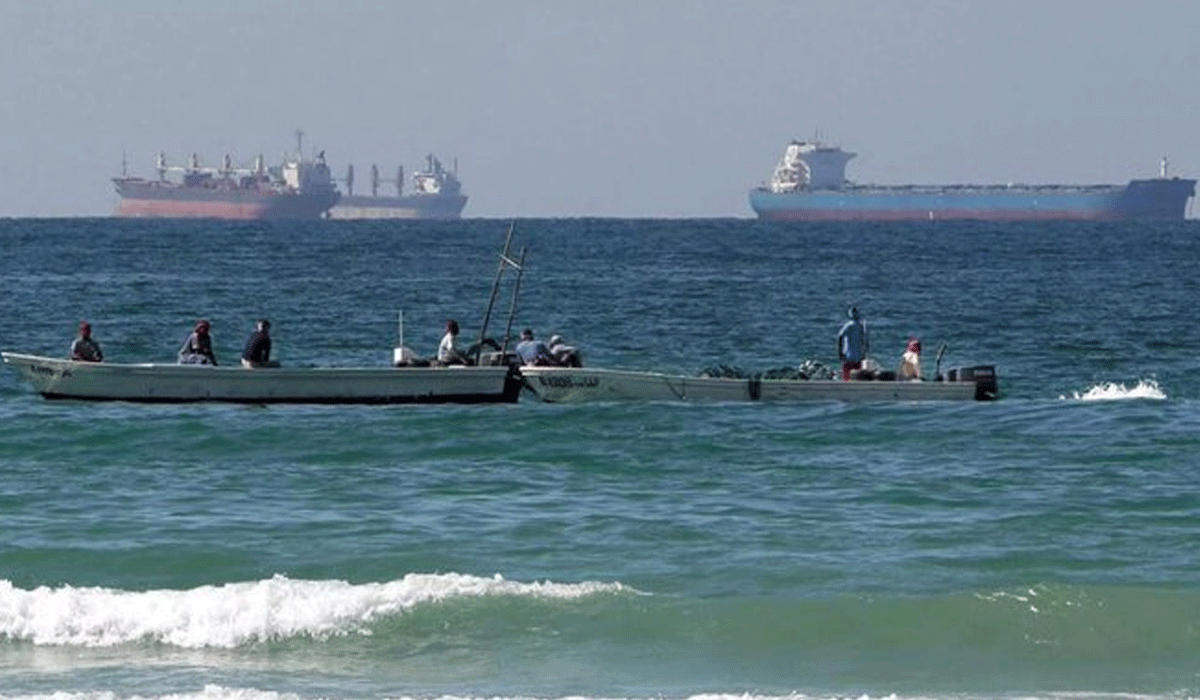
Tehran: Iran’s parliament has kicked off a process to approve a plan to exercise smart management over the Strait of Hormuz.
Abbas Goudarzi, spokesman for the Iranian parliament’s presiding board, said the new plan has been added to the legislature’s agenda after gathering over 250 signatures from the members of parliament (MPs). Parliament has 290 seats in total, Xinhua news agency reproted quoting the semi-official Tasnim news agency.
He said the plan aims to enhance the waterway’s security and collect tolls from vessels in the local currency, the rial.
Earlier on Sunday, senior MP Alireza Salimi said the double-urgency plan has four main objectives: ensuring shipping security, charging environmental polluters, collecting fees for guidance services, and establishing a regional development fund.
The development came with Iran’s tight control over the Strait of Hormuz, where it has, since late last month, barred passage for vessels linked to Israel, the United States and their allies.
Meanwhile, Iranian Foreign Minister Seyed Abbas Araghchi on Monday accused some European countries of remaining silent about “brutal attacks against the Iranian people” while focusing only on the conflict’s economic impact.
Araghchi spoke by phone with French Foreign Minister Jean-Noel Barrot to discuss the fallout from recent US-Israeli strikes on Iran and rising regional tensions, according to a statement from Iran’s Foreign Ministry.
He warned that Iran would continue defensive operations, including strikes on US and Israeli military bases in regional countries, and cautioned that any provocative moves in the Strait of Hormuz, including at the United Nations, could escalate the crisis further.
Barrot reaffirmed France’s opposition to attacks on civilian targets and called for stronger diplomatic efforts to end the war and restore regional stability, also expressing concern over tensions across West Asia, including in Lebanon, according to the Iranian statement.
On February 28, Israel and the United States launched joint attacks on Tehran and several other Iranian cities, killing Iran’s Supreme Leader Ali Khamenei, along with senior military commanders and civilians. Iran responded by launching waves of missile and drone strikes targeting Israel and US bases and assets in the Middle East.


