
Pakistan didn’t possess diplomatic prowess to navigate deeply contested US-Iran issues: Report
Pakistan should focus on securing its own peace before projecting itself as an arbiter of it on the international stage, a report highlighted on Thursday citing the recent failed Islamabad talks between Iran and the United States.

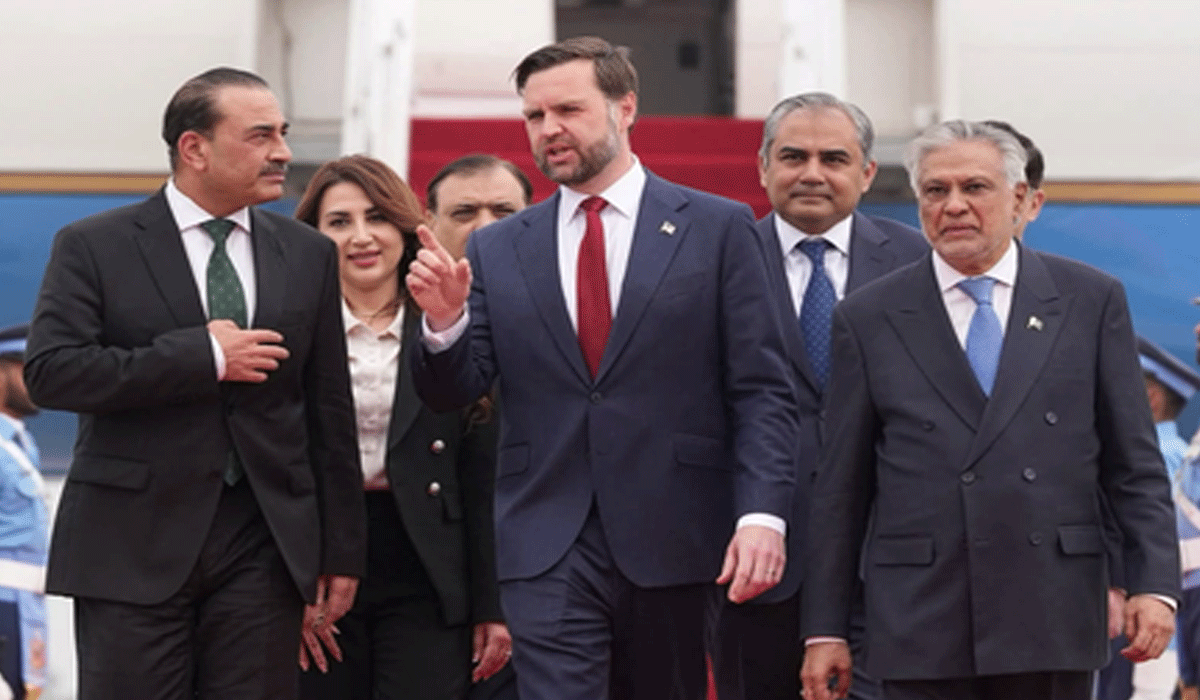

Washington: Pakistan should focus on securing its own peace before projecting itself as an arbiter of it on the international stage, a report highlighted on Thursday citing the recent failed Islamabad talks between Iran and the United States.
Writing in US-based ‘Inkstick Media’, Marcus Andreopoulos stated that while Islamabad’s role in brokering a temporary ceasefire may have resulted in greater global attention in the short term, any optimism quickly faded once US Vice President J D Vance announced that no agreement had been reached.
“Getting both parties to the negotiating table was one thing, but the real test lay in Pakistan’s ability to facilitate a lasting agreement for peace in the Middle East. An objective that the Islamabad talks ultimately failed to achieve,” wrote Andreopoulos.
The collapse of this initiative, he said, should not have come as a surprise.
“Pakistan did not possess the leverage or diplomatic prowess to navigate the deeply contested and disputed set of issues that dominated the Islamabad meeting, from access to the Strait of Hormuz and Israel’s ongoing war in Lebanon, to Iran’s nuclear programme, sanctions relief, and compensation.
Equally, in the back of its mind, Islamabad had to consider the implications of any agreement, particularly any concessions made to Iran, against its own relationship with Saudi Arabia. After all, Riyadh has already expressed deep concern over Tehran’s effective control of the Strait of Hormuz and reported imposition of passage fees,” he added.
He detailed how the West Asia conflict and the unrest due to the ongoing fighting between Afghanistan and Pakistan, have also cast a huge doubt on the durability of the recent Saudi-Pakistan Mutual Defence Agreement – a little more than six months since that treaty was signed – as neither Riyadh nor Islamabad appears prepared to come to the other’s aid.
“Trump’s war against Iran has not just exposed the practical military weaknesses of the Saudi-Pakistan pact, but it has also underscored the fundamental differences in political objectives between the two countries. Since Hamas-led fighters launched its attack on Oct. 7, 2023 and Israel began its war in Gaza, Islamabad has sought to lend its diplomatic support to Tehran while attempting to avoid antagonizing Saudi Arabia or open itself up to condemnation from the US.
“Equally, it has embarked on a charm offensive with the Trump administration, nominating the President for the Nobel Peace Prize on two separate occasions, and acting as a founding member of the so-called ‘Board of Peace’. Pakistan had been able to sustain this seemingly contradictory foreign policy without objection — until now,” opined Andreopoulos.
Citing the incident involving hundreds of Pakistanis turning violent outside the US Consulate in Karachi following the death of Iranian Supreme Leader Ayatollah Ali Khamenei, he mentioned that, despite Pakistan PM Shehbaz Sharif‘s desire to remain in US President Donald Trump’s good books, there were clear political restrictions on Pakistan coming out enthusiastically in support of Washington’s actions in the Middle East.
“What happens in the Middle East now remains uncertain. One thing is for sure: The Saudi-Pakistan defence pact requires a fundamental rethink if it is to regain its credibility as an effective deterrent. When it was signed last September, the treaty attracted significant enthusiasm. But there is still no indication either Islamabad or Riyadh will come to the backing of the other, leaving the agreement largely devoid of any substance. Whether the pact will even survive the latest hostilities in the Middle East and South Asia seems doubtful. What good is a pact, after all, if it cannot deter conflict and ensure military support from its signatories?” he concluded.


