
Supreme Court refuses to intervene in Meenakshi Natarajan nomination rejection row
In a major setback to Congress leader Meenakshi Natarajan, the Supreme Court on Friday declined to interfere with the Returning Officer's decision rejecting her nomination for the Rajya Sabha elections from Madhya Pradesh over the alleged non-disclosure of a criminal case in Telangana.

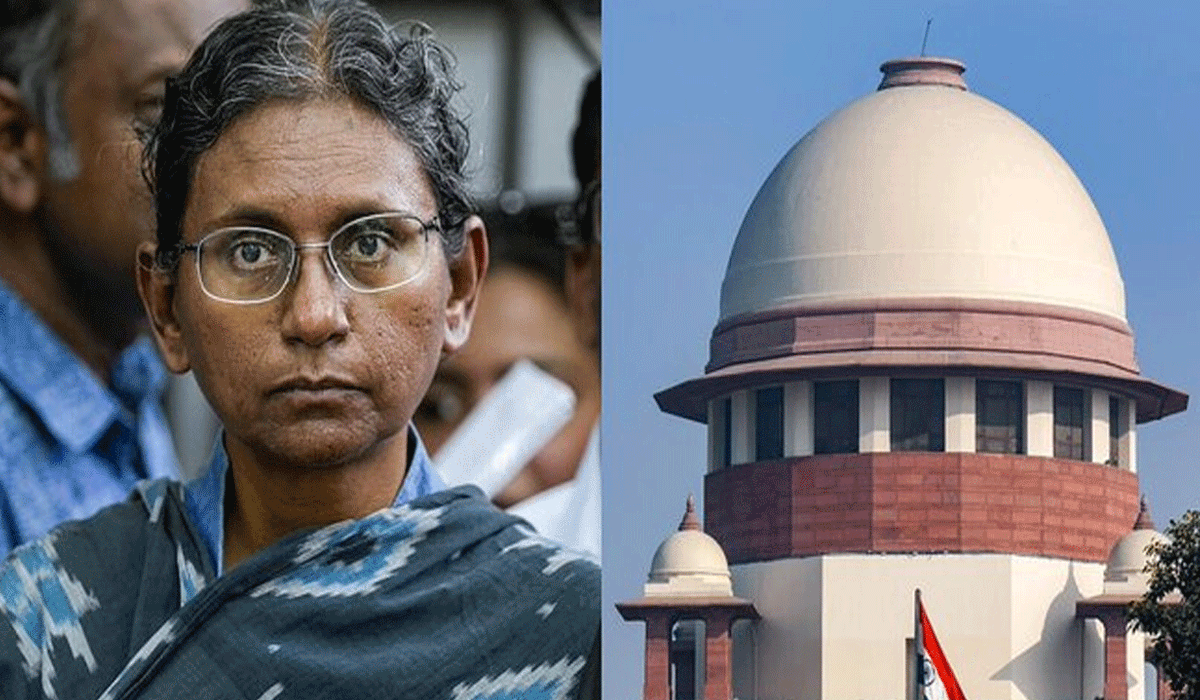
New Delhi: In a major setback to Congress leader Meenakshi Natarajan, the Supreme Court on Friday declined to interfere with the Returning Officer’s decision rejecting her nomination for the Rajya Sabha elections from Madhya Pradesh over the alleged non-disclosure of a criminal case in Telangana.
The court observed that once a Returning Officer rejects a nomination paper, the statutory remedy available to an aggrieved candidate is to approach the Election Commission. The court, therefore, refused to grant relief and left it open for Natarajan to approach the poll panel.
Appearing for Natarajan, senior advocate Abhishek Manu Singhvi argued that the rejection of the nomination was legally unsustainable as the alleged case cited against her did not meet the disclosure requirements prescribed under the election law.
Singhvi contended that the Representation of the People Act and Form 26 of the nomination affidavit require disclosure only in cases where charges have been framed by a competent court or where a court has taken cognisance of an offence. In the present matter, he submitted, neither condition had been satisfied.
Referring to the Telangana case that formed the basis for the rejection, Singhvi told the court that it was merely a private complaint in which no cognisance had been taken by any court. He further argued that the incident referred to in the complaint allegedly took place nearly three years before Natarajan was appointed as the Congress in-charge for Telangana, making any attempt to link her to the matter legally untenable.
However, the Supreme Court held that the challenge essentially pertained to the Returning Officer’s decision and that the appropriate course available under the election law framework was to approach the Election Commission.
“The petitioner is free to approach the Election Commission again,” the court observed while disposing of the plea.
The development comes amid a politically charged contest for the Rajya Sabha seat in Madhya Pradesh, where the rejection of Natarajan’s nomination had triggered a sharp confrontation between the Congress and the BJP, with the opposition party alleging procedural irregularities and misuse of electoral processes.
The three BJP candidates were declared elected unopposed after the deadline for withdrawal of candidatures ended on Thursday.


