
KIMS Hospitals kondapur team successfully performs complex surgery for a diifcult cancer after an 8 year wait.
The surgical gastroenterology team at KIMS Hospitals, Kondapur, has successfully removed a rare and highly complex functioning paraganglioma from a woman who had been suffering from debilitating symptoms for nearly eight years.

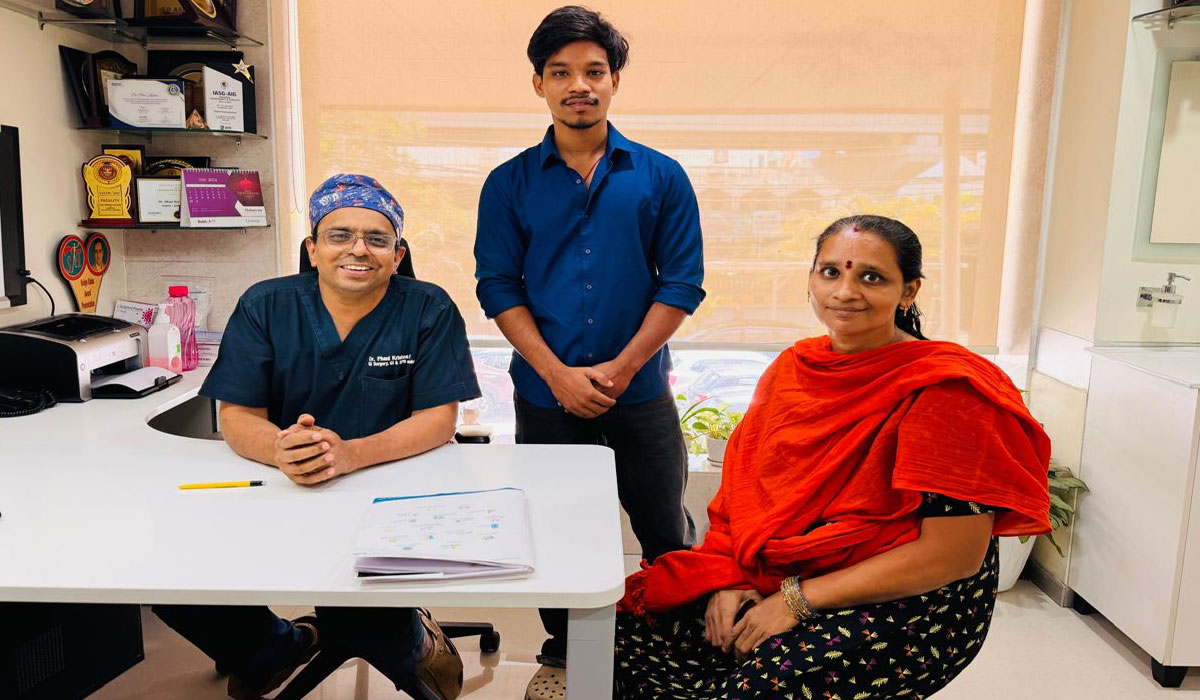
Hyderabad: The surgical gastroenterology team at KIMS Hospitals, Kondapur, has successfully removed a rare and highly complex functioning paraganglioma from a woman who had been suffering from debilitating symptoms for nearly eight years. The patient was treated at several prestigious institutes in North and South India. Twice surgery was attempted and abandoned due to difficulties. She was taking 4 medicine to control her blood pressure because of the hormones secreted. In addition to a critical location, handling of tumor has to be done very carefully to avoid sudden hormonal spikes during surgery.
The intricate 10-hour surgery involved advanced vascular reconstruction techniques to safely remove the tumour while preserving blood supply to vital organs.
Sharing details of the case, Dr. Ravula Phani Krishna, Senior Consultant Surgical Gastroenterologist and HPB surgeon, said “the patient was diagnosed with a functioning paraganglioma, an uncommon neuroendocrine tumour that secretes excessive catecholamine hormones. The hormonal activity had resulted in uncontrolled hypertension, recurrent infections, and dizziness and significantly affected her quality of life.
The case was particularly challenging because the tumour was located behind the pancreas and had encased several major blood vessels, including the celiac trunk, superior mesenteric artery (SMA), portal vein and the aorta, which supply blood to the liver, intestines and lower limbs. Owing to the high surgical risk associated with involvement of these critical vessels, the patient had previously been turned down by several leading hospitals.
After a detailed multidisciplinary evaluation at KIMS Hospitals, Kondapur, the surgical team decided to proceed with the operation using vascular reconstruction techniques routinely employed in complex liver transplant procedures. During the 10-hour surgery, the tumour was completely removed, and the affected blood vessels were meticulously reconstructed to restore normal blood flow to the vital organs.
The patient made an uneventful recovery and was discharged in stable condition. She experienced complete relief from the symptoms that had troubled her for years and was also able to discontinue multiple medications previously required to control her blood pressure.
“Until recently, tumours involving major blood vessels were often considered inoperable because of the high risk of catastrophic bleeding and organ failure. However, advances in transplant surgery have enabled us to apply sophisticated vascular reconstruction techniques to complex oncological procedures. This has significantly expanded the scope of curative surgery for patients who were once considered beyond surgical treatment,” Dr. Phani Krishna said.
He explained that functioning paragangliomas are rare neuroendocrine tumours capable of releasing large amounts of catecholamines, leading to severe hypertension and potentially life-threatening cardiovascular complications. Successful management of such cases requires meticulous pre-operative planning, close coordination among multiple specialties and expertise in advanced vascular reconstruction.
Dr. Phani Krishna noted that this successful surgery demonstrates how the integration of hepatopancreatobiliary (HPB) surgery, liver transplantation and vascular surgery has made it possible to offer definitive treatment to patients with highly complex tumours that were previously considered unsuitable for surgery.
For more details: Munsif daily.com