
Sridhar Babu to inaugurate HIPLEX 2026, India’s third-largest Plastics Expo
Plastics industry welcomes the introduction of Polymer Currency Notes of Rs 10 and 20. According to them these note may go circulation by October or November this year.

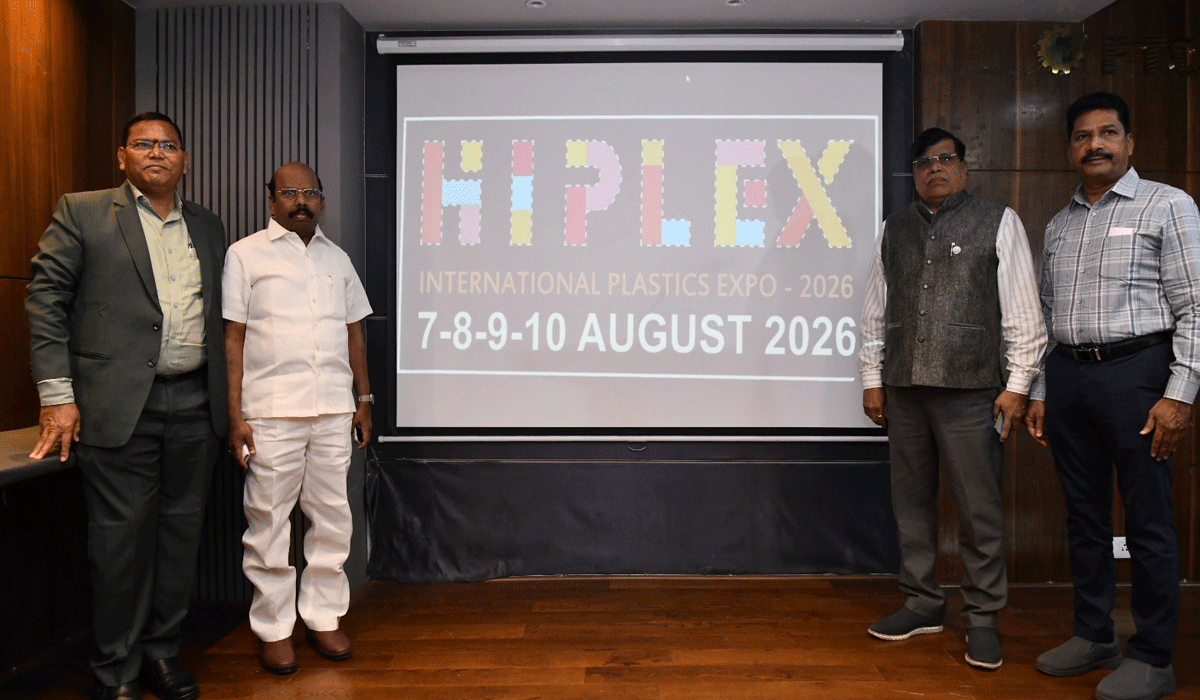

South & Central India’s Biggest Plastics Exhibition to feature 550 exhibitors and attract over 50,000 business visitors
Recycling Pavilion and Advanced Plastics to take centre stage
Plastics industry welcomes the introduction of Polymer Currency Notes of Rs 10 and 20. According to them these note may go circulation by October or November this year.
School benches made from recycled plastic are expected to be introduced in Telangana shortly,
Hyderabad, August 5, 2026: Telangana Minister for Information Technology, Electronics, Communications, Industries & Commerce D. Sridhar Babu will inaugurate HIPLEX 2026, South & Central India’s largest plastics exhibition and India’s third-largest plastics expo, at 11.30 am on August 7 at the HITEX Exhibition Centre, Hyderabad.
Organised by the Telangana and Andhra Plastics Manufacturers Association (TAAPMA), the four-day triennial exhibition will be held from August 7 to 10 across seven exhibition halls covering over 26,000 square metres, making it the largest edition of HIPLEX since its inception. The entry to the expo toll 6th August is free and can be revered online. From the inaugural days onwards the entry will be by way of tickets priced at Rs 300/- per person per day.
Other dignitaries expected to attend the inaugural include Krishna Aditya S., Special Secretary, Industries & Commerce, Government of Telangana; Arvind Mehta, Chairman, Governing Council, All India Plastics Manufacturers’ Association (AIPMA); Dr. Raju Desai, President, Plastindia Foundation; Dr. Dharmendra Gandhi, Vice President; and Dr. Sameer Joshi, Honorary Treasurer.
Addressing a curtain-raiser press conference at FTCCI, Narendra Baldwa, President, TAAPMA; Meela Jayadev, Convener, HIPLEX 2026; Anil Reddy Vennam, Senior Vice President, AIPMA; and N. Bhaskar Reddy, Senior Vice President, TAAPMA, said HIPLEX 2026 would be the biggest-ever edition of the exhibition.
More than 550 exhibitors will showcase products and technologies, while over 50,000 business visitors from India and abroad are expected to attend. Around 160 companies from Gujarat, 110 exhibitors from Telangana and Andhra Pradesh, and nearly 40 companies from China are participating.
The exhibition will feature live demonstrations of plastics processing machinery, moulds, raw materials, automation technologies, recycling systems, packaging innovations, specialty chemicals and finished plastic products.
Mr. Narendra Baldwa said TAAPMA, a 55-year-old apex industry body representing more than 1,000 members, has been working to promote technological advancement, sustainability and responsible growth in the plastics industry.
Speaking on the occasion, Mr. Meela Jayadev said plastics have become indispensable to modern life.
From a pin to an aeroplane, plastics are everywhere. The question today is not whether plastics should exist, but how responsibly they should be produced, used and recycled.”
He said India’s per capita plastic consumption is about 7 kg, compared to around 24 kg in China, indicating enormous potential for future growth.
One of the biggest attractions at HIPLEX 2026 will be the Dedicated Recycling Pavilion, showcasing the remarkable transformation of plastic waste into high-value products.
Visitors will witness how 25 discarded PET bottles can be converted into a wearable T-shirt, while a wide range of innovative products made from recycled plastics—including roads, railway sleepers, bricks, benches, bus shelters, furniture, roofing materials and even houses—will be on display.
The pavilion carries a simple yet powerful message: Without recycling, garbage remains garbage. With recycling, garbage becomes a resource.
Mr. Jayadev said India has already built over one lakh kilometres of roads using waste plastic, making it one of the world’s leading adopters of plastic road technology. Around one tonne of waste plastic can be utilised for every kilometre of road, resulting in stronger, more durable and water-resistant roads.
He announced that school benches made from recycled plastic are expected to be introduced in Telangana shortly, reflecting the growing acceptance of recycled plastic products in public infrastructure.
The Recycling Pavilion will also showcase global innovations including plastic houses, recycled plastic bridges, plastic boats, bottle-to-fashion technologies and sustainable construction materials, demonstrating how discarded plastic is becoming tomorrow’s raw material.
Visitors will also learn how recycled plastic furniture outlasts conventional materials. Unlike wood, it neither rots nor attracts termites. Unlike metal, it does not rust. Many such products last 25 to 50 years and can themselves be recycled again.
Mr. Jayadev said plastics today extend far beyond packaging and consumer goods.
Advanced engineering plastics are replacing steel, copper and wood in several applications because of their strength, durability and lightweight properties. Today, plastics are extensively used in aerospace, defence, automobiles, electronics, precision engineering and renewable energy.
Modern medical-grade polymers are increasingly used in artificial joints, cardiovascular devices, life-saving medical equipment and components of next-generation artificial heart systems.
From hospitals to highways, from satellites to sustainable housing, plastics are quietly transforming modern life,” he observed.
Welcoming the Government of India’s move towards introducing ₹10 and ₹20 polymer banknotes, Mr. Anil Reddy Vennam, Senior Vice President, AIPMA, described it as another milestone in the adoption of advanced polymer technology.
Polymer banknotes last significantly longer than paper currency, offer superior security features and reduce replacement costs. They are another example of how innovation is redefining the plastics industry.”
Mr. Reddy said that, based on industry discussions, polymer currency notes are expected to enter circulation later this year, though the rollout schedule rests with the Government of India and the Reserve Bank of India.
He expressed the view that the first generation of polymer banknotes should preferably be manufactured using virgin polymer to ensure the highest standards of quality, durability and security. As recycling technologies continue to advance, he believes future generations of polymer currency could progressively incorporate recycled polymers wherever technically and security-wise feasible.
Mr. Reddy added that the Government of India’s Extended Producer Responsibility (EPR) framework has mandated the phased use of recycled plastic content in several categories of plastic packaging, encouraging the industry to move steadily towards a circular economy.
He noted that India has emerged as one of the world’s largest plastic recycling ecosystems, w…
For more details: Munsif daily.com


