
AINU’s Mobile Kidney Health Initiative Reveals Growing Need for Early Screening
The Asian Institute of Nephrology and Urology (AINU) has screened more than 10,368 individuals through its Mobile Kidney Screening Initiative, highlighting a growing need for early detection of kidney diseases and stronger community awareness.

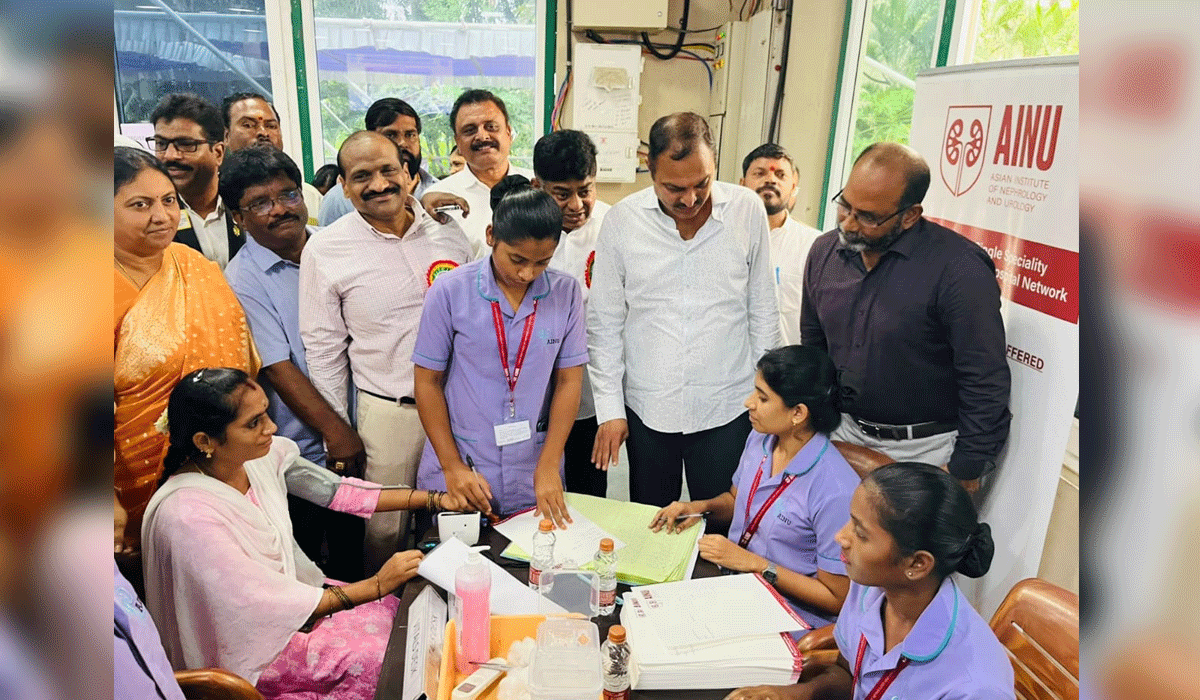
Hyderabad: The Asian Institute of Nephrology and Urology (AINU) has screened more than 10,368 individuals through its Mobile Kidney Screening Initiative, highlighting a growing need for early detection of kidney diseases and stronger community awareness.
Launched on World Kidney Day 2025, the initiative aims to bring preventive kidney health services closer to the public. Continuing into 2026, the programme has emerged as one of the largest community-level screening efforts in Telangana, offering key insights into the prevalence of chronic kidney disease (CKD) and its risk factors.
According to AINU, the screenings primarily covered young and middle-aged adults, a group often overlooked for routine kidney checks. The average age of participants was 39 years, with 66 per cent male and 34 per cent female representation. Notably, nearly 59 per cent of those screened were between 21 and 40 years, underlining the rising relevance of kidney health risks among younger populations.
One of the most significant findings was the high prevalence of hypertension, detected in 24.01 per cent of participants. Medical experts note that high blood pressure is a leading contributor to CKD, as it damages kidney blood vessels over time and reduces their ability to function effectively.
The screenings also identified cases of advanced kidney disease, with 2.46 per cent of individuals in Stage 3 CKD, 0.33 per cent in Stage 4, and 0.07 per cent in Stage 5. Though relatively small in proportion, these cases point to the presence of undiagnosed kidney impairment in the community.
Experts emphasised that CKD is often a “silent disease,” with symptoms appearing only in later stages. They said community-based screening plays a crucial role in early detection, identifying risk factors such as hypertension and diabetes, and encouraging timely medical intervention.
AINU highlighted that lifestyle and occupational factors are increasingly driving kidney disease, especially among working populations. Sedentary habits, high salt intake, poor hydration, stress, irregular work schedules, and the frequent use of over-the-counter painkillers are contributing to declining kidney health.
Recent estimates suggest that CKD prevalence in Telangana has nearly doubled over the past decade, reaching around 7.4 per cent of the adult population.
Doctors stress that many cases of kidney disease can be prevented or delayed through simple measures such as regular blood pressure monitoring, maintaining a healthy weight, reducing salt intake, staying physically active, and avoiding tobacco use.
They added that individuals with hypertension should undergo periodic kidney function tests to detect early signs of damage and prevent disease progression.


