
Asian Thalassemia Conclave 2026 to Spotlight India’s Prevention Strategy in Hyderabad
Hyderabad will host the Asian Thalassemia Conclave (ATC) 2026 on January 10 and 11, bringing together doctors, public health experts, policymakers, researchers, NGOs and patient groups from across India and Asia to deliberate on coordinated strategies to prevent thalassemia, one of the country’s most serious yet largely preventable genetic blood disorders.

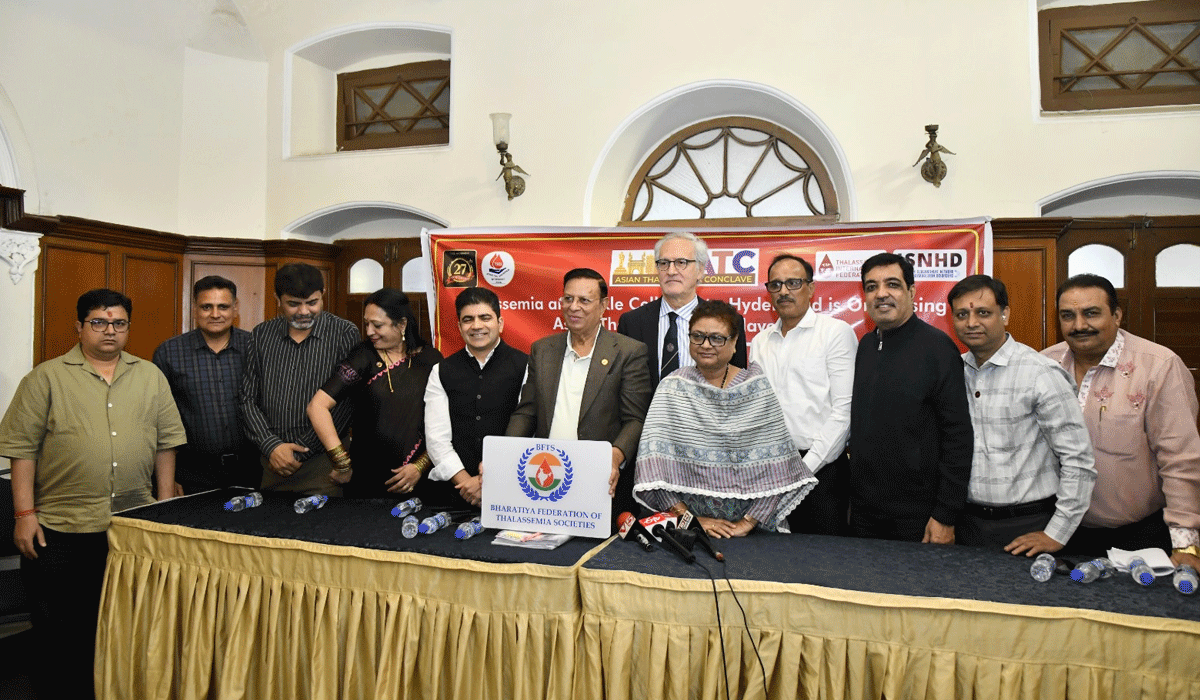
Hyderabad: Hyderabad will host the Asian Thalassemia Conclave (ATC) 2026 on January 10 and 11, bringing together doctors, public health experts, policymakers, researchers, NGOs and patient groups from across India and Asia to deliberate on coordinated strategies to prevent thalassemia, one of the country’s most serious yet largely preventable genetic blood disorders.
The two-day conclave is being jointly organised by the Thalassemia and Sickle Cell Society (TSCS), Hyderabad, and the Kamala Hospital Research Center. TSCS President Dr Chandrakant Agrawal recently met Telangana Health Minister Damodar Raja Narasimha to brief him on the objectives of the conclave. The minister welcomed the initiative, appreciated its strong focus on prevention, and conveyed his intention to attend and formally inaugurate the event, reaffirming the state government’s commitment to prevention-led healthcare strategies.
With over 27 years of work in thalassemia care, prevention and advocacy, TSCS is the world’s largest NGO working exclusively for thalassemia patients. The organisation currently provides free, comprehensive treatment and long-term support to more than 4,588 patients, many of whom rely on it for regular blood transfusions and specialised care.
Over the years, TSCS has developed a robust ecosystem encompassing patient care, safe blood transfusion services, diagnostics, counselling, research and sustained awareness programmes. Its landmark intervention in Telangana’s Mahabubnagar district — which achieved 100 per cent prenatal screening of pregnant women for thalassemia — has emerged as a nationally recognised model demonstrating how systematic screening and genetic counselling can significantly reduce preventable thalassemia births.
Building on such successes, the Asian Thalassemia Conclave aims to take proven prevention models to a broader platform. Organisers have set a long-term vision of working towards a thalassemia-free India by 2035.
India continues to shoulder one of the world’s highest thalassemia burdens, with nearly 15,000 children born annually with thalassemia major, a severe and transfusion-dependent condition. Experts note that most of these births can be prevented through early screening, timely counselling and informed reproductive choices. However, gaps in awareness, uneven implementation of screening programmes and limited access to genetic counselling remain key challenges.
Sessions at the conclave will focus on prevention-first approaches, including premarital and antenatal screening, strengthening genetic counselling services, and integrating thalassemia screening into existing maternal and child health programmes. Ensuring a safe and reliable blood supply through stronger voluntary blood donation systems will also be discussed.
The conclave will additionally address disparities in access to treatment and long-term care, particularly in rural and underserved regions. Participants will explore strategies to strengthen referral systems, decentralise care, and improve affordability and continuity of treatment.
By bringing medical experts, researchers and policymakers together on a common platform, the Asian Thalassemia Conclave 2026 seeks to bridge the gap between clinical evidence and public policy. Patient advocates and families will also play a central role, sharing lived experiences and highlighting the emotional, social and financial challenges of managing the disorder, with the aim of shaping policies that are both effective and compassionate.
If you want, I can also provide:
- a shorter news brief
- a headline-focused rewrite
- or a social media–friendly version


