
Delhi courts Dhaka after BNP sweep, keeps close watch on ISI moves
Ties between India and Bangladesh are witnessing a reset following the massive win by the Bangladesh Nationalist Party (BNP).

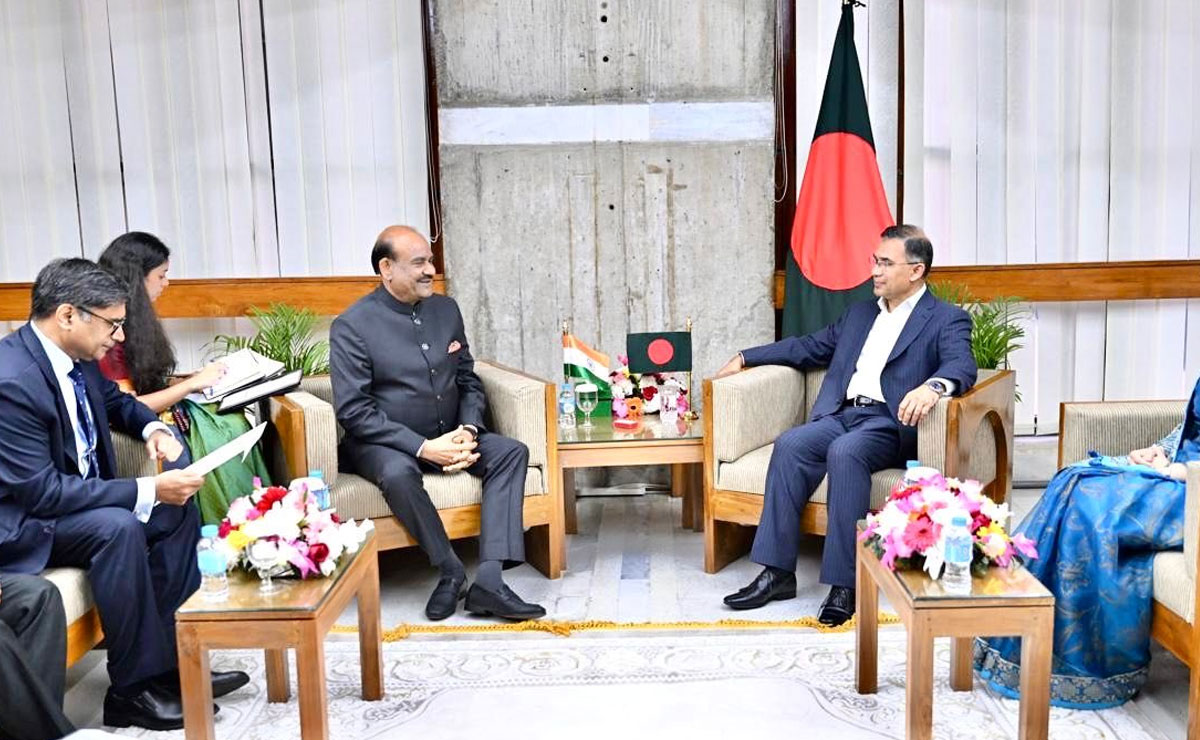
New Delhi: Ties between India and Bangladesh are witnessing a reset following the massive win by the Bangladesh Nationalist Party (BNP). Prime Minister Narendra Modi was one of the first to congratulate Tarique Rahman on his impressive victory. PM Modi even sent a letter to Rahman with Lok Sabha Speaker Om Birla, who attended the swearing-in ceremony.
India has also reached out to the second-largest party, the Jamaat-e-Islami. India’s foreign secretary Vikram Misri conveyed his greetings to Shafiqur Rahman, the supremo of the party. He also reaffirmed India’s enduring support for Bangladesh. The Jamaat chief, on his part, highlighted the deep civilisation bonds shared by India and Bangladesh, while expressing hope for stronger bilateral relations.
Officials say that there has been a lot of bad blood between the two countries since the ouster of Sheikh Hasina. Ties under the former caretaker of the interim government, Muhammad Yunus, had worsened. However, India understands the importance of maintaining good relations with its neighbours and hence wants to make a fresh start. Bangladesh is important in terms of trade and security, and hence good ties become all the more important, the official also added.
India finds the BNP to be more moderate and hence is hopeful of working closely with Dhaka. India’s bilateral trade with Bangladesh is around $10 billion annually, and hence it is important for relations to be fine. Bangladesh too recognises this and hence would go all out to improve ties with New Delhi. Another official said that the safety of Hindus in Bangladesh is of utmost priority. Under Yunus, not only were Hindus violently targeted, but many had been placed under arrest, too.
India would seek the immediate release of these persons while also wanting an assurance on the safety of the Hindus in Bangladesh. India would also seek the restoration of the damaged Temples in Bangladesh. An Intelligence Bureau official said that security is also a key issue. The security officials of both countries would be working closely to ensure that Bangladesh does not become a launch pad for Pakistan-backed terrorists. Indian agencies are also keeping a close watch on the engagement by the Pakistanis in India.
In recent months, groups such as the Rohingya Solidarity Organisation (RSO) and Arakan Rohingya Salvation Army (ARSA) have received funding from the ISI. Moreover, the ISI has been trying to bring these groups together with outfits such as Al-Qaeda in the Subcontinent (AQIS) and Jamaat-ul-Mujahideen Bangladesh (JMB).
A close watch is being kept on the radicalisation camps across the border areas. The agencies have learnt that these camps have plenty of Rohingya refugees, and the ISI has been looking at them as potential recruits. Both sides need to tackle this issue diligently since it threatens not just India, but Bangladesh too, an Intelligence Bureau official said. Pakistan too is closely watching New Delhi’s outreach programme following the BNP win.
Islamabad would try to derail any bilateral relations between the two countries. If it feels that Rahman is not falling in line, the ISI could orchestrate violence only to make the BNP government vulnerable. Rahman’s biggest challenge currently is internal security and the economy. The people have voted for him with a lot of hope, and he would not want to let them down, officials say.
Bangladesh watchers say that the win by the BNP is a positive start for India-Bangladesh ties. However, the road ahead would be a tricky one since there is the Pakistan angle to it. The ISI would try everything it could to derail ties between New Delhi and Dhaka. It is important for India to take one step at a time and ensure that complete ties are restored with Bangladesh, the experts also say.


