
Delhi enforces ‘No PUC, No Fuel’ rule from today; bars BS-VI vehicles from outside
The national capital continues to gasp under severe pollution, prompting the Delhi government to announce an expansive set of emergency and long-term measures targeting vehicular emissions, dust, waste and traffic congestion.

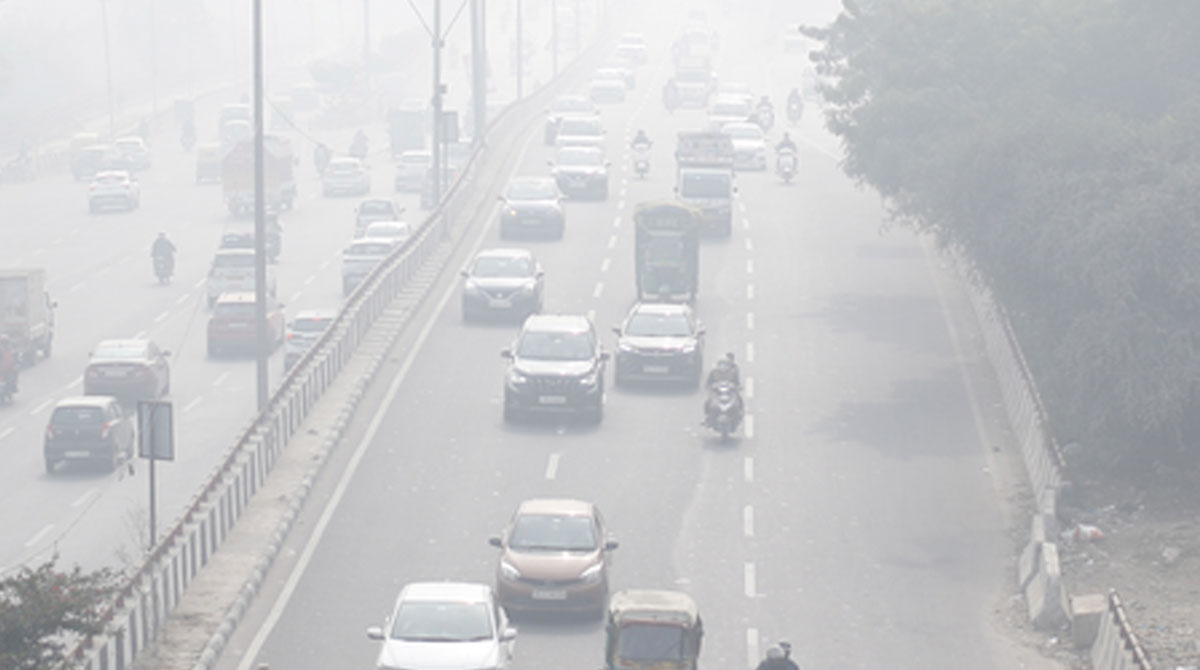
New Delhi: Under the Delhi government’s new measures to curb air pollution in the national capital, the ‘No PUC, No Fuel’ rule will come into force from Thursday.
Additionally, only BS-VI compliant vehicles registered outside Delhi will be allowed to enter the city from Thursday, while trucks carrying construction material will remain banned. Construction activity continues to be prohibited under GRAP norms, with strict action promised against violators.
The national capital continues to gasp under severe pollution, prompting the Delhi government to announce an expansive set of emergency and long-term measures targeting vehicular emissions, dust, waste and traffic congestion.
Earlier on Wednesday, Environment Minister Manjinder Singh Sirsa said the government was acting on multiple fronts as residents remained exposed to hazardous smog.
Addressing a press conference, Sirsa announced a complete overhaul of the Pollution Under Control Certificate (PUCC) system, the introduction of third-party monitoring, a city-wide car-pooling app, integrated traffic management reforms and large-scale deployment of mechanised road-cleaning equipment.
“Delhi government is considering an overhaul of the Pollution Under Control (PUC) certificate issuing system, as the existing centres are old with many shortcomings. A third-party monitoring system will be brought in,” he said.
Follow for more details: munsifdaily.com
Sirsa said Wednesday was the last day for vehicle owners to obtain valid PUC certificates. “From tomorrow, polluting vehicles will not be given fuel,” he said, adding that ANPR cameras, voice alerts at petrol pumps and police deployment would ensure compliance.
To enforce the fuel ban, 126 checkpoints have been set up across Delhi, including border points, with deployment of 580 police personnel and 37 Prakhar Vans.
Enforcement teams from the transport department will also be stationed at petrol pumps and border checkpoints. Sirsa urged citizens to cooperate, saying, “Delhiites are requested not to argue with officers at petrol pumps or borders and checkpoints. This step is for your health and your children’s future.”
The government has also mandated 50 per cent work from home across government and private establishments to reduce vehicular load.
The Delhi government is also exploring partnerships with Google Maps and Map India to identify traffic congestion hotspots using live data.
Sirsa said he chaired a high-level meeting with Google Maps officials on Wednesday to explore the creation of an integrated traffic management system that could dynamically adjust traffic signals based on real-time congestion.
“This collaboration will allow us to use live traffic data to identify emerging hotspots, decongest roads faster and reduce vehicular idling emissions,” he said.
The government plans to identify at least 100 vehicular pollution and traffic hotspots for targeted intervention. Sirsa noted that pollution hotspots in Delhi have increased from 13 during the previous AAP government’s tenure to 62 at present.
Also Read: Gold, silver prices fall on MCX ahead of US inflation data
Highlighting pollution sources, Sirsa said, “There are four sources of pollution in Delhi, vehicular, industrial, dust and solid waste.”
The Public Works Department has been directed to deploy 70 mechanical road sweepers and water sprinklers, while around 1,000 litter pickers and 300 water sprinklers will operate across the city.
The Delhi government will provide Rs 2,700 crore over 10 years to the Municipal Corporation of Delhi for procuring mechanised sweepers and litter pickers.
The PWD has also launched a permanent pothole-monitoring mechanism led by a third-party survey agency under an Annual Rate Contract model to ensure repairs within 72 hours. The agency will conduct year-long surveys, identify potholes, take photographs and submit real-time data, as potholes significantly contribute to dust pollution.
The environment minister also announced an MoU with IIT-Madras to identify and develop “smog-eating” surfaces.
These titanium oxide-based photocatalytic coatings, already used in some global cities, can reduce nitrogen dioxide and harmful hydrocarbons. Pilot testing will be carried out in selected areas of the city.


