
Delhi families with Rs 1.20 lakh annual income to get ration cards: CM Rekha Gupta
Delhi families with an annual household income of up to Rs 1.20 lakh will now be eligible for a ration card, up from the earlier cap of Rs 1 lakh, Chief Minister Rekha Gupta announced on Saturday while sharing a recent Delhi Cabinet decision.

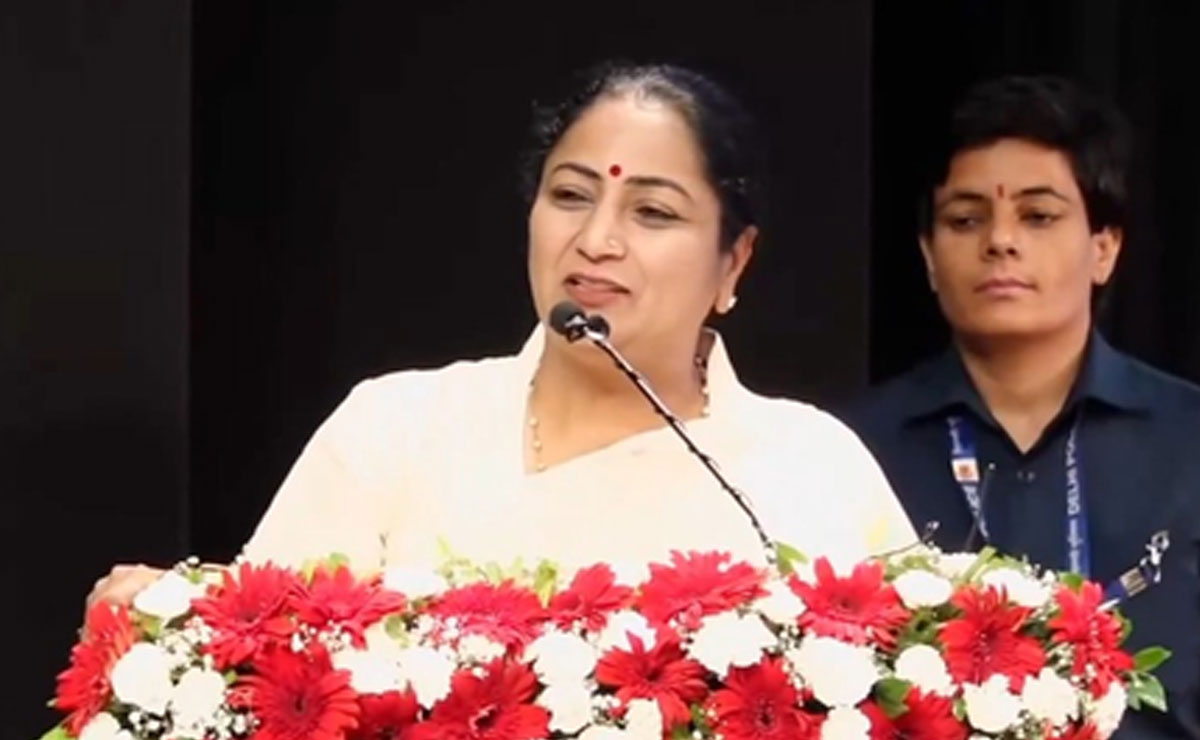
New Delhi: Delhi families with an annual household income of up to Rs 1.20 lakh will now be eligible for a ration card, up from the earlier cap of Rs 1 lakh, Chief Minister Rekha Gupta announced on Saturday while sharing a recent Delhi Cabinet decision. She said the decision has been taken to make Delhi’s food security system more equitable and focused on the poor.
Under the new rules, families will not be eligible if they own property in A to E category colonies in Delhi, pay income tax, own a four-wheeler (excluding one commercial vehicle used for livelihood), have any family member in government service, or have an electricity connection exceeding 2 kilowatts, according to an official statement.
The Chief Minister made it clear that food security is not an act of charity, but a right of the poor. The government’s resolve is that no needy person should go hungry merely because of shortcomings in the system, the statement said. According to official data, due to the absence of clear rules for several years, more than 3,89,883 applications have remained pending in Delhi, and over 11,65,965 people are still waiting for food security benefits.
These individuals will now be included in a transparent, need-based system. The Chief Minister stated that under the new rules, the income limit for identifying priority households has been made more realistic. Families with an annual household income of up to Rs 1.20 lakh will now fall within the ambit of food security, compared to the earlier limit of Rs 1 lakh. An income certificate issued by the Revenue Department has been made mandatory, thereby ending the system of self-certification, she said.
The Chief Minister said that the ‘first-come, first-served’ system will now be discontinued. Applications will be examined, approved, and prioritised through district-level committees. This will ensure that those who need the food subsidy the most are placed higher on the list. She explained that the district-level committee has been designated as the central unit for priority determination.
It will be chaired by the District Magistrate (DM) or Additional District Magistrate (ADM) and will include the local MLA and officials. The committee will scrutinise applications and arrange them in order of priority so that the most deserving families receive benefits first. Additionally, a 20 per cent waiting list will also be prepared to ensure that vacancies are filled in a timely manner. The Chief Minister said that a huge backlog had accumulated over the years due to the lack of clear rules.
The government conducted a review of food security system data, which revealed several irregularities. Based on this verification, those who were not genuinely eligible were removed from the list. Data verification revealed around 6,46,123 beneficiaries whose income details did not match the prescribed norms. About 95,682 individuals had remained in the system for a long time without availing any benefits. Nearly 23,394 duplicate names were found, while in 6,185 cases benefits were recorded in the names of deceased persons. Around 56,372 people had themselves requested to opt out of the system. Owing to all these reasons, a total of more than 8,27,756 vacancies were created.


