
Hyderabad Conference Advances U.S.-India TRUST Initiative in AI and Cybersecurity
The United States and India took a significant step forward in deepening cooperation on artificial intelligence (AI) and cybersecurity as a high-level conference in Hyderabad advanced the U.S.-India TRUST (Transforming the Relationship Utilizing Strategic Technology) initiative.

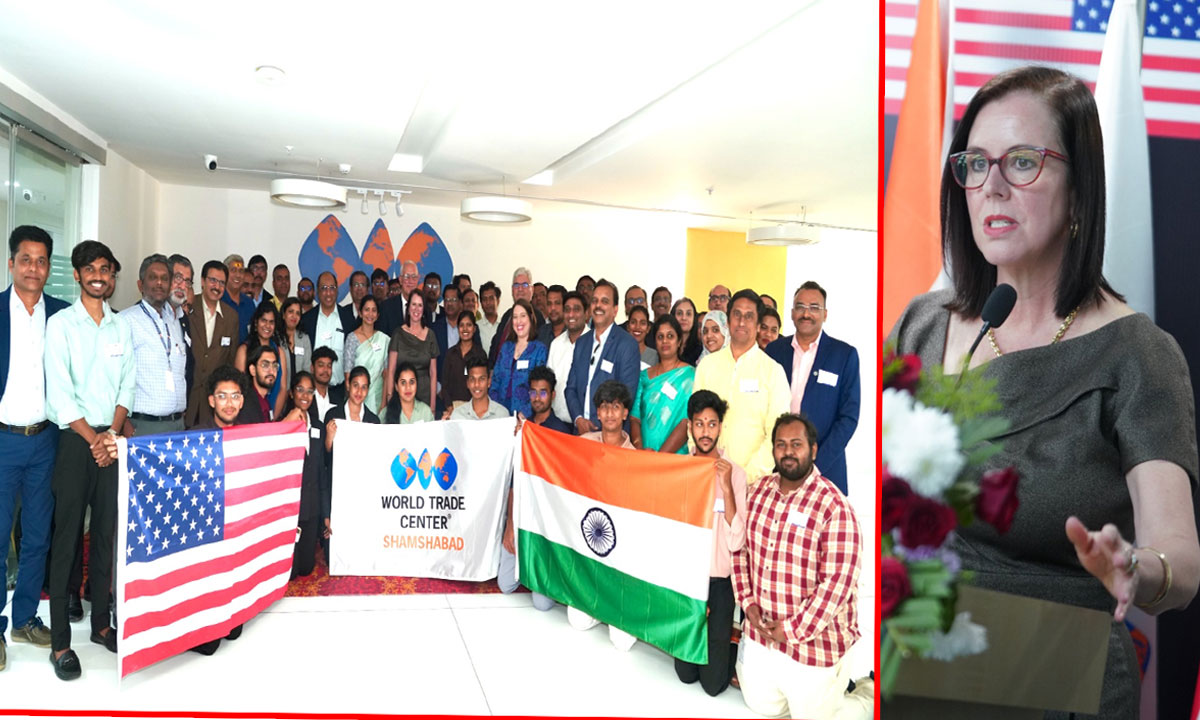
The United States and India took a significant step forward in deepening cooperation on artificial intelligence (AI) and cybersecurity as a high-level conference in Hyderabad advanced the U.S.-India TRUST (Transforming the Relationship Utilizing Strategic Technology) initiative.
The conference, titled Leveraging U.S.–India TRUST: Industry Academia Partnerships in AI & Cybersecurity was organised by the U.S. Consulate General Hyderabad in collaboration with the World Trade Center, Shamshabad & Visakhapatnam, at the World Trade Center in the Financial District. It brought together senior government officials, academics, policymakers, and industry leaders from both countries to translate strategic commitments into actionable partnerships.
The TRUST initiative was launched in February 2025 by U.S. President Donald Trump and Indian Prime Minister Narendra Modi to catalyse collaboration across critical and emerging technologies, including AI, semiconductors, quantum computing, biotechnology, energy, and space. These sectors are seen as central to national security, economic competitiveness, and long-term technological leadership.
Addressing the gathering, U.S. Consul General Laura Williams said the TRUST initiative reflects Washington’s focus on advancing national security and economic interests through results-driven partnerships. “By working with India, we are building secure technology ecosystems that protect American innovation, strengthen supply chains, and create new opportunities for U.S. leadership in critical and emerging technologies,” she said. She also referred to the U.S.-India COMPACT framework, affirmed by U.S. Secretary of State Marco Rubio in September 2025, aimed at enhancing cooperation in trade, defence, energy, and technology.
Y Varaprasad Reddy, Chairman of the World Trade Center, Shamshabad & Visakhapatnam, described the initiative as a defining moment for strengthening academic and industry linkages between the two countries. He said the conference was designed to foster innovation, build confidence, and promote knowledge exchange in fast-evolving domains such as AI and cybersecurity.
The conference focused on turning policy vision into practical outcomes. The TRUST framework seeks to build resilient supply chains, accelerate AI infrastructure development, and foster innovation ecosystems that enhance technological capabilities in both nations while aligning collaboration with security and economic priorities.
Delivering the keynote address, Dr. James Lerums of Purdue University highlighted the critical role universities play in research, skills development, and international technology partnerships. He underlined the importance of building a strong talent pipeline to support AI and cybersecurity capabilities.
Four thematic sessions formed the core of the conference discussions. These included translating policy into practice for AI and cybersecurity ecosystems, bridging innovation through collaboration, showcasing successful U.S.-India academic partnership models, and outlining a long-term roadmap for cooperation through skills development, joint research, and common standards for safe AI deployment.
Panel discussions examined the growing role of AI in detecting and responding to cyber threats, an area increasingly vital for protecting national security and digital infrastructure. Participants also discussed how government-supported programmes in both countries can accelerate joint research while promoting responsible AI development and robust cybersecurity standards.
The event highlighted U.S. technological leadership alongside India’s emergence as a major hub for AI innovation, driven by a strong startup ecosystem and deepening academic-industry partnerships. Representatives from leading universities, technology companies, and policy institutions from both countries participated, reflecting the multi-stakeholder approach at the heart of the TRUST initiative.
The conference concluded with a forward-looking roadmap that emphasised expanding academic-industry research partnerships and establishing common standards for the safe and secure use of AI and digital technologies. Organisers said the event demonstrated the practical strength of the TRUST framework in building a future-ready U.S.-India partnership that supports innovation while keeping security and competitiveness at its core.
Follow MunsifNews24x7 for latest updates.


