
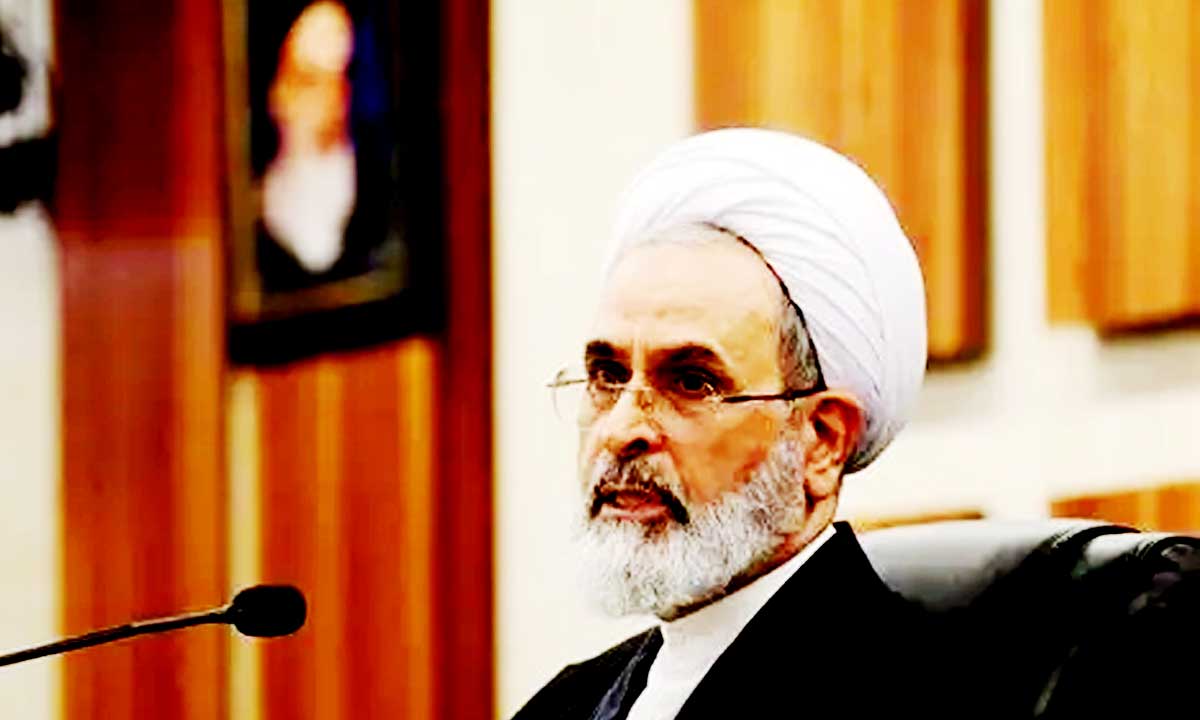
Tehran: Hours after long-time Supreme Leader Ali Khamenei was killed in a US-Israeli airstrike, Iran on Sunday named Ayatollah Alireza Arafi as his interim successor.
Ayatollah Khamenei, whose death in an attack on his residential compound in Tehran was announced by Iran, had been the Supreme Leader since 1989 after the passing away of the 1979 Iranian Islamic Revolution’s leader, Ayatollah Ruhollah Khomeini, in 1989.
Table of Contents
After announcing his death, the government said that a three-member council comprising President Masoud Pezeshkian, Judiciary Chief Gholamhossein Mohseni Ejei, and a jurist from the Guardian Council would oversee Iran’s leadership during the transitional period, as per the IRNA news agency.
Under Iran’s constitution, the council assumes leadership duties until a successor is appointed by the Assembly of Experts, an 88-member clerical body that holds ultimate authority over the country’s political system, armed forces, and key institutions.
Transitional Council to Oversee Leadership Shift
According to RT, Shia cleric and Islamic jurist Ayatollah Arafi was born in 1959 in Meybod in central Iran.
Head of Iran’s Centre for the Management of Islamic Seminaries, and Director of the revered Qom Seminary since 2016, he is also a member of the powerful Guardian Council, a constitutional body that vets legislation and oversees elections.
He has served as President of Al-Mustafa International University from 2008 to 2018 and is a permanent member of the Supreme Council of the Cultural Revolution since 2011.
The announcement of Ayatollah Arafi’s appointment marks a significant development in Iran’s political and religious leadership at a time of heightened regional tension. His interim role comes amid domestic mourning and international scrutiny following the reported airstrike that resulted in the death of Ayatollah Khamenei.
The three-member council, as outlined in the constitution, is tasked with ensuring continuity in governance and preventing any administrative vacuum. The Assembly of Experts, responsible for appointing the Supreme Leader, is expected to convene in due course to decide on the permanent successor.
Background and Religious Credentials of Ayatollah Arafi
Ayatollah Arafi’s long association with religious scholarship and institutional leadership positions him as a prominent figure within Iran’s clerical establishment. His tenure as Director of the Qom Seminary has been particularly significant, as the institution remains a central hub for Shia theological education and ideological discourse.
As a member of the Guardian Council, he has played a role in overseeing legislation and supervising electoral processes, reflecting his influence within the constitutional framework. His academic and administrative roles, including leadership at Al-Mustafa International University, have further cemented his standing within both national and international religious circles.
Observers note that his experience within multiple high-level bodies could provide stability during the interim phase. However, the broader political implications of the leadership transition will depend on the decisions of the Assembly of Experts and the evolving domestic and international context.
Constitutional Process and Future Outlook
Iran’s constitutional mechanism for succession is designed to ensure continuity and institutional stability. The Assembly of Experts holds the authority to appoint, supervise, and, if necessary, dismiss the Supreme Leader. Until such a decision is reached, the interim arrangement aims to maintain governance structures and operational command over key institutions.
The leadership transition unfolds against the backdrop of regional uncertainty and diplomatic strain. The coming days are expected to be crucial as political leaders, religious authorities, and security institutions coordinate to navigate this period.
Ayatollah Arafi’s appointment as interim Supreme Leader represents a pivotal moment in Iran’s contemporary history, marking the beginning of a new chapter in the nation’s political and religious leadership landscape.
Follow MunsifNews24x7 for latest updates.


