
What Is the Strait of Hormuz? Why the Iran War Is Shaking Global Oil Prices and Economy
The Strait of Hormuz closure during the Iran war is disrupting global oil shipments and pushing fuel prices higher. Learn why this strategic waterway is crucial to the world economy.

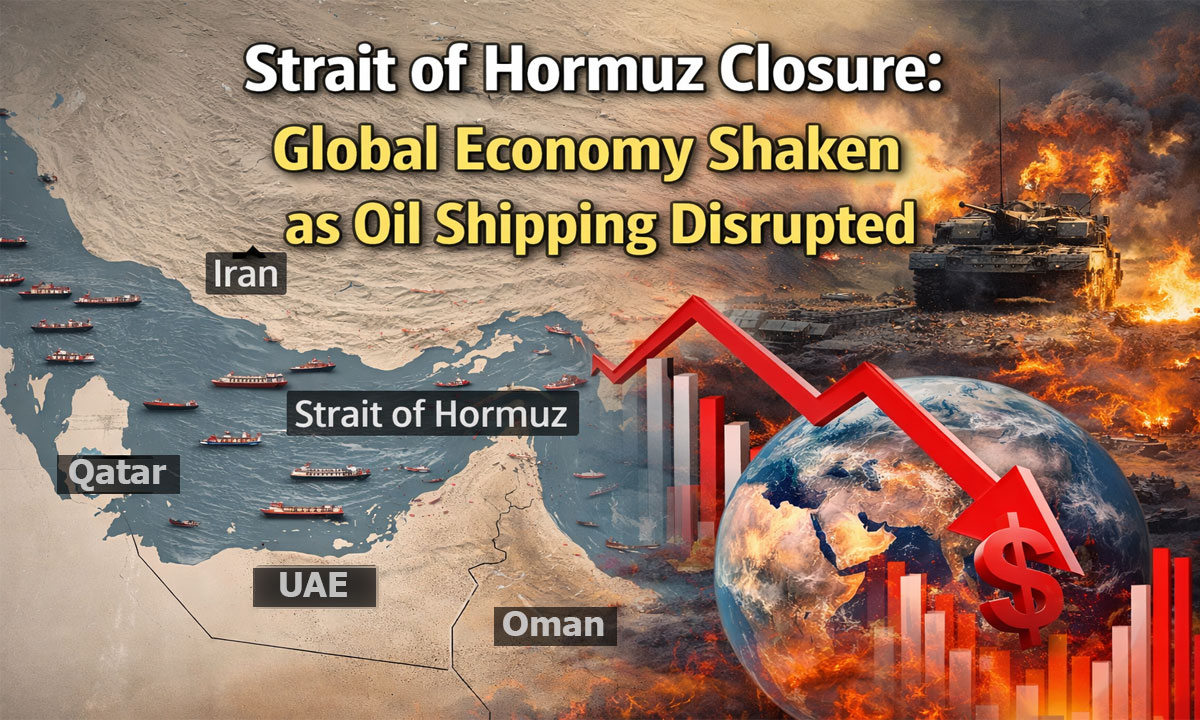
The Strait of Hormuz closure amid the Iran war has triggered global concern as this vital shipping route handles a major share of the world’s oil supply. Rising tensions in the Middle East have disrupted maritime traffic through the Strait of Hormuz, causing sharp reactions in global energy markets and raising fears of higher fuel prices worldwide.
Table of Contents
The Strait of Hormuz closure due to the Iran war is now being closely watched by governments, oil companies, and economists because the waterway plays a crucial role in transporting oil and gas from the Persian Gulf to global markets.
What is the Strait of Hormuz?
The Strait of Hormuz is a narrow waterway located between Iran and Oman, connecting the Persian Gulf to the Arabian Sea.
Key facts about the Strait of Hormuz:
- It is approximately 55 kilometers wide
- It connects major oil-producing countries to international markets
- It is one of the most important energy shipping routes in the world
Because of its strategic location, any disruption in the Strait of Hormuz shipping route immediately affects global energy supply and international trade.
Why the Strait of Hormuz Is So Important to Global Oil Supply
The Strait of Hormuz handles a massive portion of global oil transportation.
Important statistics include:
- Around 13 million barrels of oil pass through the strait every day
- This represents roughly 31% of global oil shipments
- Major exporters depend on the route to send oil worldwide
Countries heavily dependent on the Strait include:
- Saudi Arabia
- Iraq
- Kuwait
- United Arab Emirates
- Iran
For several of these nations, the Strait of Hormuz is the primary route for exporting oil to global markets.
Iran Announces Strait of Hormuz Closure
During the escalating Iran war and regional conflict, Iran announced the closure of the Strait of Hormuz, warning that ships entering the passage could face attacks.
The move immediately disrupted global shipping traffic.
Current impacts include:
- Maritime traffic through the strait has dropped by nearly 70%
- Dozens of oil tankers remain stranded in the Persian Gulf
- Global energy markets are reacting with rising prices
The announcement has intensified concerns about global oil supply disruptions and economic instability.
Oil Prices Already Rising Worldwide
The Strait of Hormuz closure during the Iran war has already affected oil markets.
Recent developments include:
- Brent crude oil prices rose to around $79 per barrel
- West Texas Intermediate reached about $71 per barrel
- Oil prices increased by 6–8% within days
These price increases are already beginning to influence fuel costs in several countries, including gasoline prices.
Energy analysts warn that if the Strait of Hormuz remains closed, global oil prices could rise further.
Lessons From Previous Global Oil Crises
History shows that disruptions to oil supply can trigger major economic consequences.
Examples include:
1973 Oil Crisis
- Oil exports were restricted to certain countries
- Global oil prices quadrupled within two months
- Several economies entered recession
1979 Oil Crisis
- The Iranian Revolution disrupted global oil production
- Oil prices doubled in a short period
- Fuel shortages hit many countries
These events demonstrate how conflicts affecting oil supply routes like the Strait of Hormuz can have far-reaching economic effects.
Why the Strait of Hormuz Closure Matters Today
The Strait of Hormuz closure in the current Iran war could potentially block millions of barrels of oil shipments every day.
A complete shutdown of the strait could lead to:
- Severe global oil supply disruptions
- Higher fuel prices worldwide
- Economic instability in many countries
- Rising costs for goods and transportation
Experts warn that even partial disruption of tanker traffic can significantly affect global energy markets.
Global Markets Watching the Strait of Hormuz Closely
As the Iran war continues and tensions rise in the Middle East, the Strait of Hormuz remains the most critical flashpoint for global energy supply.
The world’s attention is now focused on whether the Strait of Hormuz will remain closed or reopen, because its status will largely determine the future direction of oil prices and the global economy.
For now, the Strait of Hormuz closure during the Iran war continues to disrupt shipping, raise energy prices, and create uncertainty across global markets.
Follow MunsifNews24x7 for latest updates.


