
‘My Only Crime Was Being Afghan’: Deported Prisoners Allege Abuse in Pakistan Jails
Afghan prisoners being sent back from Pakistan jails have been recounting tales of abuse and repression in detention, with some claiming incarceration without reason, say reports from Kabul.

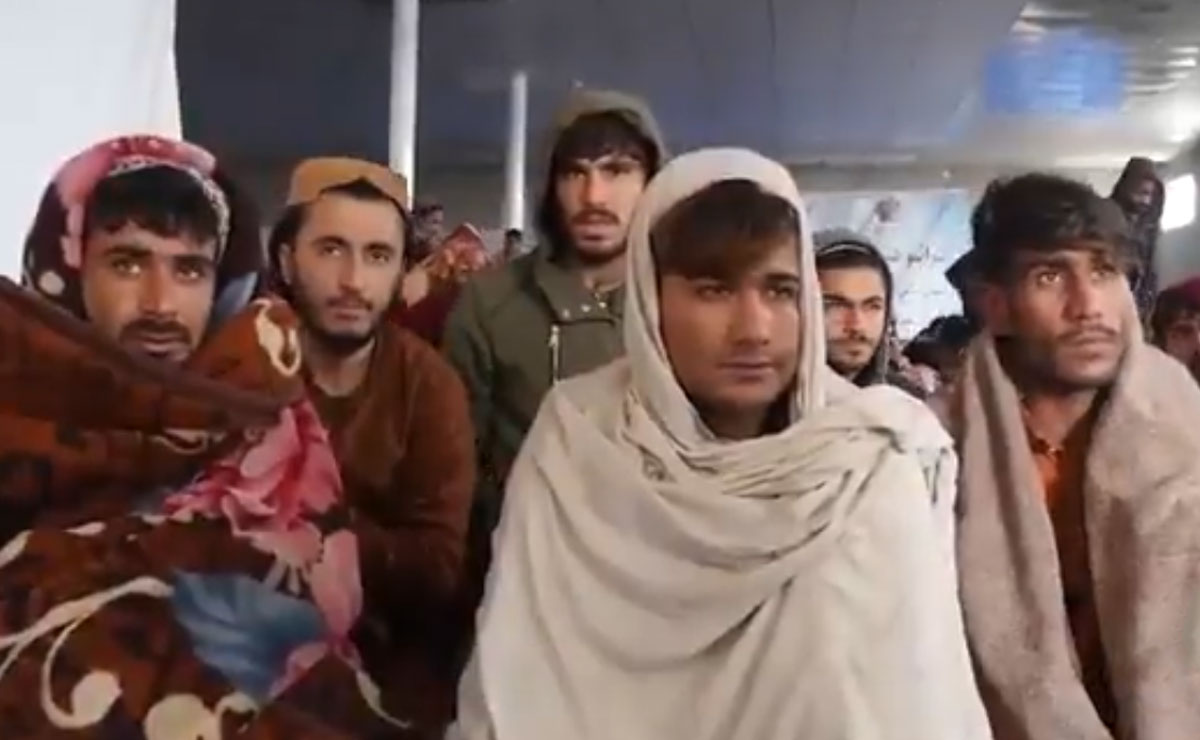
New Delhi: Afghan prisoners being sent back from Pakistan jails have been recounting tales of abuse and repression in detention, with some claiming incarceration without reason, say reports from Kabul. Pakistan has once again intensified the arrest, detention, and forced deportation of Afghan refugees, according to Afghanistan’s Tolo News on Tuesday. Last week, over 500 Afghans released from Pakistani prisons were handed over to Afghan authorities at Spin Boldak, it reported.
Spin Boldak, in Afghanistan’s Kandahar province, shares a border with Chaman of Pakistan’s Balochistan province and has once been the gateway for trade and traffic. But since the fierce firefight that took place in October last year, the border remains shut, except for occasional movement with consent from both sides. In an earlier report, Tolo News said late last week that “Afghans recently returned from Pakistan say they were transferred to harsh and inhumane prison conditions after being detained by Pakistani police”.
According to it, Akhtar Mohammad Hotak, who was deported along with his family via Spin Boldak, stated that after being imprisoned in Balochistan, he was kept in Chaman, where he faced mistreatment by Pakistani forces. “We haven’t eaten anything yet. They didn’t give us water or tea. There were no basic facilities. They packed 100 people into one room,” said another returnee, Akhtar Mohammad Hotak. Another man recently released from a Pakistani prison, identified as Abdul Sattar, claimed that he was imprisoned despite possessing valid documentary proof of identity.
He alleged that another person, who had no identification papers and was arrested at the same time, was released on payment of 45,000 Pakistani rupees. “If you pay, they let you go; if not, they send you back,” he told the news website. In the latest incident of their return, one of the 500 released prisoners, identified as Mohammad, said that he was arrested while on his way to work and taken to a refugee camp in Karachi. “They asked me where I was from. I said I was Afghan.
That was enough; they beat me so badly that my shoulder still hurts. My only crime was being Afghan,” he claimed. Another claimed, “No one respected us there. They looked at our mothers and sisters with contempt.” A prisoner who reportedly had spent about two weeks in a Pakistani prison, told the news-site that the police treated them so badly that at times they did not even let some Afghan inmates sleep at night. “They committed such cruelty that everyone here witnessed it. We were all standing, women were lying on the ground. Each person was given half a piece of bread.
The situation was horrible,” added the former prisoner, Dost Mohammad. He claimed they had filmed their ordeal, where the kind of cruelty meted out never existed even in their imagination. Analysts that Tolo News spoke to have urged humanitarian organisations to act and prevent the mistreatment of Afghan refugees in neighbouring countries. It quoted one such commentator saying that the arrest, imprisonment, and deportation of Afghan refugees in Iran, Pakistan, or any other country violates international norms, exhorting the global community to stop it.


