
Serious Escalation 2026: Netanyahu says attack on Iran to continue with ‘full force’
Benjamin Netanyahu said in a live broadcast statement that Israel's attack on Iran will continue with "full force and uncompromising momentum."

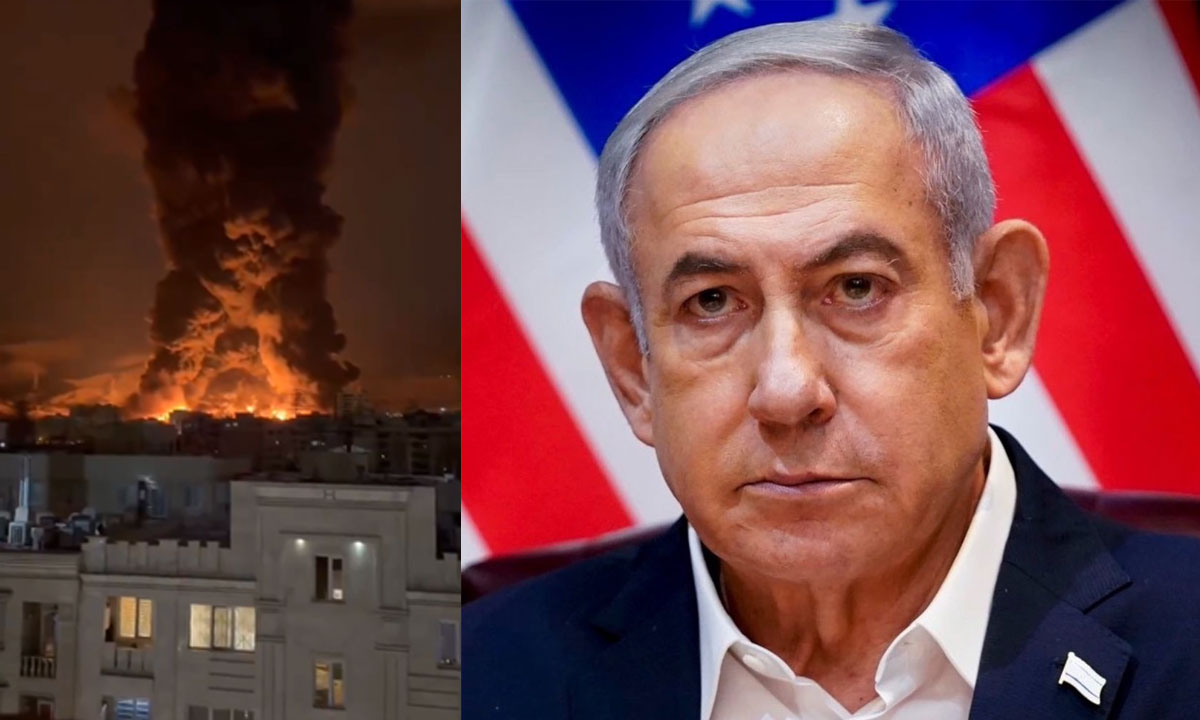
Jerusalem: Benjamin Netanyahu said in a live broadcast statement that Israel’s attack on Iran will continue with “full force and uncompromising momentum.”
The remarks from the Israeli Prime Minister come amid intensifying tensions in the region following days of military confrontation involving Israel, Iran, and the United States. The ongoing conflict has drawn significant global attention as world leaders monitor the situation closely, fearing further escalation in the already volatile Middle East.
Table of Contents
Israel signals continued military campaign against Iran
Israel has a well-prepared plan with many surprises to undermine “Iranian regime” and “enable change,” Netanyahu said on Saturday.
The statement suggested that the Israeli government intends to maintain strong military pressure as part of a broader strategy aimed at weakening Iran’s influence and military capabilities.
Netanyahu addresses Iranian people during broadcast
Addressing the Iranian people, he said, “The moment of truth is approaching. We do not seek to divide Iran, but to liberate it and live with it in peace.”
The comments were widely interpreted as an attempt to directly communicate with Iranian citizens while criticizing the country’s leadership. Netanyahu framed the conflict as part of a broader struggle against what he described as destabilising policies in the region.
His statement also hinted at Israel’s long-standing concerns regarding Iran’s military strength, regional alliances, and support for armed groups across the Middle East.
Criticism of the United Nations
He condemned the United Nations for “condemning us without reason in our just war against Iran’s murderous proxies in Gaza and doing nothing about the massacre in Iran.”
The criticism reflects growing frustration within the Israeli leadership regarding international reactions to the conflict. Israeli officials have repeatedly argued that their military actions are necessary to counter threats posed by Iran and its allied groups.
The United Nations has been involved in multiple diplomatic discussions surrounding the conflict, urging restraint from all sides while calling for peaceful dialogue.
Israel warns Lebanon over Hezbollah
He also demanded that the Lebanon government enforce the ceasefire agreement and disarm Hezbollah, Xinhua news agency reported.
“If you do not do this, Hezbollah’s aggression will have disastrous consequences for Lebanon,” he warned.
The warning highlights concerns in Israel that the conflict could expand beyond Iran if Hezbollah becomes directly involved. Hezbollah, a powerful armed group based in Lebanon, has historically been aligned with Iran and has been a key factor in regional security dynamics.
Trump claims major military setback for Iran
Meanwhile, Donald Trump said the United States had severely weakened Iran’s military after a week of fighting, while signalling that Washington holds strong negotiating leverage but is not actively pursuing a settlement with Tehran.
Speaking to reporters on Saturday during a press gaggle aboard Air Force One, Trump described the early phase of the conflict as a decisive blow against Iran’s armed forces. The United States and Israel launched a joint military operation against Iran on February 28.
“We’ve wiped out their Navy, 44 ships. We’ve wiped out their Air Force. Every plane,” Trump said. He said American strikes had also crippled Iran’s missile capabilities and launch infrastructure.
“We’ve knocked out about 70 per cent of the rocket launchers,” he said, adding that the systems were “very hard to get, very expensive.”
According to Trump, the reduction in launchers and manufacturing capacity has sharply reduced Iran’s ability to retaliate. “They’re at about 9 per cent of what they sent out in the first two days,” he said.
Rising global concern over Middle East tensions
The conflict between Israel and Iran has heightened fears of a wider regional confrontation involving several countries and armed groups across the Middle East.
Analysts believe the situation could significantly impact geopolitical stability, global energy markets, and diplomatic relations among major world powers. Governments around the world are urging caution and calling for diplomatic efforts to prevent further escalation.
At the same time, the military statements from leaders in Washington and Jerusalem suggest that the confrontation may continue in the near term. The situation remains fluid, with developments unfolding rapidly as both sides assess their strategic positions.
Observers say the coming days will be crucial in determining whether the conflict intensifies further or moves toward diplomatic engagement aimed at reducing tensions in the region.
Follow MunsifNews24x7 for latest updates.


