
NHRC asks states to act against deadly heat waves, protect vulnerable populations
The National Human Rights Commission (NHRC) has directed the Delhi government and 21 state governments to take proactive measures and implement relief efforts to protect vulnerable populations from the growing threat of heat waves.

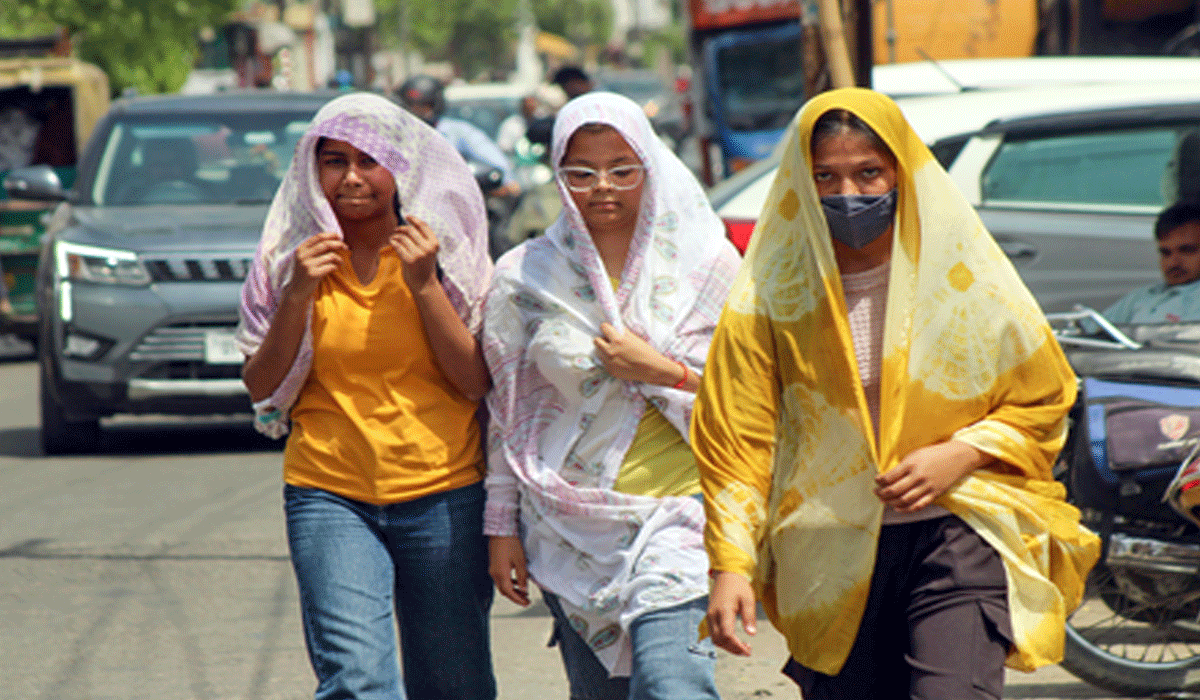

New Delhi: The National Human Rights Commission (NHRC) has directed the Delhi government and 21 state governments to take proactive measures and implement relief efforts to protect vulnerable populations from the growing threat of heat waves.
In communications sent to the Chief Secretaries of the concerned states and Delhi, the apex human rights body stressed the urgent need for integrated and inclusive measures to mitigate the impact of extreme heat and prevent casualties.
The states covered under the directive include Andhra Pradesh, Assam, Bihar, Chhattisgarh, Gujarat, Haryana, Himachal Pradesh, Jharkhand, Karnataka, Kerala, Madhya Pradesh, Maharashtra, Odisha, Punjab, Rajasthan, Sikkim, Tamil Nadu, Telangana, Tripura, Uttar Pradesh and West Bengal.
The NHRC observed that the increasing frequency, duration and intensity of heat waves disproportionately affect marginalised and economically weaker sections, particularly outdoor workers and homeless persons who often lack adequate shelter and resources.
It further highlighted that the elderly, children, infants and newborns are especially vulnerable to severe health consequences arising from prolonged exposure to extreme temperatures.
The NHRC also noted that heat waves can result in loss of livelihoods and heighten the risk of fire-related incidents. Referring to National Crime Records Bureau (NCRB) data, the NHRC recorded that 3,712 deaths due to heatstroke or sunstroke were reported across India between 2019 and 2023. In view of these concerns, the NHRC has urged the Delhi and state governments to ensure implementation of relief measures in accordance with their existing Standard Operating Procedures (SOPs) or guidelines issued by the National Disaster Management Authority (NDMA).
The apex human rights body has also sought consolidated action taken reports from district authorities through the respective state and Union Territory administrations.
Established under the Protection of Human Rights Act, 1993, the NHRC, an autonomous statutory body, embodies India’s concern for the promotion and protection of human rights. Its primary role is to protect and promote human rights, defined as the rights relating to life, liberty, equality, and the dignity of individuals, guaranteed by the Constitution or embodied in international covenants, and enforceable by courts in India.
The apex human rights body has the power to take suo motu (on its own motion) action based on media reports, public knowledge, or other sources, without receiving a formal complaint of human rights violations.


