
Oil Prices Near $90 as Iran War Shakes Global Energy Markets
Oil prices near $90 as the Iran war disrupts global energy markets and raises fears of supply disruptions through the Strait of Hormuz.

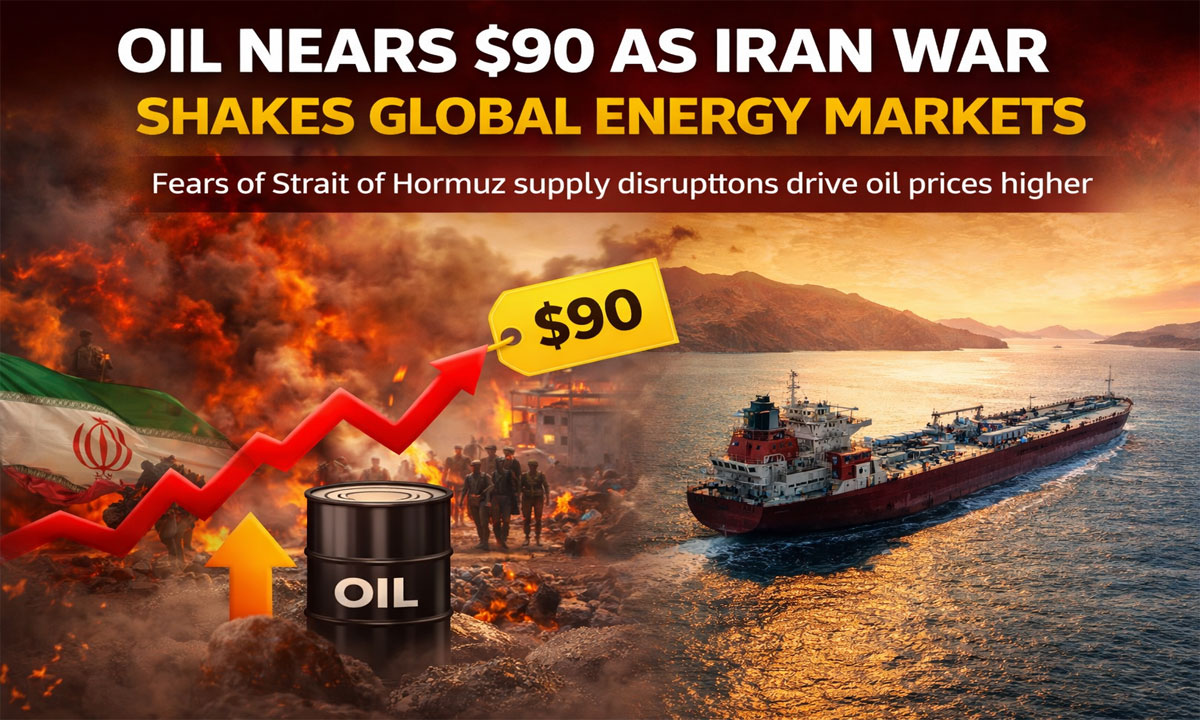
Washington: Global energy markets are witnessing sharp volatility as oil prices near $90 amid the Iran war, raising fears of major supply disruptions through the Strait of Hormuz, one of the world’s most important oil shipping routes. The Iran war impact on oil prices has triggered uncertainty in global markets, pushing crude prices higher and prompting emergency policy discussions to control rising fuel costs.
Table of Contents
The surge in prices is already affecting energy markets worldwide, with analysts warning that continued tensions in the Middle East could push oil prices even higher.
Oil Prices Near $90 Amid Iran War
The global oil price surge due to the Iran war has pushed crude prices close to the $90 mark.
Current market levels show:
- Brent crude: Around $91.94 per barrel
- US crude (WTI): Around $88.87 per barrel
Earlier in the week, oil prices briefly approached $120 per barrel before easing slightly amid mixed market signals.
Energy markets remain highly volatile as traders closely watch developments in the Middle East.
Strait of Hormuz Disruption Fears
The Iran war and oil supply risk through the Strait of Hormuz has become the biggest concern for global markets.
The Strait of Hormuz is critical because:
- It is one of the world’s most important oil chokepoints
- A large share of global oil shipments passes through the strait
- Major exporters such as Saudi Arabia, Iraq, and the UAE rely on this route
Any disruption in this narrow waterway could significantly impact global oil supply and fuel prices.
Global Energy Markets Face Major Uncertainty
Energy experts warn that the Iran war’s impact on oil prices could trigger a major shock if the conflict disrupts tanker traffic.
Key concerns include:
- Slower oil tanker movement through the Strait of Hormuz
- Potential attacks on oil shipping routes
- Reduced supply of crude oil in global markets
If the disruption continues, analysts say oil prices could rise significantly in the coming weeks.
Oil Market Volatility After Conflict Escalation
The Iran war energy crisis has caused large swings in global oil markets.
Earlier market reactions included:
- Oil prices spiking close to $120 per barrel
- Traders reacting quickly to geopolitical developments
- Continued uncertainty about how long the conflict will last
Even temporary supply disruptions could create long-term instability in global energy markets.
Rising Fuel Prices Impact Consumers
The increase in oil prices due to the Iran war is already being felt by consumers as fuel prices begin rising in several countries.
Higher crude prices can lead to:
- Increased petrol and diesel prices
- Higher transportation costs
- Rising inflation and cost of living
Governments are now exploring ways to reduce the burden on households.
Emergency Measures Proposed to Control Fuel Costs
In response to the global oil price surge caused by the Iran war, lawmakers in the United States have proposed emergency measures to ease fuel costs.
One proposal includes:
- Temporary suspension of federal gasoline tax
- Reduction of fuel prices for consumers
- Monitoring by authorities to ensure savings reach motorists
However, analysts believe such measures may offer only temporary relief if global oil supply disruptions continue.
Global Oil Market Faces Uncertain Future
The oil prices nearing $90 due to the Iran war and Strait of Hormuz tensions highlight the fragile state of global energy markets. Experts warn that if tensions escalate further or shipping routes are disrupted, oil prices could surge again, affecting economies and fuel prices worldwide.
Follow MunsifNews24x7 for latest updates.


