
SC refuses to entertain Jan Suraaj’s plaint challenging results of Bihar Assembly polls
The Supreme Court on Friday refused to entertain a writ petition filed by Jan Suraaj, founded by political strategist Prashant Kishor, challenging the validity of the 2025 Bihar Assembly elections and seeking a direction for holding fresh polls.

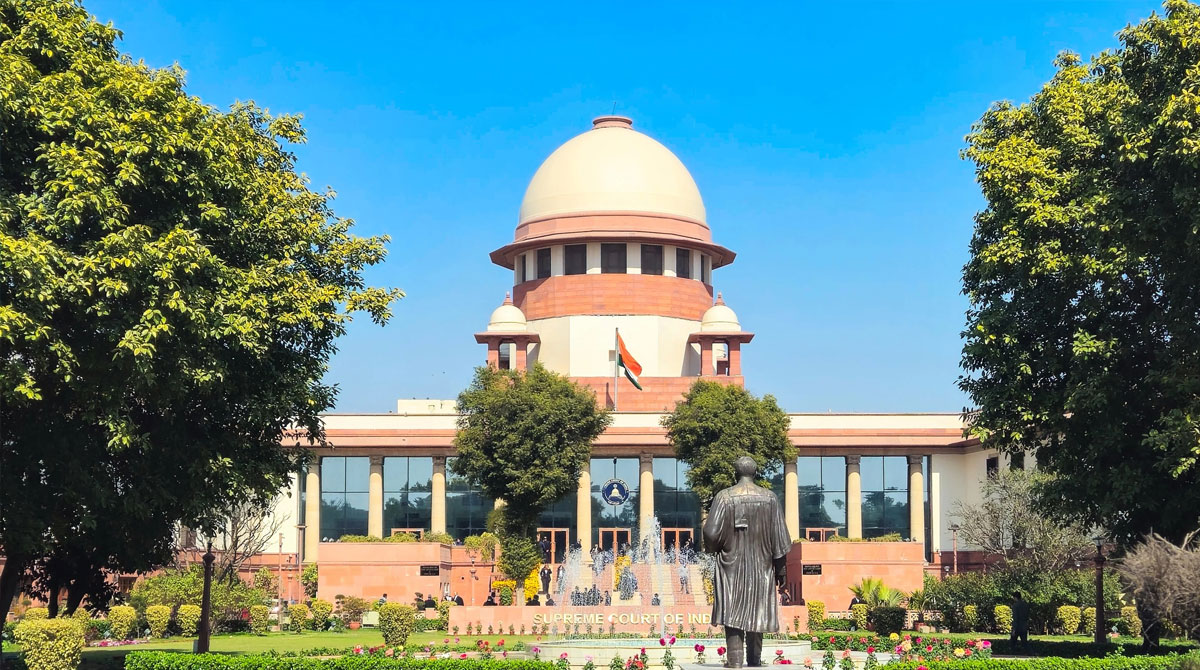
New Delhi: The Supreme Court on Friday refused to entertain a writ petition filed by Jan Suraaj, founded by political strategist Prashant Kishor, challenging the validity of the 2025 Bihar Assembly elections and seeking a direction for holding fresh polls.
A Bench of Chief Justice of India (CJI) Surya Kant and Justice Joymalya Bagchi expressed disinclination to examine the matter under Article 32 of the Constitution, following which the petitioner sought to withdraw the plea with liberty to approach the Patna High Court.
Granting such liberty, the CJI Kant-led Bench dismissed the petition as withdrawn.
Senior advocate Chander Uday Singh, appearing for Jan Suraaj, submitted that the Supreme Court was already seized of the broader issue relating to the distribution of “freebies” during elections.
He argued that in a fiscally stressed state like Bihar, which carries a high-debt burden, the announcement of a scheme involving the disbursal of Rs 10,000 to women voters during the election period disrupted the level playing field and violated the Model Code of Conduct (MCC).
“How many votes did you get? Once people reject you, you use the judicial forum to get relief!” the Apex Court remarked, adding that if the scheme was objectionable, it should have been challenged at the appropriate stage.
The CJI Kant-led Bench observed that the writ petition was like a “composite election petition” seeking an omnibus direction to set aside the entire election.
It pointed out that the petition did not contain any specific prayer challenging the cash transfer scheme itself.
When the senior counsel representing the petitioner suggested that the prayers could be segregated to separately consider the issue of freebies, the Supreme Court asked the petitioner to approach the Patna High Court.
The Apex Court clarified that it would continue to examine the broader issue of freebies in other pending matters, but would not entertain the present petition at the instance of a party that had lost the election.
“We will consider the freebies issue seriously, but we also have to examine the bona fides,” it said.
In its petition filed before the Top Court, the Jan Suraaj has contended that the disbursal of Rs 10,000 each through Direct Benefit Transfer (DBT) to one woman per family during the subsistence of the MCC and in the course of elections vitiated the level playing field and undermined the principles of free and fair polls.
It alleged that the Bihar government extended benefits under the Mukhyamantri Mahila Rojgar Yojana to around 25–35 lakh women voters during the Assembly election period, amounting to “gratification, bribery, and corrupt practices” by the ruling party.
Follow for more details: munsifdaily.com
The petition, filed through advocate Aditya Singh, has sought a declaration that the fresh addition of beneficiaries under the scheme and the payments made during the election period were illegal, unconstitutional and violative of Articles 14, 21, 112, 202, and 324 of the Constitution.
Alleging large-scale voter inducement, Jan Suraaj has urged the Apex Court to direct the Election Commission of India (ECI) to take action under Article 324 of the Constitution and Section 123 of the Representation of the People Act, asserting that the DBT payments amounted to corrupt electoral practices by the party in power in Bihar.
The plea has also questioned the deployment of about 1.80 lakh women beneficiaries linked to self-help groups under the JEEVIKA programme at polling booths during both phases of voting, terming it illegal and unfair.
It has also prayed for the framing of comprehensive guidelines on freebies and DBT-based welfare schemes and for fixing a minimum time gap, preferably six months, for implementing such schemes before the announcement of elections.
After the Bihar Assembly election results, Prashant Kishor had alleged that thousands of poor families were “bribed with Rs 10,000 each” in exchange for votes, calling it a violation of democratic values and the constitutional ethos laid down by B.R. Ambedkar.
Notably, the broader issue of poll freebies is already under consideration before the Supreme Court in a pending petition filed by advocate Ashwini Kumar Upadhyay, in which the Apex Court has observed that lucrative promises by political parties may push states towards imminent bankruptcy and has referred the matter to a three-judge Bench.
In its 2013 judgment in Subramanian Balaji vs Tamil Nadu, however, the Supreme Court held that the distribution of free colour television sets by the DMK government after winning the Tamil Nadu Assembly elections could not be termed a “corrupt practice” under the Representation of the People Act.


