
Two Ramadans and Two Eids in a Single Year! When Will This Rare Phenomenon Occur?
Meanwhile, the start of Ramadan this year is expected to fall around February 17 or 18. However, the final confirmation will be made only after the sighting of the moon by local moon-sighting committees in each country.

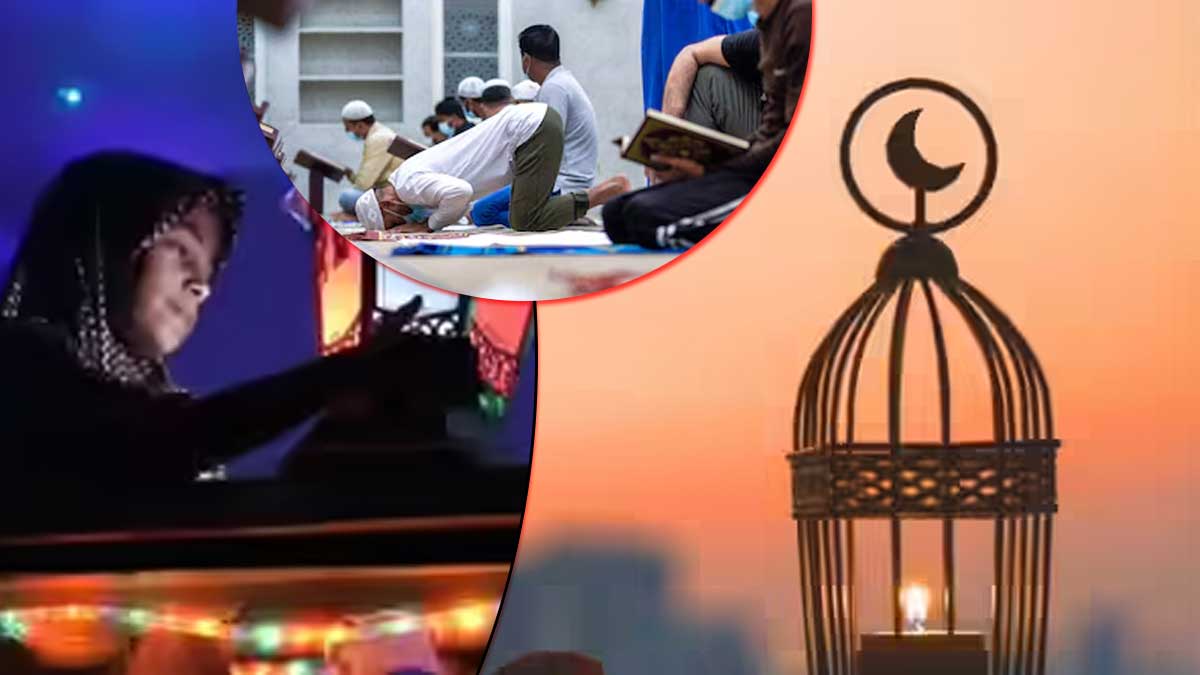
Muslims around the world usually observe the holy month of Ramadan once a year and celebrate Eid-ul-Fitr only once. However, every 32 or 33 years, the cycle of time creates a rare and fascinating situation when two Ramadans and two Eids fall within the same Gregorian year. Such an extraordinary occasion is set to occur once again in the coming years.
At present, Muslims across the globe are eagerly awaiting the arrival of Ramadan, which is now less than a month and a half away. Under normal circumstances, Ramadan and Eid-ul-Fitr occur once a year, but due to the difference between the Islamic lunar calendar and the Gregorian calendar, certain years witness these sacred observances twice within the same calendar year.
Astronomers predict that in the year 2030, Muslims worldwide will welcome the month of Ramadan twice. The first Ramadan is expected to begin around January 5, 2030, while the second is likely to start around December 26 of the same year. As a result, Muslims will observe a full 29 or 30 days of fasting in January and approximately six days of fasting in December, bringing the total number of fasts in 2030 to around 35 or 36 — a truly unique occurrence.
Similarly, the year 2033 is expected to witness two celebrations of Eid-ul-Fitr within the same year. According to astronomical estimates, the first Eid-ul-Fitr may fall on January 2 or 3, while the second is likely to be celebrated around December 23 or 24.
This rare phenomenon occurs due to the difference in length between the Islamic and Gregorian calendars. A Gregorian year consists of 365 days, or 366 days in a leap year. In contrast, the Islamic lunar year has only 354 or 355 days, depending on the moon cycle. As a result, the Islamic year moves back by about 10 to 11 days each Gregorian year, eventually causing an entire Islamic year to fit within a single Gregorian year every 32 or 33 years.
Such an event has occurred in the past as well. The last time Muslims experienced two Ramadans in one year was in 1997, while the year 2000 saw two celebrations of Eid-ul-Fitr.
Meanwhile, the start of Ramadan this year is expected to fall around February 17 or 18. However, the final confirmation will be made only after the sighting of the moon by local moon-sighting committees in each country.
It is important to note that while astronomical calculations can provide estimated dates for the beginning of Ramadan and Eid, the final announcement traditionally depends on the physical sighting of the crescent moon. Countries such as Pakistan, Saudi Arabia, and several others still rely primarily on human observation, while some nations follow scientific calculations.
In the years ahead, this rare alignment of calendars promises to offer Muslims around the world a memorable experience filled with spiritual devotion and double celebrations — an event that many will witness only once in their lifetime.


