
West Bengal Voter List Row: One Man Shown as Father of 389 Voters, 310 More Flagged as His Children in SIR ‘Logical Discrepancy’
West Bengal voter list logical discrepancy sparks outrage after SIR flags one man as father of 389 voters and another of 310, forcing Supreme Court intervention.

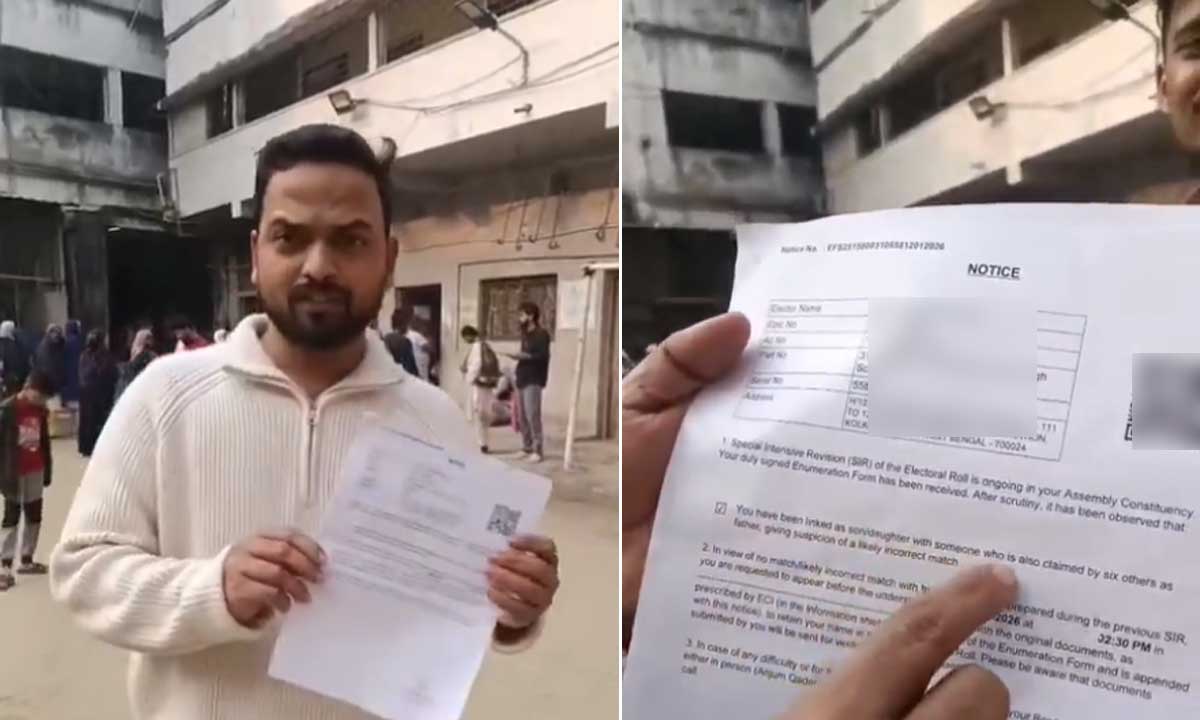
Kolkata: The ongoing Special Intensive Revision (SIR) of electoral rolls has triggered a major controversy in West Bengal after startling errors were detected in voter family data, now widely referred to as the West Bengal voter list logical discrepancy issue.
Table of Contents
The matter has escalated to the Supreme Court of India, following widespread complaints that ordinary voters are being forced into verification due to apparent system-level failures.
Extreme Cases Raise Serious Questions
During scrutiny of the revised voter lists by the Election Commission of India, officials identified anomalies that defied basic logic:
- One individual shown as the father of 389 voters
- Another listed as the parent of over 310 voters
- Multiple households recorded with six, seven, or even more children, while families insist they have only three or four members
These cases were automatically categorised as logical discrepancies, triggering notices for hearings and document verification.
AI-Based Matching at the Centre of the Controversy
Officials familiar with the process say the draft SIR list relied heavily on AI-assisted data matching, which grouped voters with similar or identical names as members of the same family.
As a result:
- Unrelated individuals were linked as siblings
- Hundreds of voters were attached to a single parent name
- Entire localities were flagged without ground-level verification
This has caused particular anger in neighbourhoods such as Garden Reach and Metiabruz in Kolkata, where residents say the notices bear no resemblance to their actual family structures.
Scale of Notices Across the State
The numbers involved underline the seriousness of the issue:
- Around 23–24 lakh voters flagged under the category of having more than six children
- Between 94 lakh and 1.25 crore voters issued notices across West Bengal under various discrepancy categories
Such large-scale flagging has led to concerns over the credibility and efficiency of the voter revision process.
Supreme Court Directs Transparency Measures
Taking note of the impact on voters, the Supreme Court of India has directed the Election Commission to:
- Display lists of affected voters publicly at panchayat and ward offices
- Allow citizens to submit corrections without intimidation or confusion
- Ensure that notices are treated as requests for correction, not grounds for automatic deletion
The Election Commission has maintained that no voter will lose their voting rights without due verification.
Voters Fear Disenfranchisement
Despite official assurances, anxiety remains high on the ground. Many voters, especially daily wage workers and elderly citizens, say the process is:
- Complex and time-consuming
- Difficult to navigate without assistance
- Risky if corrections are delayed or missed
They argue that technological errors should not translate into hurdles for exercising a fundamental democratic right.
Technology Needs Human Oversight
The West Bengal voter list logical discrepancy episode highlights the limits of automation in sensitive democratic processes. While technology can speed up verification, lack of human checks can magnify errors, placing the burden on citizens instead of the system.
Bigger Questions for Electoral Integrity
As the state moves closer to future elections, the controversy raises urgent questions about:
- Transparency in voter list revisions
- Accountability for data errors
- Making correction processes more voter-friendly
Follow MunsifNews24x7 for latest updates.


