
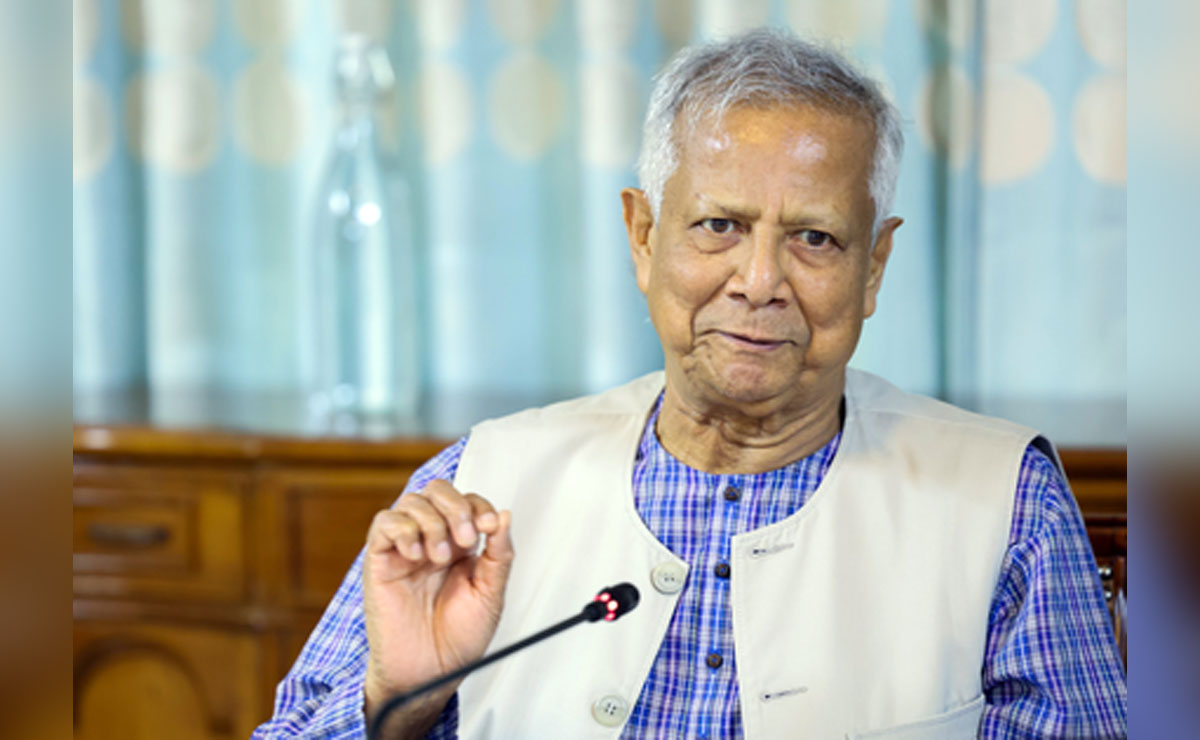
New Delhi: Bangladesh is facing serious problems in maintaining its trade relations with the world’s major economies due to the policy mistakes of the Muhammad Yunus-headed interim government. Business disruptions and domestic economic crises have intensified these trade risks, according to an article in the Dhaka-based Daily Sun newspaper. The fact that Bangladesh is losing its categorisation as a least developed country (LDC) has made it more vulnerable as it will no longer be eligible for trade benefits in the international market that are given to poor countries.
Observers say Bangladesh initially appeared to strengthen ties with its largest trade partner, China, after the July political shift. However, after reaching agreements on trade with the United States, China has turned cautious in its trade relations with Bangladesh, the article points out. While China has pledged to maintain tariff benefits after Bangladesh graduates from LDC status, it has not provided written guarantees.
Also Read:Bangladesh: Sheikh Hasina, family members sentenced to jail in graft case
The article also highlights that the interim government has struggled to maintain smooth trade relations with India, Bangladesh’s second-largest trade partner. Since taking office, the government has faced disagreements over multiple issues, including trade restrictions on specific commodities via land routes, leading to a slowdown in bilateral trade with India. As a result, Bangladesh now pays higher prices for essential imports such as rice, which it previously sourced from India, and must buy from Singapore instead.
Bangladesh also faces challenges with Japan as Tokyo seeks similar trade concessions as those granted to the United States, complicating the signing of a potential Economic Partnership Agreement (EPA). Japan demands a reduction in high import tariffs on vehicles, using the US agreement as an example. The article further states that the European Union (EU), Bangladesh’s most secure trade partner, has also signalled concern.
To obtain tariff benefits under a reciprocal trade agreement with the United States, Bangladesh has promised increased imports and large purchases, including Boeing aircraft and LNG. This move has raised pressure from Europe, as Bangladesh previously committed to purchasing 10 Airbus planes from France. The EU now insists that Bangladesh honour its prior promise, warning that failure could affect GSP Plus privileges post-LDC graduation. Germany’s ambassador also reportedly issued a veiled warning at a recent DICAB event.
Experts say the combined pressures and conditions imposed by major trade partners and development allies create serious threats to Bangladesh’s international trade. The article cites MK Muzeri, former director general of the Bangladesh Institute of Development Studies (BIDS), as saying that the interim government made several wrong decisions that not only jeopardised trade but could also burden the next elected government.
The former Chief Economist of Bangladesh Bank said, “The understanding reached with the United States will influence Bangladesh’s trade in the long term. Other countries may now impose conditions to gain similar advantages. Most of Bangladesh’s export income comes from Europe. If any complications arise with Airbus purchases, European nations will naturally react. The interim government should not have rushed into these long-term agreements without consulting businesses and entrepreneurs, he added.


