
Telangana High Court Ban on Coercive Traffic Challan Enforcement Brings Relief to Hyderabad Commuters
The Telangana High Court ban on coercive traffic challan enforcement bars police from snatching keys or forcing payments, reinforcing due process and court oversight.

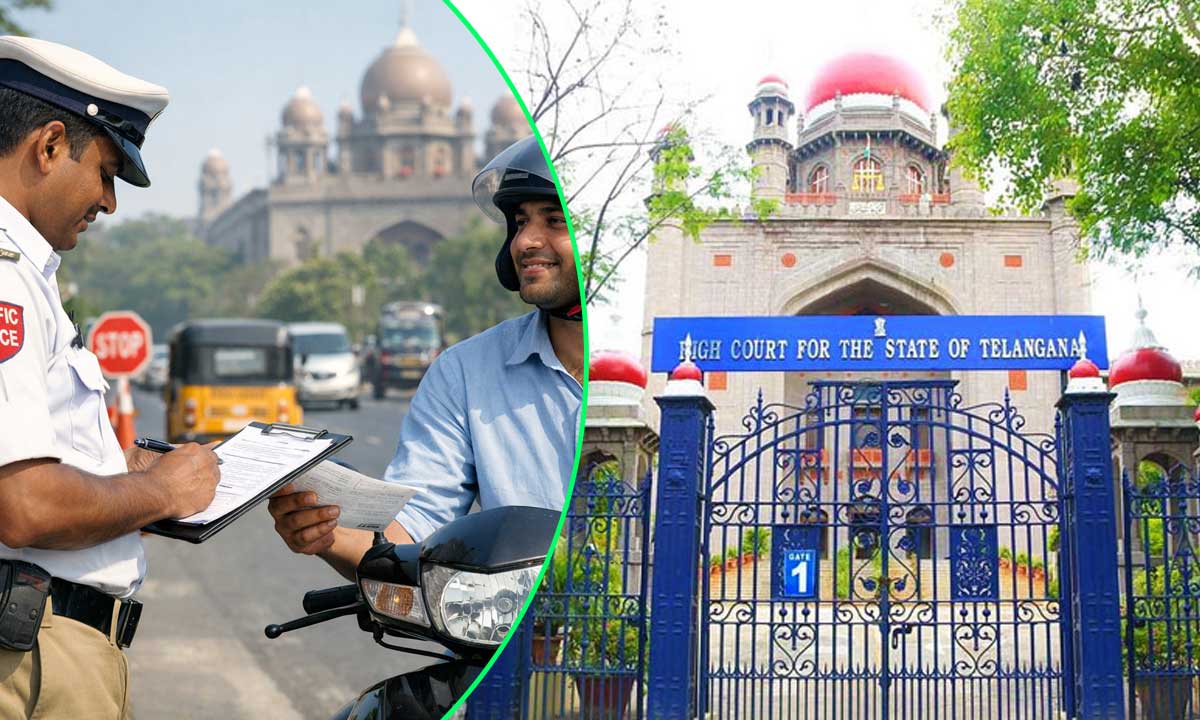

In a significant judgment offering relief to thousands of motorists, the Telangana High Court ban on coercive traffic challan enforcement has made it clear that police cannot forcibly recover pending traffic fines by snatching vehicle keys or pressuring commuters on the road.
Table of Contents
The order, passed around January 13, 2026, reinforces the principle that traffic penalties must follow due legal process, including proper court notices and judicial scrutiny.
Court’s Strong Message to Enforcement Agencies
The ruling was delivered by Justice NV Shravan Kumar while hearing writ petitions filed by V Raghavendra Chary, a resident of Secunderabad. The petitions challenged what were described as arbitrary and unlawful traffic challans, often issued solely on the basis of mobile phone photographs.
The court categorically stated that:
- Forcible collection of fines on roads is illegal
- Police personnel have no authority to act as judges
- Pending challans must be enforced only through courts
Questioning the Validity of E-Challans
The petitioner highlighted multiple issues in the existing system, including:
- A ₹1,200 fine for alleged “triple riding” issued on March 17, 2025
- Absence of cited legal provisions such as Section 128 of the Motor Vehicles Act, 1988
- Use of uncertified mobile devices instead of approved cameras
Earlier hearings in November 2025 had already raised concerns about:
- Excess fines exceeding prescribed limits
- Lack of transparency in e-challan generation
- Need for urgent system upgrades
On-Spot Collections Under Legal Cloud
A major legal challenge was also mounted against GO 108 of 2011, which allows on-the-spot compounding of traffic offences. Petitioners argued that:
- Only courts can decide penalties under Section 208 of the Motor Vehicles Act
- Roadside collections violate the separation of powers
- The government order may be repugnant to central law
The court observed that enforcement based on uncertified evidence violates Rule 167A(6) of the Central Motor Vehicles Rules, 1989, making mobile-phone-based challans legally questionable.
Court Rejects Discount Culture in Fines
The High Court also took a critical view of discounts offered on traffic fines, noting that such practices dilute deterrence and undermine the seriousness of traffic laws. This observation aligned closely with the petitioner’s argument that penalties must remain under judicial oversight, not administrative discretion.
Political Developments Add to the Debate
Just days before the judgment, Revanth Reddy announced plans to:
- End traffic challan discounts
- Explore automatic debit of fines from bank accounts at the time of vehicle registration
These proposals sparked widespread criticism for potentially bypassing legal safeguards, standing in contrast to the High Court’s emphasis on voluntary compliance and court-driven enforcement.
Public Reaction and Ground Reality
Following the ruling, social media platforms saw renewed discussion on traffic policing practices:
- Old videos allegedly showing vehicle key snatching resurfaced
- Commuters welcomed the judgment but expressed doubts about enforcement
- Civil society voices questioned selective targeting, particularly of two-wheeler riders
As of January 13, no fresh official response was issued by Hyderabad Traffic Police, though earlier submissions had assured the court of corrective measures.
Why This Judgment Matters
The Telangana High Court ban on coercive traffic challan enforcement sets a clear boundary between law enforcement and judicial authority, reaffirming that:
- Traffic laws must be enforced legally, not forcefully
- Citizens’ rights cannot be overridden for convenience
- Courts remain the final authority on penalties
For commuters across Hyderabad and Telangana, the ruling restores confidence that traffic regulation must operate within the framework of law, not intimidation.
Follow MunsifNews24x7 for latest updates.


