
US-Iran War Raises Global Food Security Concerns, Push to Reform Agricultural Trade Rules Intensifies
US-Iran war raises global food security concerns as supply chain disruptions impact fertilizers and agriculture, pushing reforms in global trade rules.

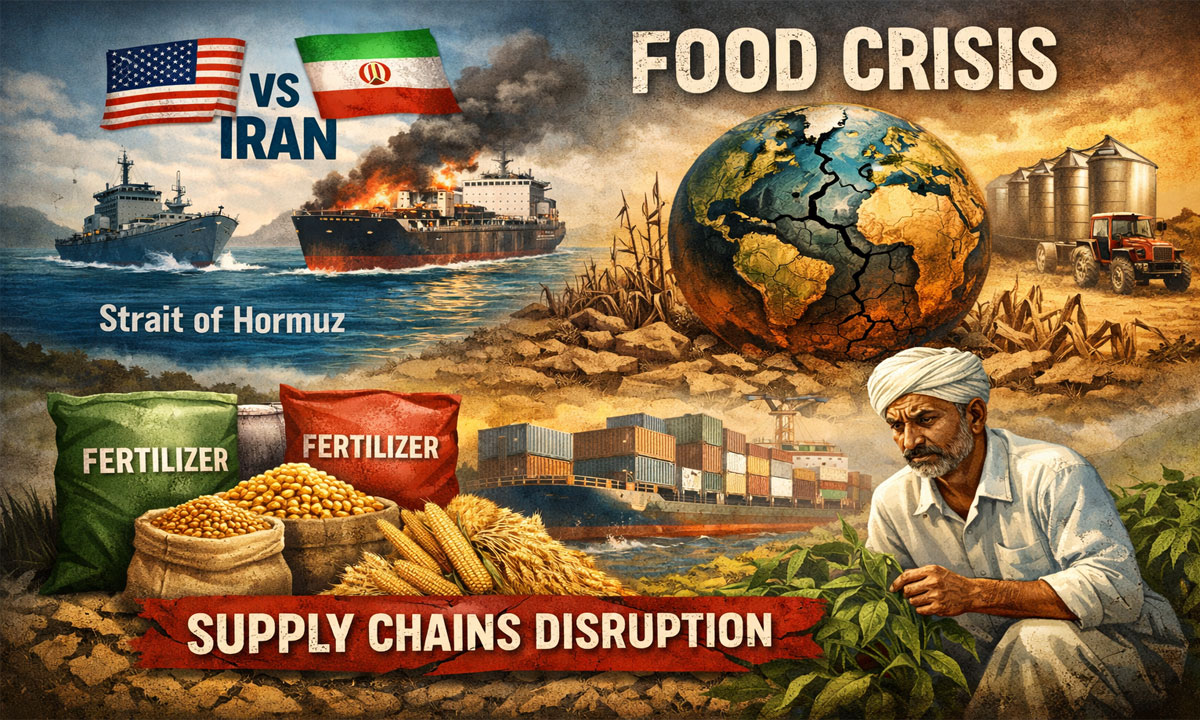

The ongoing US-Iran war has significantly impacted global markets, raising serious concerns about global food security and accelerating efforts to reform agricultural trade rules worldwide. Experts warn that disruptions in supply chains due to the conflict could have long-term consequences on food availability and prices.
Impact of US-Iran War on Food Security
The conflict involving United States, Iran, and Israel has not only shaken oil markets but also disrupted fertilizer and food supply chains globally.
- Shipping disruptions through the Strait of Hormuz have increased transportation risks
- Rising energy prices have affected fertilizer production
- Global food supply chains are facing instability
Experts highlight that these interconnected systems—energy, fertilizers, and agriculture—are now under severe stress.
India Faces Fertilizer Supply Pressure
Countries like India are particularly vulnerable due to high dependency on imports:
- Nearly 20% of urea is imported
- Around 50% of DAP (Di-Ammonium Phosphate) comes from abroad
- Almost 100% of potash is imported
Due to rising freight costs and insurance premiums, fertilizer prices have surged. The Indian government is currently absorbing the shock through increased subsidies to protect farmers and maintain agricultural output.
Why Agricultural Trade Rules Need Reform
Economists believe the current system under the World Trade Organization is outdated and ineffective in handling crises like wars, pandemics, and climate change.
A proposed “Model Treaty on Agricultural Trade” suggests:
- Prioritizing food security over free trade
- Encouraging countries to boost domestic production
- Allowing governments to intervene in markets when necessary
- Promoting sustainable and equitable agricultural practices
Long-Term Risks: Rising Costs and Supply Challenges
Even if tensions ease, experts warn that “war risk premiums” in shipping through the Strait of Hormuz may remain permanently high. This could lead to:
- Structurally higher fertilizer prices
- Increased cost of agricultural production
- Rising food prices globally
India’s Strategic Response
To reduce dependency and manage risks, India is now:
- Exploring new sources for potash and phosphate imports
- Investing in overseas mineral assets
- Expanding domestic urea production
- Signing long-term LNG agreements beyond Gulf countries
These steps aim to safeguard India’s agricultural sector from future global shocks.
A Wake-Up Call for Global Trade Systems
The US-Iran war and global food security crisis have exposed structural weaknesses in international trade systems. Experts argue that concentrated supply chains can trigger worldwide disruptions.
The proposed reforms call for:
- Reducing dominance of large agribusiness corporations
- Ensuring fair pricing for farmers
- Recognizing food security as a global shared responsibility
In conclusion, the US-Iran war has not only disrupted energy markets but has also intensified concerns over global food security, forcing nations to rethink agricultural trade policies to prevent future crises.
Follow MunsifNews24x7 for latest updates.


