
Iran says reviewing US views as exchange of messages continues
Iranian Foreign Ministry spokesman Esmaeil Baghaei has said that the exchange of messages between Iran and the United States is continuing through the Pakistani mediator, and Tehran is reviewing the latest US views.

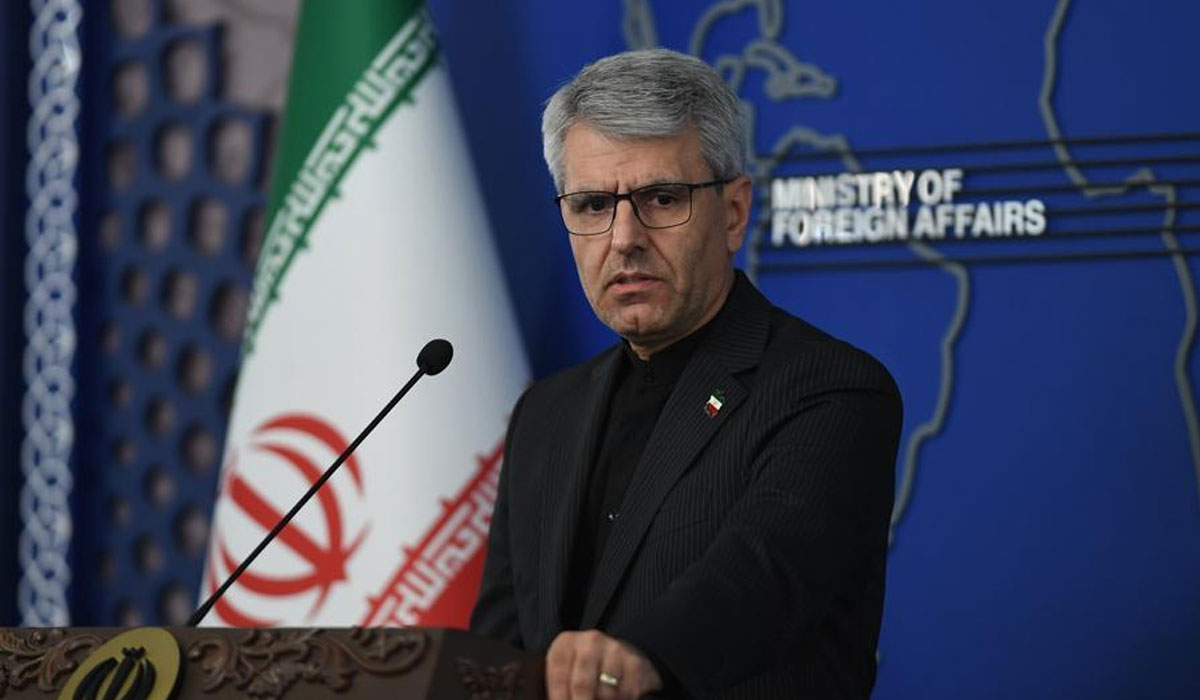
Tehran: Iranian Foreign Ministry spokesman Esmaeil Baghaei has said that the exchange of messages between Iran and the United States is continuing through the Pakistani mediator, and Tehran is reviewing the latest US views.
In an interview with state-run IRIB TV, Baghaei said messages have been exchanged on several occasions.
Baghaei said that Iran is focused on ending the war on all fronts, including Lebanon, with clear demands, including releasing Iranian frozen assets and ending the US “maritime piracy” and hostile actions against Iran’s shipping.
He added that Iran has entered the diplomatic process with goodwill and seriousness, but views Washington with deep distrust due to its “very bad” track record over the past 18 months.
Baghaei said that Iran, in cooperation with Oman, seeks to create a mechanism to guarantee “lasting security” in the Strait of Hormuz and is ready to develop protocols for safe maritime traffic in the waterway in coordination with other coastal states.
Citing a source close to Iran’s negotiation team, the semi-official Tasnim news agency reported that Washington has sent a new draft proposal to Tehran after Iran submitted its 14-point proposed plan three days ago, reports Xinhua news agency.
The mediator is currently in Tehran seeking to bring the two sides’ drafts closer, though nothing has been finalised, according to the source.
Follow for more details: munsifdaily.com
Also on Wednesday, Iranian President Masoud Pezeshkian said on social media platform X that Iran has consistently honoured its commitments and sought to avert war.
“All paths remain open from our side. Forcing Iran to surrender through coercion is nothing but an illusion,” Pezeshkian said.
Iran, the United States, and Israel reached a ceasefire on April 8 after 40 days of fighting that started with joint US-Israeli attacks on Tehran and other Iranian cities on February 28.
Following the truce, Iranian and US delegations held one round of negotiations in Pakistan’s capital, Islamabad, on April 11 and 12, which failed to yield an agreement.
Following the eruption of the war, Iran tightened its grip on the Strait of Hormuz, barring passage to vessels belonging to or affiliated with Israel and the United States. After the Islamabad talks collapsed, the United States imposed a naval blockade on the strait, preventing ships from and to Iranian ports from transiting the waterway.


