
HYDRAA breathes new life into a Nizam-era lake Preparations underway for the inauguration of Bum–Rukn-ud-Daula Lake
In a significant boost to heritage conservation and urban ecology, the Hyderabad Disaster Response and Asset Protection Agency (HYDRAA) has successfully revived the historic Bum–Rukn-ud-Daula Lake in the Old City, restoring a Nizam-era water body that had nearly disappeared due to decades of encroachments.

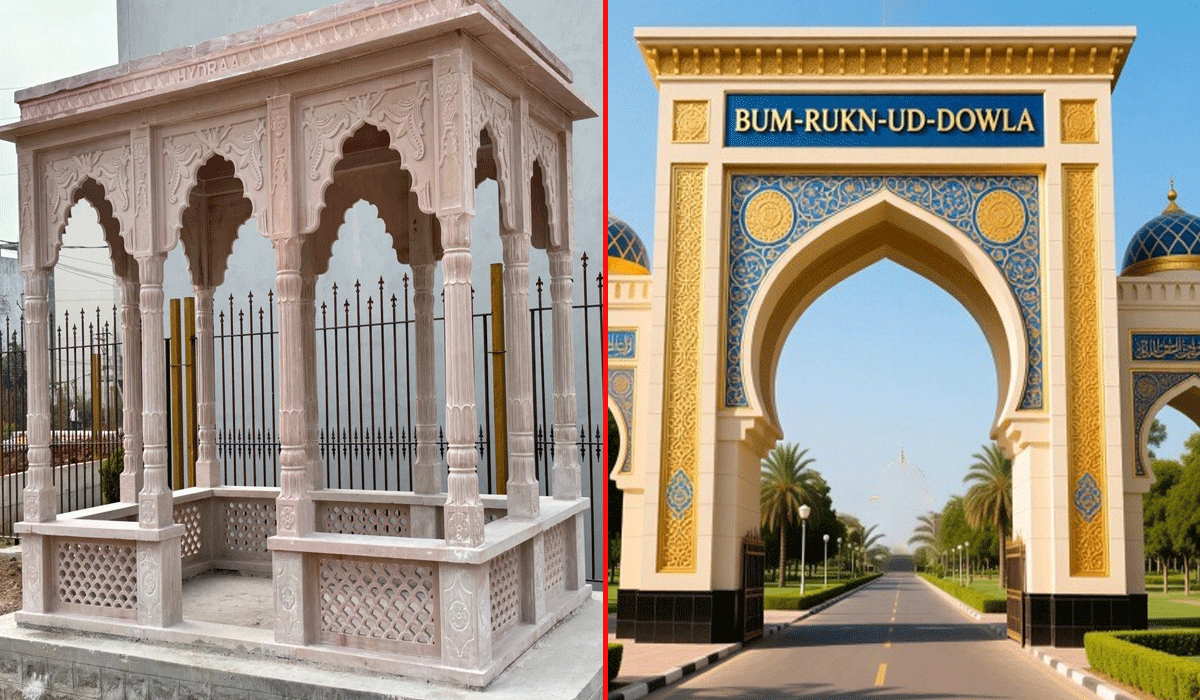
Hyderabad: In a significant boost to heritage conservation and urban ecology, the Hyderabad Disaster Response and Asset Protection Agency (HYDRAA) has successfully revived the historic Bum–Rukn-ud-Daula Lake in the Old City, restoring a Nizam-era water body that had nearly disappeared due to decades of encroachments.
Once on the brink of losing its identity, the lake has now been rejuvenated after the removal of illegal occupations, bringing a forgotten chapter of Hyderabad’s history back to life. Reflecting its historic grandeur, HYDRAA is transforming the lake into a prominent landmark, poised to emerge as a major attraction and green lung for the Old City.
Also Read: Gill’s omission surprising, maybe lack of form and touch went against him, says Gavaskar
With preparations underway for its inauguration in January, HYDRAA Commissioner Sri A.V. Ranganath visited the site on Saturday to review the ongoing development works. Emphasising the cultural and historical importance of the project, he said the restoration represents the revival of a heritage asset believed to have been lost to time and instructed officials to ensure meticulous execution at every stage.
The Commissioner reviewed the construction of access roads, entry gates, walking tracks along the bund, inner fencing works, children’s play areas, parks and open gyms. He also directed the development of gazebos on all four sides of the lake to provide resting spaces for senior citizens, ensuring the facility caters to all age groups.
Stressing that the lake should serve as a major recreational hub, especially in an increasingly concrete-dominated urban landscape, Ranganath instructed officials to plant medicinal and native tree species and develop lush green parks around the lake. He noted that the greenery should help bring down ambient temperatures in the surrounding areas, enhancing the local micro-climate.
To preserve historical authenticity, the Commissioner directed that stones used during the Nizam era be reused to strengthen structures wherever possible. He also reviewed the construction of wide inlets and outlets, suggesting the channeling of rainwater from Rajendranagar, Aramghar and nearby areas over a stretch of nearly 10 kilometres. The lake, he said, should also function as a flood-mitigation measure for surrounding localities. CCTV cameras are being installed to strengthen security and monitoring.
Historical records reveal that the Bum–Rukn-ud-Daula Lake was constructed in 1970 during the reign of the third Nizam, Sikandar Jah, by the then Prime Minister Nawab Rukn-ud-Daula, after whom the lake is named. Originally spread over 104 acres to meet drinking water needs, the lake gradually shrank over the decades. HMDA later identified its extent as 17.05 acres, which further reduced to just 4.12 acres due to encroachments.
In August last year, HYDRAA undertook a major drive to remove encroachments and restore the lake area as per official records. Despite facing resistance and criticism during the process, the agency persisted, successfully reclaiming and developing the lake. The transformation has drawn widespread appreciation, with even critics acknowledging the scale and quality of the restoration.
Local residents and elders recall the lake’s rich historical and cultural significance, noting that floodwaters from Rajendranagar, Aramghar and Katedan once flowed into it. During the Nizam era, Mir Alam Tank was reportedly used by kings, while the Bum–Rukn-ud-Daula Lake was reserved for queens. Medicinal herbs were said to be placed in the lake, with its spring water used for drinking, and fragrant flowers once grown around the lake were believed to have contributed to perfume-making, with the scented water even exported to Arab countries.
Residents say the revival of such a historically significant lake has brought immense pride and joy to the locality, transforming an area once neglected into a symbol of heritage, sustainability and urban renewal.


