
Supreme Court Denies Bail to Umar Khalid and Sharjeel Imam, Grants Relief to Five Others
The Supreme Court on Friday denied bail to Umar Khalid and Sharjeel Imam in the alleged conspiracy case related to the 2020 Delhi riots, while granting conditional bail to five other accused. The verdict was delivered by a bench comprising Justice Aravind Kumar and Justice N.V. Anjaria.

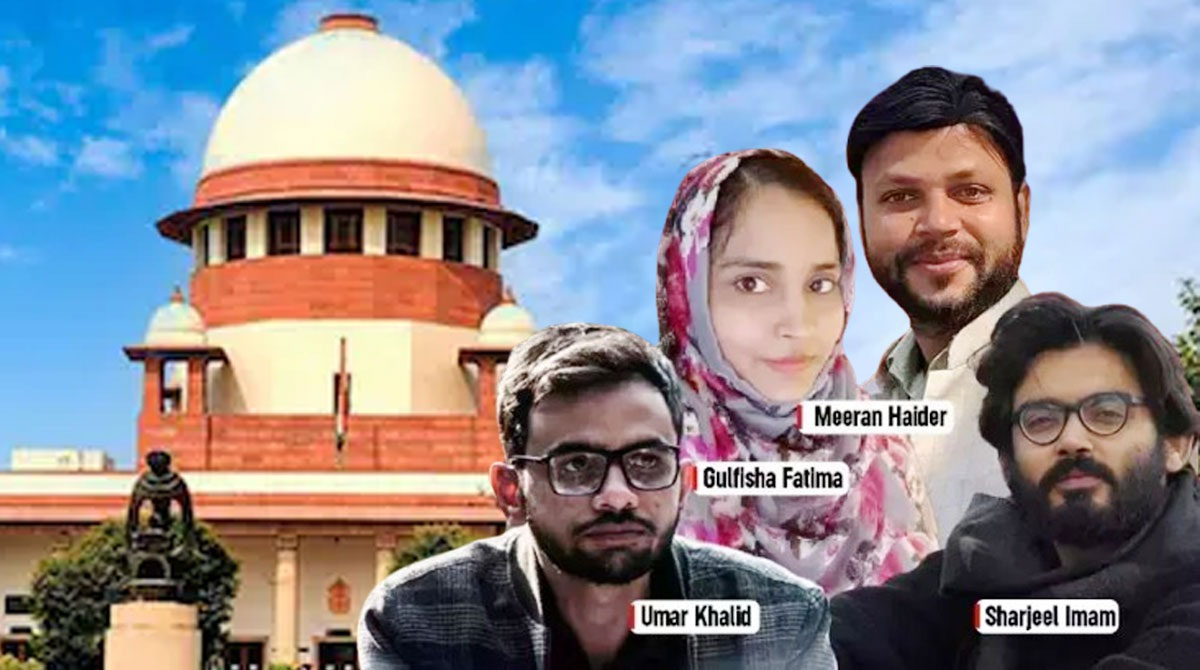
The Supreme Court on Friday denied bail to Umar Khalid and Sharjeel Imam in the alleged conspiracy case related to the 2020 Delhi riots, while granting conditional bail to five other accused. The verdict was delivered by a bench comprising Justice Aravind Kumar and Justice N.V. Anjaria.
The court observed that the alleged roles of Umar Khalid and Sharjeel Imam are distinct from those of the other accused and that there are sufficient prima facie indications of their involvement in the conspiracy. It clarified that at this stage; their roles cannot be compared with those granted bail.
Follow for more details: munsifdaily.com
The accused are facing charges under the Unlawful Activities (Prevention) Act (UAPA) and various provisions of the Indian Penal Code in connection with the violence that erupted in northeast Delhi in February 2020, leaving 53 people dead and over 700 injured. The riots occurred amid protests against the Citizenship Amendment Act (CAA) and the National Register of Citizens (NRC).
The Supreme Court emphasized that bail proceedings are not meant to assess the merits of the defence in detail, but to examine whether a prima facie case exists and whether the accused’s role has a reasonable nexus with the alleged offence.
The court granted bail to Meeran Haider, Gulfisha Fatima, Shifa Ur Rehman, Mohammad Shakeel Khan, and Shadab Ahmed, subject to specific conditions.
Telangana Government Plans Fresh Land Acquisition as Future City Project Gains Momentum
During the hearing, senior advocate Kapil Sibal argued that Umar Khalid has been in custody for over five years, and that the allegations against him largely pertain to speeches and alleged association with a WhatsApp group. The defence also alleged that delays in the trial were caused by the prosecution through multiple supplementary charge sheets.
Delhi Police maintained that Umar Khalid played a central role in planning protest-linked disruptions, including road blockades, and held secret meetings to mobilize support for the violence.
Meanwhile, political reactions followed the verdict, with the BJP and VHP criticizing international figures for commenting on the case, calling it interference in India’s internal affairs.


