
Smartphone Use Linked to Falling Birth Rates in India and Across the World, Researchers Say
Researchers say smartphones and social media may be contributing to falling birth rates in India and globally by changing relationships and family trends.

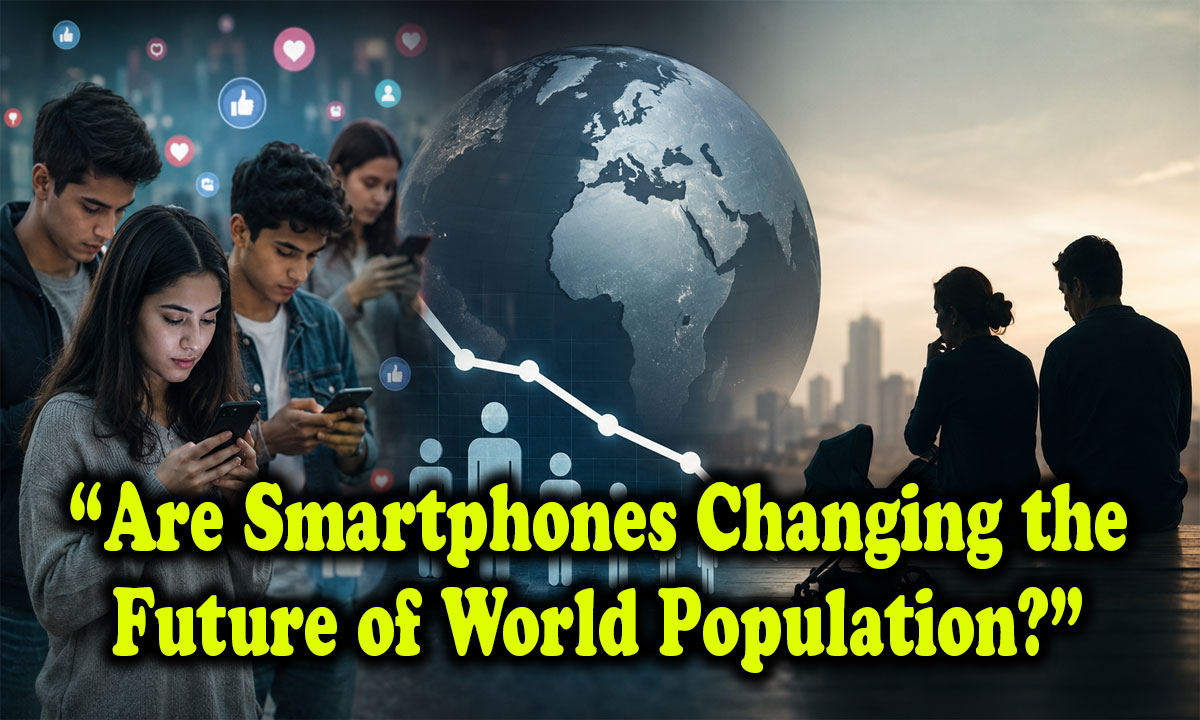
Population growth is slowing down across the world, with birth rates declining rapidly in many countries, including India.
Table of Contents
At one time, women in India gave birth to an average of 3.4 children, but the fertility rate has now reportedly fallen to just 2.0, which is below the 2.1 level considered necessary to maintain a stable population.
Experts say this trend is not limited to India, as birth rates are dropping sharply in several countries around the world. In some nations, women are reportedly giving birth to less than one child on average.
Researchers Link Smartphones to Falling Fertility Rates
Until now, rising inflation, housing costs, delayed marriages, career pressure, and changing social trends were considered the main reasons behind declining birth rates.
However, researchers have now identified another surprising factor — the growing use of smartphones and digital platforms.
Experts say smartphones, computers, and tablets have completely changed the way people build relationships. Young people are reportedly spending more time online instead of meeting face-to-face, affecting family life and childbirth trends.
University of Cincinnati Researchers Study 4G Internet and Birth Rates
Researchers Nathan Hudson and Hernan Moscoso Boedo from University of Cincinnati recently studied the relationship between 4G mobile internet and birth rates in the United States and the United Kingdom.
According to their research, areas that received high-speed mobile internet earlier experienced faster declines in birth rates.
The study reportedly found that smartphones have fundamentally changed relationship patterns among young people. People are now said to spend more time on social media and online platforms instead of real-life interactions, impacting family relationships and childbirth.
Financial Times Report Highlights Sharp Decline After 2007
According to an analysis report published by Financial Times, countries such as the United States, the United Kingdom, and Australia witnessed a noticeable decline in birth rates after 2007, when smartphones became widely common.
The report suggested that the increasing use of smartphones may be contributing to changing social behavior and lower fertility rates.
Social Media Increasing Stress and Insecurity Among Youth
Population expert Anna Rotkirch said social media is increasing insecurity, mental stress, and comparison habits among young people.
According to her observations, displays of luxurious lifestyles and financial concerns are discouraging young people from taking responsibility for raising children.
Experts also stated that while television dramas once promoted the idea of smaller families, smartphones are now accelerating this social change at a much faster pace.
Global Debate Intensifies Over Technology and Population Trends
The growing discussion around technology’s role in changing global population trends is now becoming a major international debate.
Researchers and experts continue to study whether smartphones and digital lifestyles are directly influencing declining birth rates and changing family structures worldwide.
Researchers and population experts say smartphone use and digital platforms may be contributing to declining birth rates in India and across the world. Studies by University of Cincinnati researchers Nathan Hudson and Hernan Moscoso Boedo found that areas with earlier access to 4G internet experienced faster fertility decline. Experts including Finnish demographer Anna Rotkirch also warned that social media, financial stress, and changing relationship patterns are affecting family life and childbirth trends globally. The debate over whether technology is reshaping world population patterns is continuing to grow.
Follow MunsifNews24x7 for latest updates.


