
Did Iran Destroy US Radar Systems? Middle East Climate Change Claims Raise Global Questions
Middle East climate change debate grows as claims link Iran’s destruction of US radar systems to unusual weather patterns, though experts find no scientific proof.

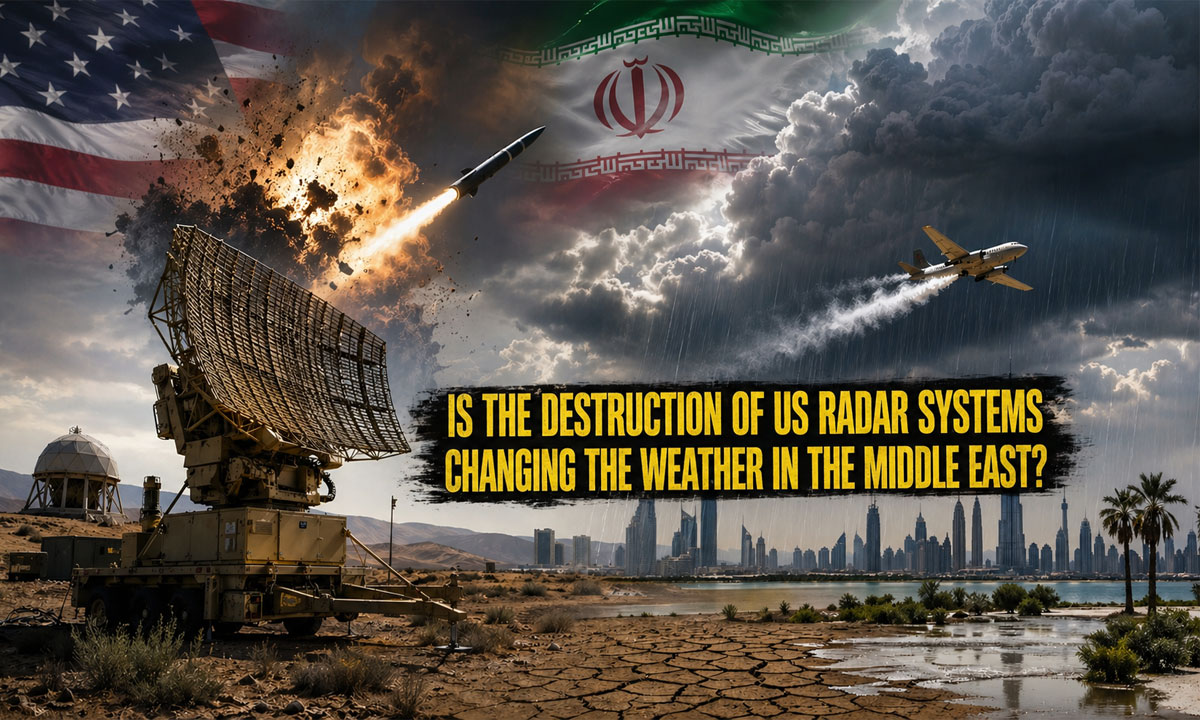
In the Middle East, discussions have intensified over claims linking the destruction of US radar systems by Iran with ongoing climate change and unusual weather patterns in the region. While these claims are being widely circulated, experts say the connection remains unproven and largely speculative, even as weather patterns continue to shift.
Table of Contents
The issue has gained attention due to recent geopolitical, military, and environmental developments, raising questions about whether advanced military technologies could influence weather systems. However, the current status remains under analysis, with no confirmed scientific evidence supporting a direct link.
Middle East Climate Conditions: A Longstanding Challenge
The Middle East has historically experienced:
- Hot and dry climate
- Low rainfall levels
- Frequent drought-like conditions
Countries including:
- Saudi Arabia
- United Arab Emirates
- Iran
- Oman
- Yemen
have long struggled with water scarcity. To manage this, many rely heavily on desalination, a process that converts seawater into usable water.
Recent Weather Changes Raise Questions
In recent years, some regions have reported:
- Increased rainfall
- Shifting weather patterns
Experts suggest that these changes may be due to:
- Global warming
- Rising global temperatures
- Changes in atmospheric pressure systems
However, some groups have linked these changes to artificial factors, including:
- Military technologies
- Radar systems
- Electromagnetic waves
Can Radar Systems Affect Weather?
Radar systems are designed for:
- Defense surveillance
- Tracking enemy movement
- Detecting missile or air attacks
These systems use powerful electromagnetic waves, leading to speculation that they might impact:
- Cloud formation
- Rainfall systems
Scientific View
There is no strong scientific evidence proving that:
- Standard defense radar systems can directly alter weather
- A single technology can control complex climate systems
Weather systems depend on multiple factors, including:
- Temperature
- Air pressure
- Humidity
- Ocean currents
Cloud Seeding: A Proven but Limited Technology
One scientifically recognized method is cloud seeding, which involves:
- Adding chemicals to clouds
- Attempting to increase rainfall
This technique is used in countries like the United Arab Emirates.
However:
- It works on a limited scale
- Results are not always guaranteed
Iran-US Radar Destruction and Climate Link: Speculation vs Reality
Claims connecting:
- Iran’s destruction of US radar systems
- Climate change in the Middle East
are largely based on assumptions and speculation.
While local environmental effects cannot be entirely ruled out, experts state that:
- Linking regional climate change to a single factor is scientifically inaccurate
- Multiple variables influence weather systems
Global Climate Change: The Bigger Factor
The primary drivers of changing weather patterns include:
- Global warming
- Melting glaciers
- Rising sea levels
- Shifts in atmospheric pressure systems
These global changes are impacting the Middle East climate significantly.
Water Crisis Still a Major Concern
Despite increased rainfall in some areas:
- Drought has not completely ended
- Water scarcity remains a serious issue
Key concerns include:
- Declining groundwater levels
- Rapid population growth
Impact of Political and Military Tensions
Ongoing political and military conflicts in the region also affect:
- Economy
- Environment
Factors such as:
- Industrial activity
- Oil production
- Air pollution
can indirectly influence climate systems.
Misinformation and Social Media Narratives
Experts warn that:
- Unverified claims often spread on social media
- Theories linking radar destruction to climate change may fall into this category
However, such claims cannot be entirely dismissed without scientific examination, making it important to rely on credible sources and research.
Future Outlook for Middle East Climate
The region is expected to face continued challenges, including:
- Water shortages
- Rising temperatures
- Unpredictable weather patterns
Solutions will require:
- Regional cooperation
- Advanced technology
- Environment-friendly policies
Middle East Climate Change and Radar Destruction Debate Continues
The debate over Iran allegedly destroying US radar systems and its link to Middle East climate change remains unresolved. While the topic has sparked widespread discussion, no scientific evidence confirms a direct connection.
Experts emphasize that climate change in the Middle East is real, but it is driven by multiple complex factors, including global warming, human activity, and natural systems. At present, the issue remains under observation and analysis, with speculation continuing but no confirmed link established.
Follow MunsifNews24x7 for latest updates.


