
Disease must never be used as weapon: EAM Jaishankar calls for stronger global biosecurity framework at BWC 50th anniversary
External Affairs Minister Dr S. Jaishankar on Monday called for urgent global reforms to strengthen biosecurity and fortify the Biological Weapons Convention (BWC) as it marks its 50th anniversary.

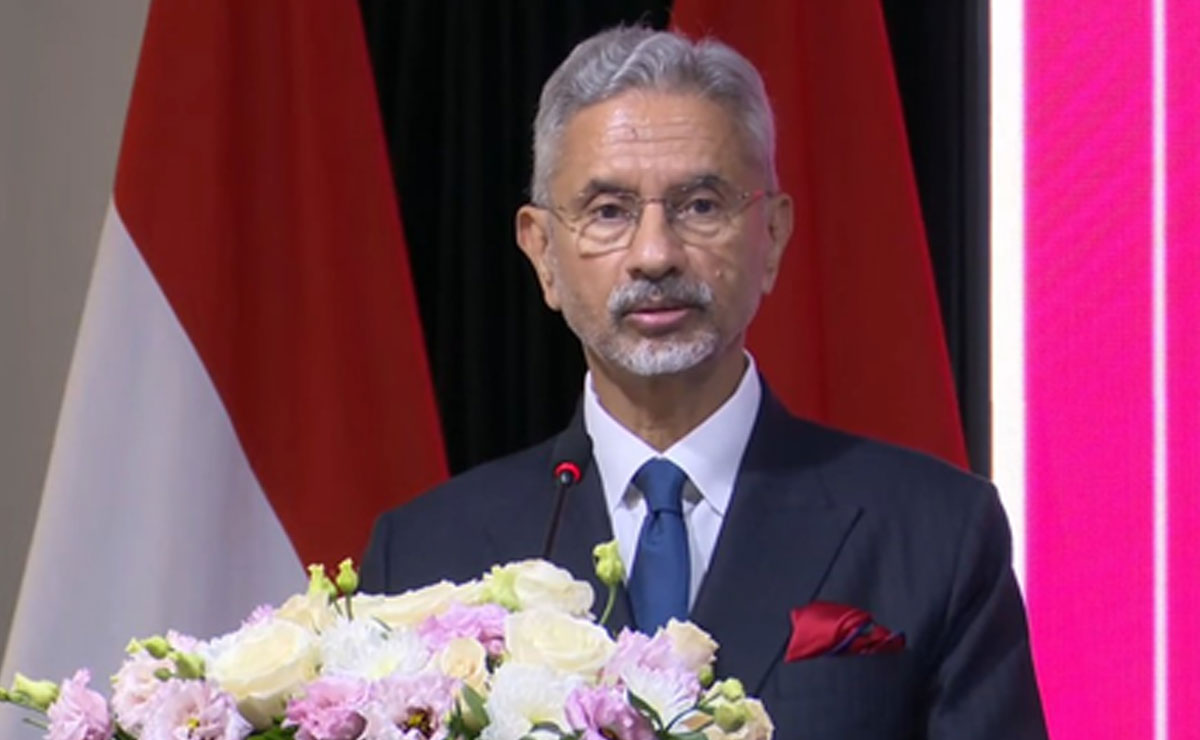
New Delhi: External Affairs Minister Dr S. Jaishankar on Monday called for urgent global reforms to strengthen biosecurity and fortify the Biological Weapons Convention (BWC) as it marks its 50th anniversary. Speaking at the Conference on 50 Years of the Biological Weapons Convention: Strengthening Biosecurity for the Global South in New Delhi, the minister warned that scientific advances are rapidly outpacing existing global governance frameworks, posing new risks for international security.
Opening his remarks with a strong moral assertion, Dr Jaishankar said, “We mark half a century of the BWC… disease must never be used as a weapon. Biology must serve peace, not advance harm.” He underlined that the BWC remains the guardrail between innovation and misuse in the life sciences domain, but questioned whether this protection would remain strong over the next 50 years. “The answer depends on the decisions we take now,” he stressed.
Also Read:Sengottaiyan intensifies push to bring unhappy AIADMK functionaries into Vijay’s TVK
Highlighting the uncertainties in global security and the rapid evolution of biotechnology, he noted that the falling cost and rising availability of sophisticated biological tools had introduced unprecedented challenges. “Whether a biological threat is natural, accidental, or deliberate, it moves fast; it defies borders, and it can overwhelm systems,” he warned, stressing that public health and national security are deeply interconnected.
Dr Jaishankar underscored the vulnerabilities of the Global South, noting gaps in healthcare systems, surveillance, laboratories, and emergency response mechanisms. “If biosecurity is uneven, so is global safety. The Global South is the most vulnerable… and its voice must shape the next 50 years of the BWC,” he said. Emphasising India’s role as a global health leader, the minister outlined five key strengths: India makes 60 per cent of the world’s vaccines; India supplies over 20 per cent of global generic medicines, with 60 per cent of Africa’s generics coming from Bharat.
India is home to nearly 11,000 biotech startups… the third-largest biotech startup ecosystem worldwide. He also mentioned major advances in digital health and healthcare investment and a vast national research network, including ICMR, DBT labs and BSL-3/4 facilities. He referenced India’s Vaccine Maitri initiative during the COVID-19 pandemic, which delivered nearly 300 million vaccine doses and medical assistance to over 100 vulnerable countries.
“When faced with a health crisis of such proportions, solidarity saves lives,” he said. EAM Jaishankar stressed that misuse of biological technology by non-state actors is an emerging risk. “Bioterrorism is a serious concern… yet the BWC still lacks basic institutional structures. It has no compliance system, no permanent technical body, and no mechanism to track new scientific developments,” he cautioned. Calling for modernisation of the BWC, he reiterated India’s longstanding demand for stronger compliance measures, verification mechanisms, and a systematic review of scientific developments.
He also highlighted India’s National Implementation Framework, covering high-risk agent identification, oversight of dual-use research, incident management, and continuous training. As a responsible member of global non-proliferation regimes, India remains active in the Wassenaar Arrangement, MTCR and Australia Group, he said, noting the latter’s relevance to biosecurity.
Concluding his address, Jaishankar said, “Norms survive only when nations renew them… We must modernise the Convention, keep pace with science and strengthen global capacity so that all countries can detect, prevent, and respond to biological risks. India stands ready.”


