
New labour codes boost safety infra, insurance coverage for petroleum workers
The Occupational Safety, Health and Working Conditions Code, 2020 (OSHWC Code) and the Social Security Code, 2020 under the recently introduced labour codes will boost the safety and welfare of workers in the petroleum industry, the government said on Monday.

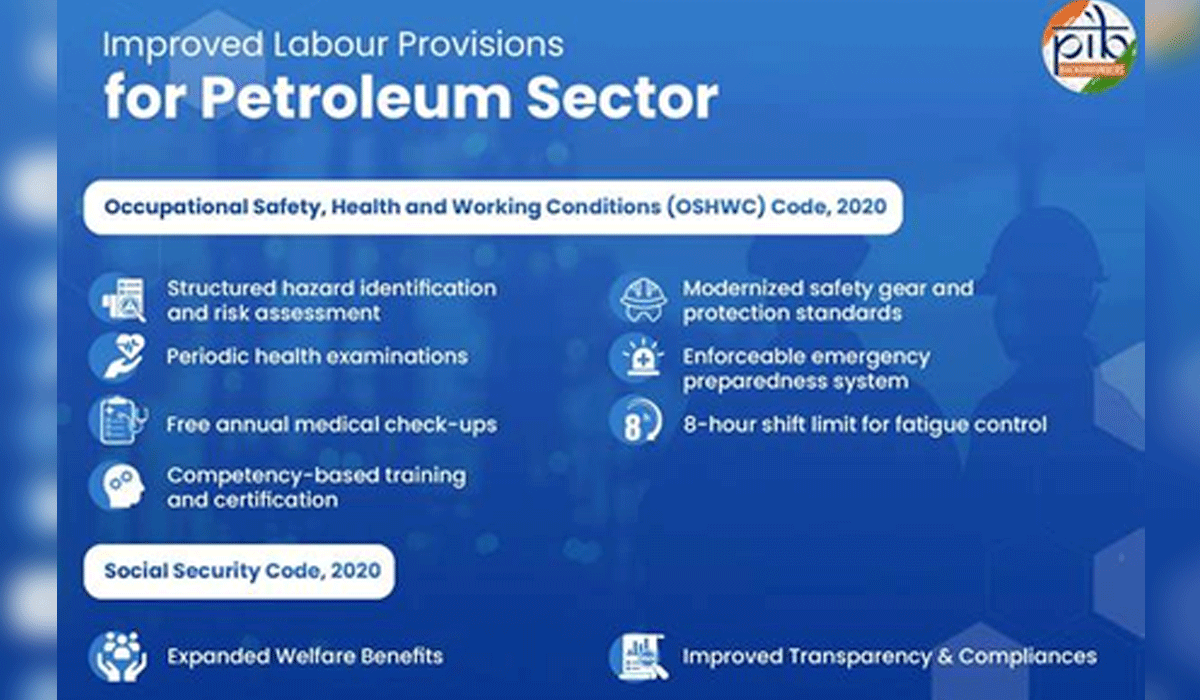
New Delhi: The Occupational Safety, Health and Working Conditions Code, 2020 (OSHWC Code) and the Social Security Code, 2020 under the recently introduced labour codes will boost the safety and welfare of workers in the petroleum industry, the government said on Monday.
The new labour codes bring petroleum units, refineries, and fuel depots under a unified national safety framework and institutionalised welfare measures, according to an official statement.
The OSHWC Code mandated structured hazard identification and risk assessment and required prior government approval before commencing hazardous operations.
Also Read: Telangana CM gearing up for friendly match against Messi’s team during ‘GOAT Tour 2025’
Further, it mandated national standards for handling, storage, transport, and disposal of petroleum substances. The code also incorporated risk‑based inspections, safety audits, emergency command‑structure involvement, and digital compliance platforms, similar to practices at global oil and gas majors.
The government said that worker protection is substantially enhanced as the code requires pre-employment, periodic, and post-exposure health examinations, supported by free annual medical check-ups for all workers engaged in hazardous petroleum operations.
The code enforces competency-based training and certification before a worker can handle petroleum or hazardous chemicals.
Employers must provide, maintain, and train workforce and ensure fatigue-control through 8-hour shift limits, a major safeguard for continuous-process plants, the statement said.
The code on Social Security Code, 2020 further institutionalised welfare measures by extending Employees’ State Insurance Corporation (ESIC) coverage to petroleum workplaces, enabling medical care, injury compensation, disability and dependents’ benefits, maternity protection compensation for occupational diseases and accidents.
Digital social-security and health records ensure portability, beneficiary transparency, and accountability.
The government said that the codes shift petroleum-sector safety from a reactive, compliance-heavy system to a modern, prevention-focused, technology-enabled, and welfare-centric framework.
The provisions enhance operational discipline, workforce capability, emergency readiness, medical monitoring, regulatory clarity, and coordination, the statement noted.


