
Iran Rejects US Ceasefire Plan, Launches Fresh Attacks Across Middle East Amid Rising Oil Prices
Iran rejects US ceasefire plan and launches fresh attacks across Middle East. Oil prices surge as Strait of Hormuz tensions rise.

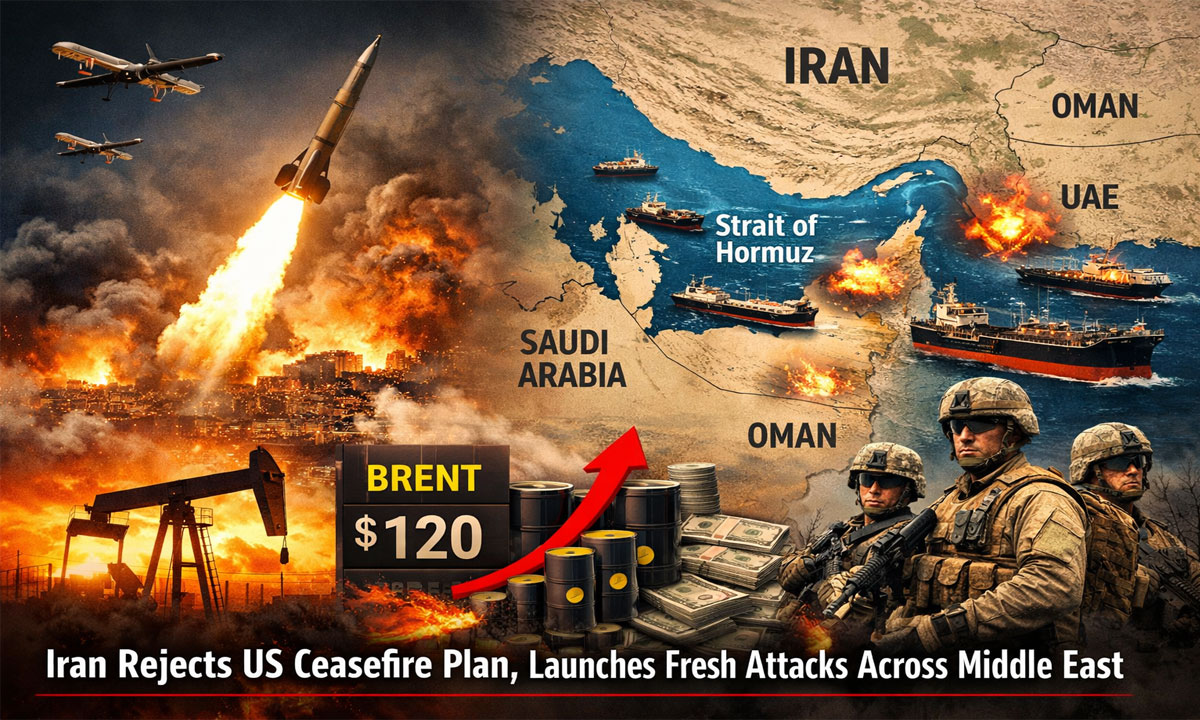
In a major escalation, Iran has rejected the US ceasefire plan and launched fresh attacks across the Middle East, intensifying the ongoing conflict. The development has raised global concerns over regional stability, oil supply disruptions, and rising energy prices.
Table of Contents
The Iran rejects US ceasefire plan move signals that the conflict may continue for a longer period.
Fresh Attacks Across Israel and Gulf Countries
Following the rejection:
- Iran launched missile and drone attacks on Israel and Gulf nations
- A major incident caused a fire at Kuwait International Airport
- Air raid sirens were heard across multiple regions
The attacks have increased tensions across the Middle East conflict zone.
US Deploys More Troops to the Region
In response to escalating tensions:
- The US is sending 1,000 troops from the 82nd Airborne Division
- Around 5,000 Marines and additional naval forces are being deployed
- Focus is on securing key locations and strategic assets
This move highlights the seriousness of the Iran-US-Israel conflict.
Ceasefire Talks Face Major Challenges
Diplomatic efforts are ongoing but face obstacles:
- Iran rejected the US proposal and issued its own conditions
- Demands include control over Strait of Hormuz and war compensation
- Talks may take place soon, but agreement remains uncertain
Strait of Hormuz Tensions Impact Global Oil Supply
The conflict has significantly affected energy markets:
- Strait of Hormuz handles a major share of global oil shipments
- Restrictions have caused oil prices to surge sharply
- Brent crude prices rose close to $120 per barrel, later stabilizing
This has sparked fears of a global energy crisis.
Heavy Casualties Reported Across Region
The ongoing conflict has led to significant losses:
- Over 1,500 deaths reported in Iran
- Around 20 deaths in Israel
- Casualties also reported in Lebanon, Iraq, and Gulf countries
The situation remains volatile with continuous strikes.
UN Urges Immediate End to Conflict
The United Nations has expressed serious concern:
- Called for an end to hostilities
- Urged all parties to de-escalate tensions
- Warned that the conflict has crossed dangerous limits
Iran Rejects US Ceasefire Plan, Conflict Intensifies
The decision as Iran rejects US ceasefire plan and continues attacks across the Middle East has deepened the crisis. With rising oil prices, troop deployments, and ongoing violence, the situation remains critical and could have far-reaching global impacts.
Follow MunsifNews24x7 for latest updates.


