
Indian Rupee Falls to Record Low Against US Dollar Amid Crude Oil Surge, FPI Outflows
The Indian rupee fell to a record low of 96.14 against the US dollar amid rising crude oil prices, FPI outflows, and global market uncertainty.

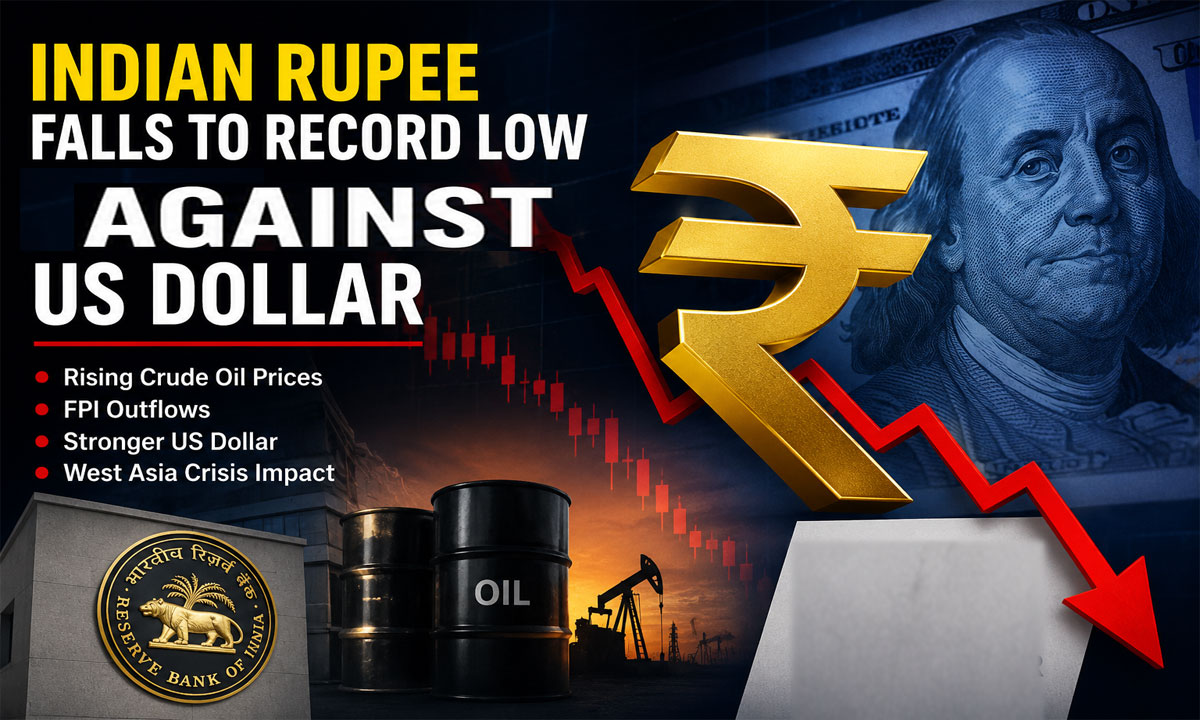

The Indian rupee fell to a record low of 96.14 against the US dollar on Friday amid rising crude oil prices in the international market and continued withdrawal of funds by foreign portfolio investors (FPIs) from the Indian market. The strengthening of the US dollar globally and concerns over the West Asia crisis further weakened the rupee, marking the all-time low value of the Indian currency recorded this week.
Rupee Hits All-Time Low Against US Dollar
The Indian rupee declined to 96.14 against the US dollar, the lowest level ever recorded for the domestic currency.
According to analysts, the fall was mainly driven by:
- Rising international crude oil prices
- Foreign portfolio investors (FPIs) withdrawing investments from Indian markets
- Strengthening of the US dollar in global markets
The decline comes just days after Prime Minister Narendra Modi called for measures to protect India’s foreign exchange reserves.
West Asia Crisis and Strait of Hormuz Concerns Impact Rupee
Economists and market analysts said the prolonged crisis in West Asia and concerns over the near-closure of the Strait of Hormuz have added pressure on the Indian currency.
The Strait of Hormuz is considered crucial for global oil transportation.
Experts believe fears related to oil supply disruptions have contributed significantly to the depreciation of the rupee.
Inflation Concerns Rise as Growth Projections Lowered
Several economists and institutions have lowered growth projections for the Indian economy while increasing inflation expectations.
At the same time, the official Wholesale Price Index (WPI) reportedly touched a nearly four-year high.
Analysts also stated that the dollar index strengthened due to indications that the US Federal Reserve may delay interest rate cuts.
RBI Selling Dollars to Control Rupee Fall
In the current situation, the Reserve Bank of India (RBI) is reportedly trying to control the rupee’s decline by selling dollars in the currency market.
Financial experts said the weakening rupee could make imports more expensive.
The likely impact includes higher prices for:
- Crude oil
- Electronic goods
- Pulses
Economists warned that the rupee depreciation may further increase inflationary pressure in the country.
The Indian rupee fell to a record low of 96.14 against the US dollar on Friday due to rising crude oil prices, FPI outflows, and strengthening of the US dollar in global markets. Concerns over the West Asia crisis and the Strait of Hormuz also contributed to the decline. While the RBI is selling dollars to stabilize the currency, experts warn that a weaker rupee could increase the prices of crude oil, electronic goods, and pulses, impacting inflation in India.
Follow MunsifNews24x7 for latest updates.


