
AIMPLB Executive Committee Ends Meeting, Announces Major Decisions on Lynching, Bulldozer Actions, Vande Mataram, UCC and Kamal Maula Mosque Case
AIMPLB Executive Committee meeting in New Delhi on June 22, 2026 announced major decisions on lynching, bulldozer actions, Vande Mataram, Uniform Civil Code implementation and the Kamal Maula Mosque/Bhojshala case.

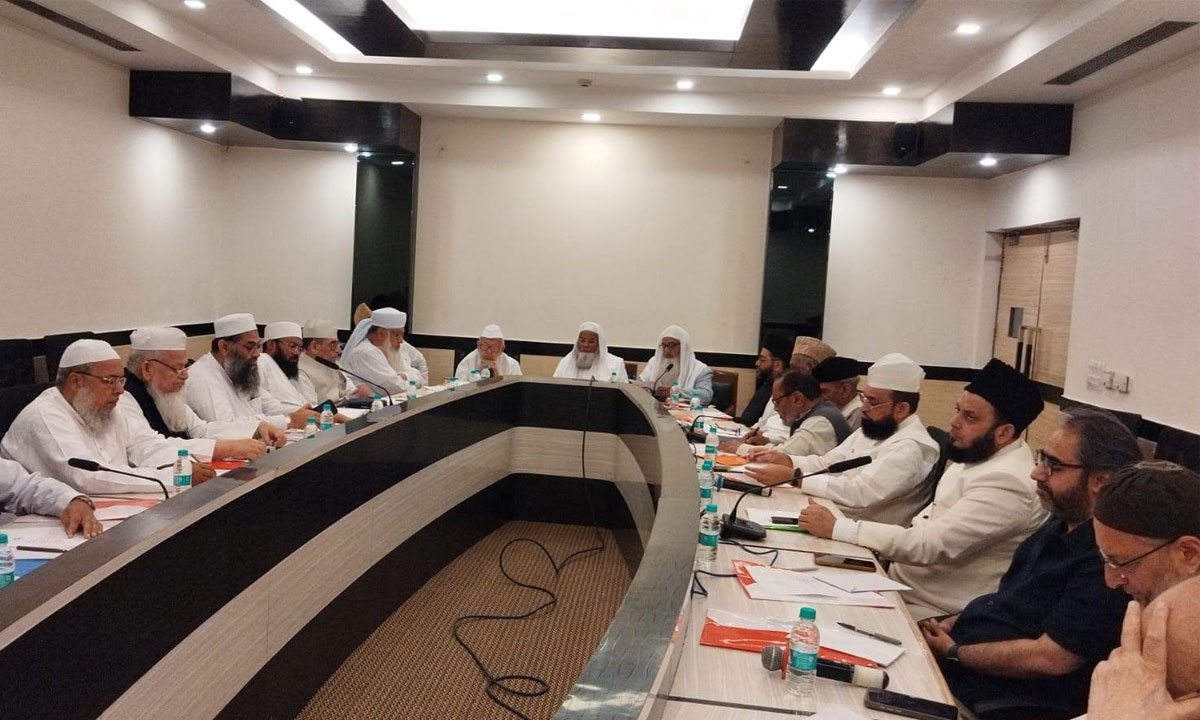
The Executive Committee of the All-India Muslim Personal Law Board (AIMPLB) concluded its meeting in New Delhi and announced several important decisions after reviewing the current situation facing the country and the Muslim community. The meeting discussed issues including increasing mob violence (lynching) against Muslims in BJP-ruled states, demolition drives against mosques and madrasas, bulldozer actions against Muslim homes and localities, attempts to make Vande Mataram compulsory in government functions, schools and aided madrasas, developments related to the implementation of the Uniform Civil Code (UCC) in various states, and the recent Madhya Pradesh High Court judgment concerning the Kamal Maula Mosque/Bhojshala case.
Table of Contents
AIMPLB Expresses Concern Over Situation of Muslims
The Executive Committee expressed serious concern over what it described as the rapidly deteriorating situation of the Muslim community in the country.
According to the Board, in BJP-administered states, Muslims’ lives, property, honour, dignity, mosques, madrasas, graveyards, personal law, fundamental rights, and even their faith and beliefs are continuously under attack.
The Committee stated that an atmosphere of hatred, prejudice and communal tension is being systematically promoted across the country. It further alleged that senior BJP office-bearers and government functionaries themselves appear to be encouraging such an environment, while no effective legal action is taken against hate speeches and provocative statements.
The Executive Committee also expressed regret that despite what it described as planned attacks on the community’s life, property, honour, dignity, religion and faith, secular political parties continue to maintain what it called a criminal silence, making Muslims appear to be treated merely as a vote bank.
Comprehensive Document to Be Published
The Board decided to prepare and publish a comprehensive document highlighting the deteriorating situation of the Muslim community, communal tensions and alleged violations of fundamental rights.
According to the Board, the objective is to awaken the conscience of aware, justice-loving and democratic sections of society.
The Board stated that violations of the rights of the country’s second-largest community are not merely the concern of one section but affect the democratic structure, social harmony and development process of the entire nation.
AIMPLB on Kamal Maula Mosque/Bhojshala Case
The Executive Committee expressed deep concern over the recent judgment of the Madhya Pradesh High Court in the Kamal Maula Mosque case.
The Board stated that the judgment is contrary to historical evidence, revenue records, colonial-era government documents and centuries-old Muslim worship traditions.
It further stated that the judgment is also inconsistent with the spirit of the Places of Worship Act, 1991.
The Executive Committee welcomed the decision of the Kamal Maula Mosque Committee to challenge the judgment before the Supreme Court and resolved that the All India Muslim Personal Law Board would provide every possible assistance in the legal battle.
Board Opposes Efforts to Make Vande Mataram Compulsory
The Executive Committee described attempts to make Vande Mataram compulsory as being contrary to Article 25 of the Constitution of India.
The Board stated that if the Central Government takes any step resulting in Parliament making the recitation of Vande Mataram compulsory for all citizens or school students, it will approach the courts against such a move.
The Board also opposed the decision of the West Bengal Government to make Vande Mataram compulsory in schools and government-aided and recognized madrasas.
According to the Executive Committee, the decision violates fundamental rights and goes against the Supreme Court’s historic judgment in Bijoe Emmanuel vs State of Kerala (1986). It demanded that the decision be withdrawn immediately.
Welcome to Calcutta High Court Interim Order
The Executive Committee welcomed the interim order of the Calcutta High Court that stayed the government directive requiring the singing of Vande Mataram in madrasas.
The court, according to the Board, initially observed that Vande Mataram cannot be made compulsory in madrasas while ignoring the religious beliefs and sentiments of the minority community.
The Board noted that no disciplinary action can be taken against any madrasa or student for not singing Vande Mataram.
The Executive Committee stated in clear terms that Vande Mataram is a polytheistic song and that some of its contents are contrary to the Islamic belief in monotheism (Tawheed). Therefore, it stated that reciting it is not permissible for Muslims according to Islamic law.
The Board appealed to Muslims not to compromise on their faith and beliefs in the name of tolerance or patriotism.
Concern Over Uniform Civil Code in Several States
The Executive Committee also expressed serious concern over legislative efforts being made under the name of the Uniform Civil Code (UCC) in BJP-ruled states.
The meeting noted that after Uttarakhand and Gujarat, preparations are now underway to implement the UCC in Assam, Madhya Pradesh and Maharashtra.
The Board stated that the Uniform Civil Code is not a constitutional provision that courts are obligated to enforce. Instead, it said that it is included among the Directive Principles of the Constitution and is a non-mandatory guiding principle.
According to the Board, the forced implementation of the UCC would be contrary to the religious freedom guaranteed under Article 25 of the Constitution of India and against the pluralistic and diverse social structure of the country.
The Executive Committee decided that just as the Board has challenged the Uttarakhand UCC law before the Nainital High Court, similar legal action would be taken against such laws in other states as well.
Nationwide Movement Planned
The Executive Committee also decided that the All India Muslim Personal Law Board will launch a nationwide movement against what it described as:
- Marginalisation of Muslims socially and politically
- Violations of constitutional requirements
- Promotion of hatred and hostility
- Damage to communal harmony
- Attacks on the lives, property, honour and dignity of Muslims
- Demolition of mosques and madrasas
The Board stated that justice-loving, democracy-supporting and peace-loving sections of society would be brought together for this movement.
For this purpose, an action committee will be constituted.
Meeting Leadership and Participants
The meeting was chaired by AIMPLB President Maulana Khalid Saifullah Rahmani.
The proceedings were conducted by AIMPLB General Secretary Maulana Mohammad Fazlur Rahim Mujaddidi.
Executive Committee members from across the country attended the meeting, including:
- Maulana Arshad Madani, President, Jamiat Ulama-e-Hind
- Maulana Ubaidullah Khan Azmi, Former Member of Parliament
- Syed Saadatullah Husaini, Ameer, Jamaat-e-Islami Hind
- Maulana Asghar Ali Imam Mehdi, Ameer, Markazi Jamiat Ahle Hadith
- Maulana Mohammad Umrain Mahfooz Rahmani
- Maulana Dr. Yaseen Ali Usmani
- Dr. Syed Qasim Rasool Ilyas, National Spokesperson
- Senior Advocate Yusuf Hatim Muchhala
- Senior Advocate M.R. Shamshad
- Advocate Jaleesha Sultana, Convener, Women Wing
- Barrister Asaduddin Owaisi, Member of Parliament
- Arif Masood
- Maulana Mohammad Abu Talib Rahmani
- Maulana Khalilur Rahman Sajjad Nomani
- Maulana Khalid Rasheed Farangi Mahali
Leaders Addressing the Press Conference
The press conference was addressed by:
- Maulana Mohammad Fazlur Rahim Mujaddidi, General Secretary
- Dr. Syed Qasim Rasool Ilyas, National Spokesperson
The AIMPLB Executive Committee meeting held in New Delhi on June 22, 2026 concluded with major decisions concerning mob lynching, demolition drives against mosques and madrasas, bulldozer actions against Muslim homes, compulsory Vande Mataram policies, Uniform Civil Code implementation efforts and the Kamal Maula Mosque/Bhojshala case. The Board announced legal, public awareness and nationwide movement initiatives while expressing concern over the current situation of Muslims and affirming support for ongoing legal challenges, including the Supreme Court appeal in the Kamal Maula Mosque case.
Follow MunsifNews24x7 for latest updates.


