
Can Your Indian Citizenship Be Cancelled If Your Name Is Missing from the Voter List? Supreme Court Answers
The Supreme Court ruled that deletion from the voters' list does not result in loss of Indian citizenship while hearing West Bengal SIR petitions. The court said the Election Commission cannot determine citizenship and called for transparency in the electoral roll revision process.

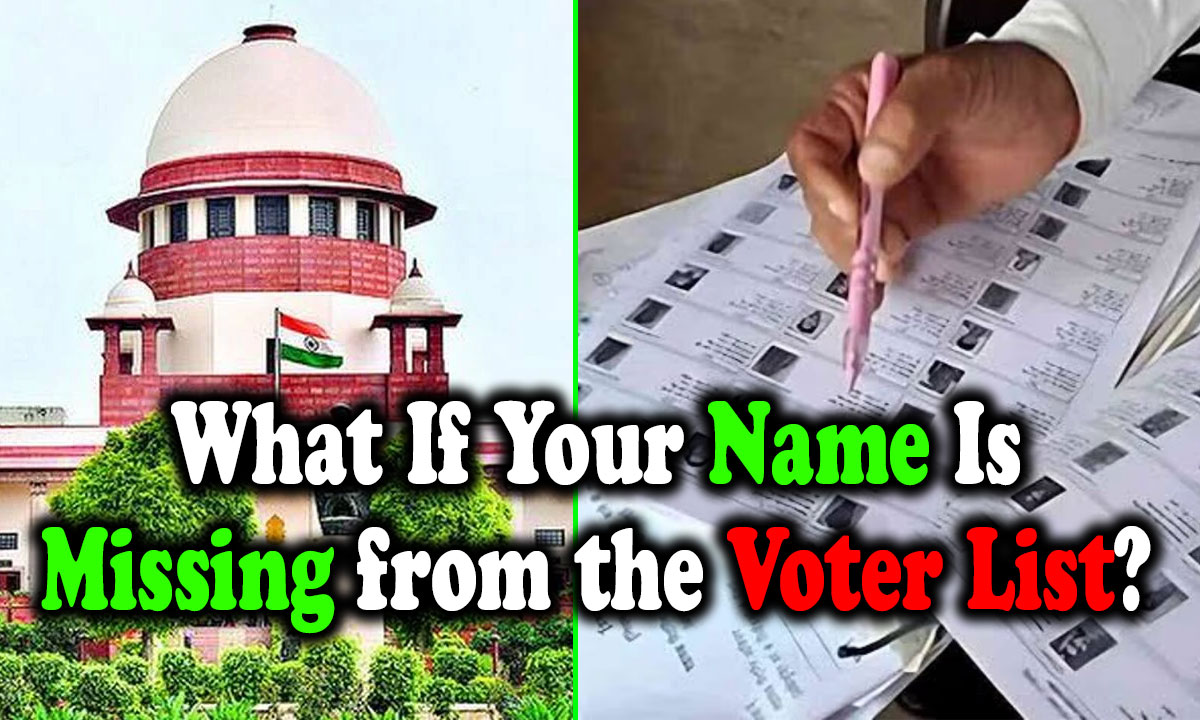
The Supreme Court has made it clear that no one will lose Indian citizenship because their name is removed from the voters’ list. While hearing petitions related to the Special Intensive Revision (SIR) process in West Bengal, the apex court stated that the Election Commission of India (ECI) does not have the final authority to determine citizenship. The court also said that removal from the electoral roll only means a person is not entitled to vote and does not result in the loss of citizenship. The matter is currently under hearing.
Supreme Court Says ECI Cannot Decide Citizenship
A bench comprising Chief Justice of India Surya Kant, Justice Jayamalya Bagchi, and Justice V. heard the petitions related to the Special Intensive Revision (SIR) process in West Bengal.
During the hearing, the Supreme Court made it clear that the Election Commission of India has no final power to determine whether a person is an Indian citizen.
The court observed that if a person’s name is not included in the voters’ list, it only means that the person is not entitled to vote. It does not serve as a document or decision that revokes Indian citizenship.
The bench also recalled that it had already clarified in the Bihar SIR judgment that removal from the voters’ list does not result in the loss of citizenship.
Follow for more details: munsifdaily.com
Supreme Court Calls for Transparency in West Bengal SIR Process
The Supreme Court noted that concerns have been raised that deletion of names from the electoral roll could lead to loss of citizenship and the suspension of government welfare schemes.
The court emphasized that there should be transparency in the electoral roll revision process. It also suggested that there should be a proper appeal mechanism for people whose names have been wrongly deleted from the electoral roll.
The court further noted that the Election Commission’s verification process is limited to the preparation of the electoral roll and does not extend to making a final determination on citizenship.
Welfare Schemes Allegedly Denied to Deleted Voters
During the hearing, the petitioner’s counsel informed the Supreme Court that there are 34 lakh appeals pending before 19 Appellate Tribunals concerning disenfranchised voters in West Bengal.
According to the submissions before the court:
- 34 lakh appeals are pending before 19 Appellate Tribunals.
- Only about 38,000 appeals have been disposed of so far.
- Around 70 per cent of those appeals were allowed.
The petitioner’s counsel also alleged that while these appeals remain pending, the West Bengal government has issued notifications denying benefits under the Public Distribution System (PDS) and welfare schemes such as the Annapurna Yojana to people whose names were deleted from the voters’ list.
The counsel further submitted that caste certificates are also being denied to such persons.
Supreme Court on ECI’s Duty After Electoral Roll Deletion
The Supreme Court observed that once a person’s name is deleted from the electoral roll, it is the duty of the Election Commission of India to apply to the Centre for ascertaining that person’s citizenship status.
The bench also decided to hear a batch of petitions challenging the West Bengal Special Intensive Revision (SIR) process and the suspension of government welfare schemes linked to deletion from the electoral roll.
The Supreme Court has reiterated that deletion from the voters’ list does not cancel Indian citizenship and that the Election Commission of India cannot make the final determination on citizenship. While hearing petitions related to the West Bengal Special Intensive Revision (SIR) process, the apex court stressed the need for transparency, a proper appeal system, and clarified that the matter remains under judicial consideration as it continues to hear challenges related to the SIR exercise and the suspension of welfare benefits.


