
Big Change for Indian Currency? RBI May Introduce Plastic Notes
RBI is reportedly planning to introduce polymer currency notes in India to reduce printing costs and improve note durability. Discussions were held in RBI board meetings in Patna and Mumbai.

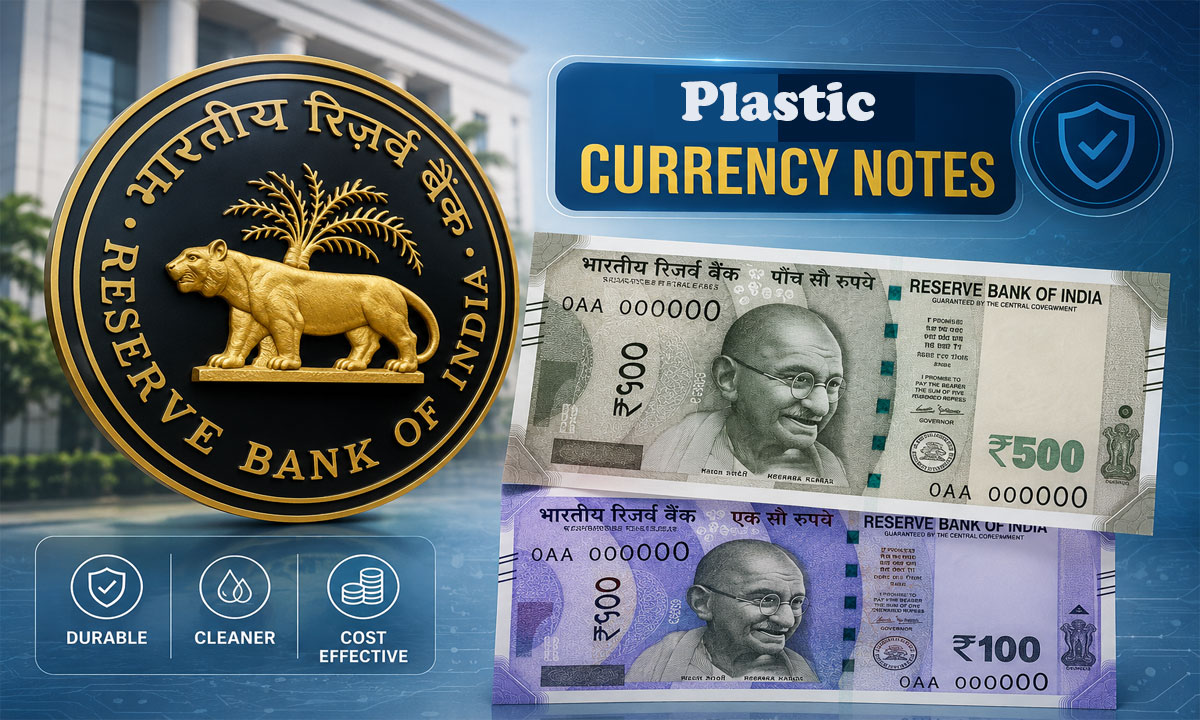

The Reserve Bank of India (RBI) is reportedly preparing to introduce Plastic currency notes in India as the demand for Indian currency continues to grow. According to national media reports, the move is being considered to reduce the increasing cost of printing existing paper currency notes. Reports suggest that the RBI is planning to introduce Plastic notes, also known as plastic notes, and may begin with a pilot project before a wider rollout.
Table of Contents
The discussions come at a time when the cost of manufacturing paper currency notes remains high and the RBI is looking at alternatives that can improve durability and reduce long-term expenses.
Plastic Notes Could Offer Multiple Benefits
According to reports, Plastic or plastic notes cost much less to manufacture compared to traditional paper notes. They also have a longer lifespan and do not wear out as quickly as paper currency.
Due to these advantages, the RBI has reportedly started discussions on introducing Plastic notes and is considering launching a pilot project first. The central bank is expected to announce a decision in the coming days.
Reports further state that the issue was discussed during the last two RBI board meetings held in Patna and Mumbai. The meetings reportedly examined the possibility of introducing Plastic or plastic currency notes in India.
Experts cited in the reports say that Plastic notes can be easily dispensed through ATMs and that the required infrastructure and resources are already available. As a result, no major changes would be required in ATM operations if the new notes are introduced.
Earlier Plastic Note Proposal Was Dropped
The idea of introducing Plastic currency notes is not new.
In 2012, the UPA government approved field trials of Plastic notes worth Rs 1 billion in five cities. However, the project was delayed due to technical issues.
At the time, the government stated that the primary objective of Plastic notes was to improve the validity and shelf life of currency notes rather than curb counterfeiting. The proposal was later withdrawn.
Now, discussions regarding Plastic notes have reportedly resumed, and the RBI may soon take the lead on the initiative.
Rising Currency Printing Costs and Damaged Notes
The growing cost of printing paper currency is one of the key reasons behind the renewed interest in Plastic notes.
According to the reports, Rs 6,372.8 crore was spent on printing paper currency notes during the last financial year.
In the previous fiscal year, around 23.8 billion mutilated notes were withdrawn from circulation, creating a major challenge for authorities.
Most of the discarded notes were Rs 500 denomination notes, followed by Rs 100 notes.
Despite the rapid growth of digital payment systems across the country, demand for cash has remained steady, increasing the need for durable currency that can stay in circulation for longer periods.
The Reserve Bank of India is reportedly considering the introduction of Plastic currency notes to replace traditional paper notes in phases. Discussions have reportedly taken place during recent RBI board meetings in Patna and Mumbai, with a pilot project under consideration. The move is being linked to rising currency printing costs, the withdrawal of 23.8 billion mutilated notes, and the steady demand for cash despite the growth of digital payments. While no official announcement has yet been made, reports suggest that the RBI may take a decision in the coming days.
Follow MunsifNews24x7 for latest updates.


