
Ötzi the Iceman: Scientists Find Active Microbial Ecosystem on 5,300-Year-Old Ice Mummy
Scientists studying Ötzi the Iceman have discovered that the 5,300-year-old ice mummy still hosts an active microbial ecosystem. Researchers found metabolically active cold-loving yeasts and growing Glaciozyma colonies.

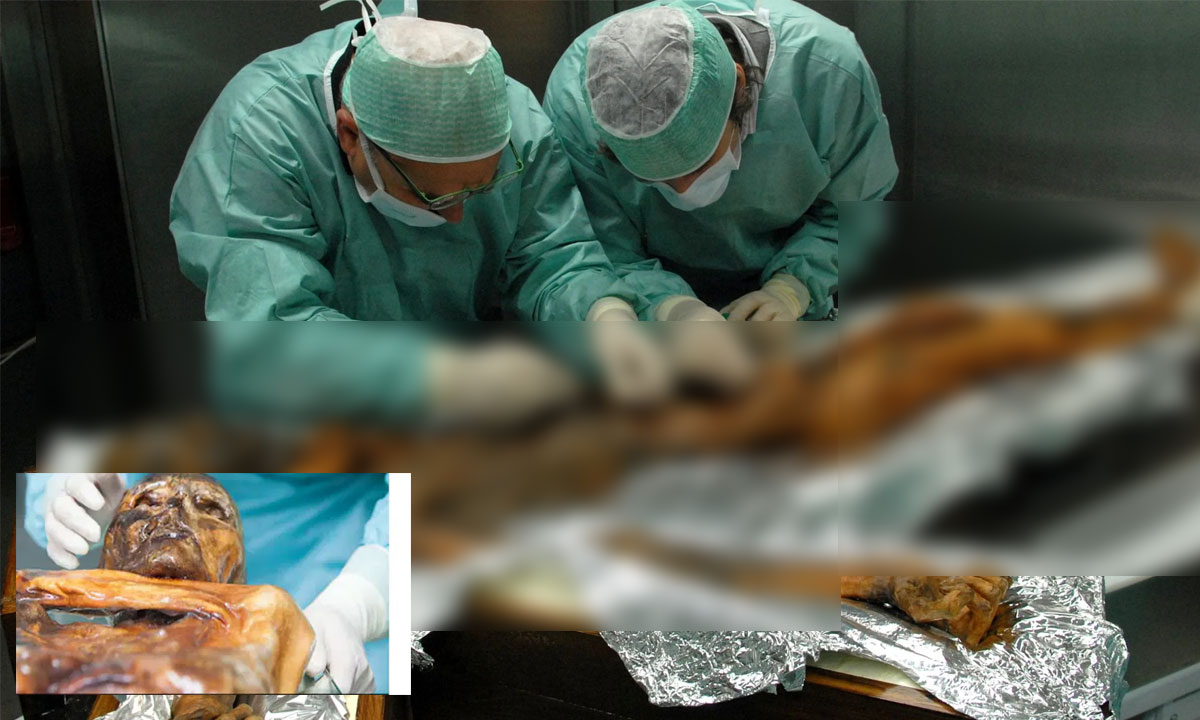
Italy: One of the most remarkable discoveries in archaeology and medical science has taken a new turn after researchers found that the microbial ecosystem on Ötzi the Iceman, a 5,300-year-old ice mummy discovered in the Alps, is still active. Scientists involved in a recent international study reported that the microbiome on the ancient body is not static but continues to change over time, surprising researchers and opening new avenues of scientific investigation.
Table of Contents
Discovery of Ötzi the Iceman
In 1991, an ancient human body was discovered frozen in the snow-covered Alps on the Italian-Austrian border.
Scientists named the mummy Ötzi the Iceman. Researchers later confirmed that the Copper Age man died approximately 5,300 years ago.
For decades, Ötzi was regarded primarily as a frozen time capsule that offered insights into life during the Copper Age.
International Study Examines Ancient Microbiome
According to a recent international study, scientists discovered that the microbiome present on Ötzi’s body remains active and continues to evolve.
The research was led by microbiologist Mohammed Sarhan from the Eurac Research Institute, Italy.
Researchers conducted genetic analysis on samples collected from:
- Ötzi’s body
- Skin
- Remains found in his stomach
The study found that ancient microbes dating back thousands of years coexist alongside modern pollutants on the mummy.
Scientists Describe Ötzi as a Living Ecosystem
In their report, researchers stated that Ötzi should not be viewed merely as a non-living fossil.
Instead, they described the ice mummy as a complex ecosystem containing microbes capable of surviving in extremely cold environments.
The findings suggest that microbial activity continues even after thousands of years under carefully controlled preservation conditions.
Ancient Cold-Loving Yeasts Still Active
One of the most unusual findings of the study was the discovery that four types of psychrophilic yeasts, also known as cold-loving yeasts, found on Ötzi’s skin remain metabolically active.
Researchers reported that these microorganisms continue to function despite the extreme cold conditions in which the mummy is preserved.
Preservation at South Tyrol Museum of Archaeology
Ötzi is currently preserved in a special chamber at the South Tyrol Museum of Archaeology, Italy.
The chamber is maintained at:
- Minus 6 degrees Celsius
- 100 percent humidity
These controlled conditions are designed to preserve the ancient body while allowing researchers to continue scientific studies.
Glaciozyma Yeast Shows Growth Over Nine Years
Scientists compared samples collected between 2010 and 2019 and found that a cold-adapted yeast species known as Glaciozyma had slowly expanded during the nine-year period.
According to the study, the yeast continued growing even under the extreme cold conditions maintained in the preservation chamber.
Researchers reported that Glaciozyma gradually spread and came to occupy the entire microbial community found on the mummy.
Current Status of the Research
The international study has confirmed that:
- Ötzi the Iceman died about 5,300 years ago.
- The microbiome on the mummy remains active.
- Four psychrophilic yeast species are metabolically active.
- Genetic analysis was conducted on body, skin, and stomach samples.
- Glaciozyma yeast showed measurable growth between 2010 and 2019.
- Ötzi continues to be preserved at the South Tyrol Museum of Archaeology under controlled conditions.
Further research into the mummy’s microbial ecosystem is ongoing.
The latest study on Ötzi the Iceman, the 5,300-year-old ice mummy discovered in 1991 in the Alps on the Italian-Austrian border, has revealed that the microorganisms living on the body remain active. Led by Mohammed Sarhan of the Eurac Research Institute, researchers found metabolically active cold-loving yeasts and documented the growth of Glaciozyma between 2010 and 2019. The findings suggest that Ötzi is not merely a preserved ancient body but a dynamic microbial ecosystem that continues to evolve under carefully maintained museum conditions.
Follow MunsifNews24x7 for latest updates.


