
Tribal Leaders Urge Telangana Governor to Safeguard Constitutional Rights, Seek CBI Probe into Godavari Sand Mining
A delegation of tribal leaders, retired senior civil servants, intellectuals and social activists on Thursday submitted a comprehensive memorandum to the Governor of Telangana, seeking urgent intervention for the protection and effective implementation of constitutional safeguards for Scheduled Tribes residing in the Fifth Schedule Areas of the state.

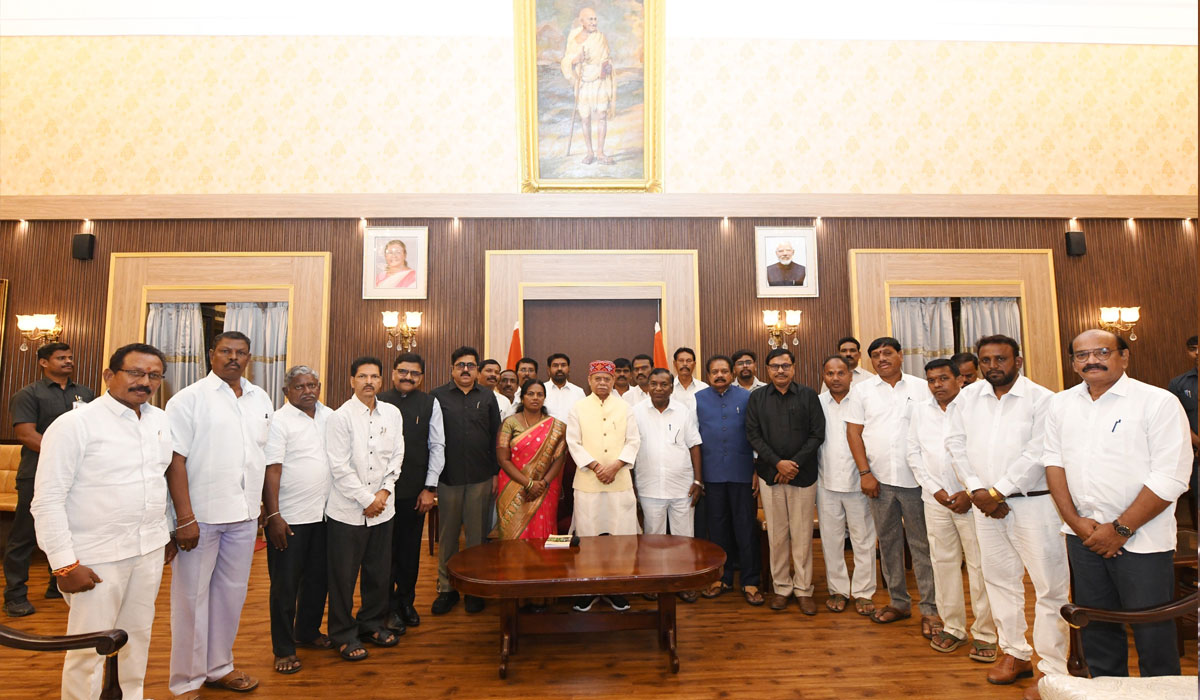

Hyderabad: A delegation of tribal leaders, retired senior civil servants, intellectuals and social activists on Thursday submitted a comprehensive memorandum to the Governor of Telangana, seeking urgent intervention for the protection and effective implementation of constitutional safeguards for Scheduled Tribes residing in the Fifth Schedule Areas of the state.
The delegation was led by former MLA and National Chairman of the All India Adivasi Constitutional Rights and Culture Protection Coordination Committee, Chanda Lingaiah Dora, along with the organisation’s advisor Dr. J. Purnachandra Rao, IPS (Retd.), former Director General of Police.
The memorandum was submitted through the Special Chief Secretary at Lok Bhavan and highlighted a range of issues concerning tribal rights, governance, land protection, rehabilitation, natural resource management and self-governance.
The delegation emphasized that the Constitution of India, through Article 244(1), the Fifth Schedule, Article 275(1) and Article 338A, provides a special governance framework for Scheduled Areas and places a constitutional responsibility on Governors to safeguard the rights and interests of tribal communities.
The memorandum stated that despite legal protections under the Fifth Schedule, the Panchayats (Extension to Scheduled Areas) Act (PESA), the Forest Rights Act and the Land Transfer Regulation, tribal communities continue to face challenges such as land alienation, displacement, unemployment, inadequate implementation of self-governance provisions and erosion of traditional institutions and culture.
One of the key demands raised by the delegation was the protection of employment opportunities for tribal youth in Scheduled Areas following the Supreme Court judgment that struck down the provision for 100 percent reservation for local tribal candidates in teacher recruitment under G.O. Ms. No. 3. The leaders urged the Governor to explore constitutional measures available under Paragraph 5(2) of the Fifth Schedule to safeguard tribal employment.
The delegation also called for restoration of alienated tribal lands and stricter implementation of the Land Transfer Regulation. Referring to the findings of the Koneru Ranga Rao Committee, they demanded a comprehensive review of illegal occupation of tribal lands and stronger enforcement of protective land laws.
Expressing concern over displacement caused by irrigation, mining, industrial and infrastructure projects, the memorandum stressed that no tribal family should be displaced without complete rehabilitation, livelihood restoration and adequate compensation. Special attention was drawn to the impact of the Polavaram Project on tribal communities across Telangana, Andhra Pradesh, Odisha and Chhattisgarh.
Follow for more details: munsifdaily.com
Advocating stronger implementation of PESA, the tribal leaders sought greater empowerment of Gram Sabhas, community control over natural resources, mandatory consultation before land acquisition and increased participation of tribal communities in governance and development planning.
The memorandum further called for a separate religion code for indigenous tribal faiths in future Census exercises to preserve tribal identity and cultural heritage. It also sought constitutional recognition and protection for tribal languages, particularly the Koya/Koyatur language, and requested its inclusion in the Eighth Schedule of the Constitution.
The delegation urged that a substantial share of revenues generated from forests, minerals, coal, water resources and other natural assets located in Scheduled Areas be earmarked for the development of tribal regions through transparent mechanisms involving Gram Sabhas.
A major demand in the memorandum was a comprehensive investigation into sand mining activities in the Godavari river basin, particularly in the Scheduled Areas of Bhadradri Kothagudem and Mulugu districts. The delegation expressed concern over large-scale sand extraction, transparency in the functioning of tribal sand societies, utilisation of mining revenues and compliance with constitutional safeguards.
The leaders requested the Governor to recommend a Central Bureau of Investigation (CBI) probe or another independent inquiry into sand mining operations in Scheduled Areas. They also sought publication of a White Paper detailing sand extraction, revenues generated, expenditure incurred and developmental works undertaken since 2014, along with a special audit of mining permissions, transportation systems and financial transactions.
The memorandum also called for stronger implementation of the Forest Rights Act, protection of community forest rights and enhanced political representation of Scheduled Tribes in Legislative Assemblies, Parliament and local self-government institutions.
In addition, the delegation requested the establishment of a dedicated Tribal Cell at Lok Bhavan to monitor implementation of constitutional safeguards and assist the Governor on matters relating to Scheduled Areas. The leaders also urged the Governor to undertake visits to tribal regions and interact directly with local communities to assess the implementation of constitutional protections on the ground.
Expressing confidence in the Governor’s role as the constitutional guardian of Scheduled Areas, the delegation said timely intervention would strengthen the protection of tribal lands, livelihoods, culture, languages, natural resources and self-governance institutions in Telangana.


